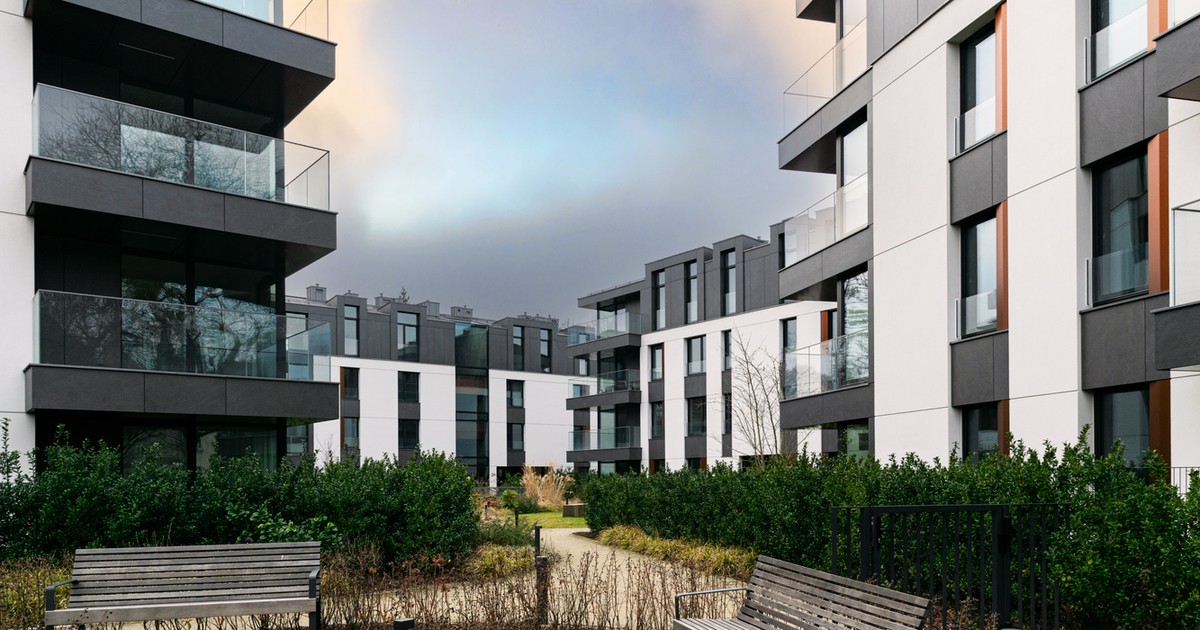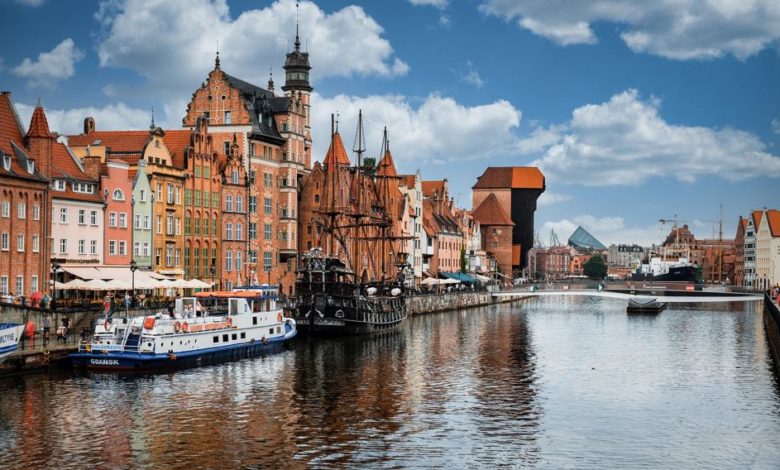
Until 2150, Venice and the islands and swamps of the Venetian lagoon may be periodically under water during the sea floods – the analysis of Italian scientists confirmed. In an interview with PAP, oceanologist prof. Jacek Piskozub emphasized that some Polish towns, including Gdańsk districts, may also be flooded until the end of the century.
Researchers provide for such a scenario if you fail to stop greenhouse gas emissions and reduce climate warming.
As researchers from Istituto Nazionale Di Geofisica E Vulcanology (INGV) in Rome – the authors of work in the magazine “Remote Sensing” – an increase in sea level in the Venice Laguna has been taking place since historical times. However, its susceptibility to flooding increases due to the effects of climate warming, including the melting of glaciers, which contributes to the increase in seas. Venetian Laguna, with a complicated network of channels, islands and salty swamps, is a unique, sensitive environment that has been inhabited since prehistoric times. Since 1987, it has been recognized by UNESCO as a world heritage.
Italian researchers analyzed the future risk of flooding and flooding of the lagoon within three climate scenarios, which is given by the 6th Report of the Inter -Government Climate Change Team (IPCC) – for low emissions, medium emissions and high emissions. For the first time – in addition to the increase in sea level – two other factors were taken into account at the same time, i.e. the gradual land settlement, which occurs at a speed of 1-3 mm per year, and in peaks up to 7 mm per year and scenarios of extreme storm waves (potential speech of the extreme Acqua Alta event, caused by a combination of low pressure and strong Socco winds).
According to the report, if we do not stop greenhouse gas emissions, these three factors can total up to 2150 to a temporary increase in sea level up to 3.5 meters above the reference of the Punta della Salute Punta Della Salute tide. These forecasts arouse concerns about the future effectiveness of the key Venice flood system – the MOSE system, which was designed to protect the lagoon from tides up to 3 meters (the difference between the lagoon and the open sea). With the increase in sea level, Mose may be flooded in 2100, which will threaten its functionality. This will lead to flooding about 65 percent. lagoons (139 sq km) during extremely high water levels. In low emission scenarios, up to 50 percent will be flooded. lagoon surface.
“The results of our research emphasize the influence of anthropogenic climate change on the Venetian lagoon. The growing level of seas, caused by CO2 emissions from the combustion of fossil fuels, connects with the local land settlement, deteriorated by urbanization and underground exploitation of resources” – commented the co -author of the study Tommaso Alberti from INGV. In his opinion, without specific actions to reduce the emission and relierate the effects of global warming, large parts of the lagoon can be flooded until the end of the century, which will threaten the historical, cultural and economic heritage of Venice.
“It is obvious that these research translates into Polish conditions, because sea level raises everywhere similarly. In Poland, it should be expected that we will have over 90 percent of the world average height of sea levels,” said PAP prof. Institute of Oceanology of the Polish Academy of Sciences Jacek Piskozub.
He pointed out that we have similar areas to Venice in the country – these are Żuławy, which are depressed (below sea level), and also gradually fall, because the ground in the river delts is gradually settled when it is not supplemented with fresh river sediment. “The flood embankments erected in Żuławy until the end of the century will certainly prove to be low. Forecasts show that sea level will increase to 2100 by probably 1 m, but it must be remembered that during storms the water is sucking up and there are so -called backs. Therefore, at the end of the age, Żuławy will be flooded every winter,” said prof. Piskozub. In his opinion, without huge investments in increasing the flood embankments, this cannot be prevented.
If it is not possible to reduce greenhouse gas emissions to the atmosphere until 2100, not only part of Żuławy Wiślane may be permanently flooded, but also the coast of Poland at the height of Dębek. According to the Climate Central simulations Under the water, there may be: St. Mary's Basilica and Długa street in Gdańsk and Śródmieście Gdynia.
“If we immediately stopped burning oil, coal and gas, i.e. they achieved emission neutrality, the forecasts would be better, but for now nothing indicates it. And with the script that we will burn these fuels for several dozen years, an increase in sea level of sea in the next age can be up to 3 meters. Then virtually every port will be flooded,” said prof. Piskozub. In his opinion, Gdańsk is most exposed among Polish cities, among others due to the faster landing of the land (in the order of 10 cm per 100 years).
The oceanologist emphasized that we should now invest money in building flood embankments and the gates of the veheteral in coastal cities. “This is a huge investment that we should start planning because it will be needed in 20-30 years. Unfortunately, I am afraid that in Poland we will do it only after the first large sea flood, which will flood Gdańsk or Żuławy. Only then will we develop a national program of saving seaside towns, “said the scientist. He pointed out that in Poland in areas, which – according to forecasts – in the future is threatened with flooding houses are still being built.
Prof. Piskozub summed up that if in 100 years we do not reach emission neutrality and the ice sheet will continue to melt, some cities, and even entire countries may cease to exist.
Joanna Morga (PAP)
jjj/ bar/ mhr/