The head of American diplomacy, announcement about the fundamental obstacle in the negotiations between Ukraine and Russia. “The problem, reduced to a central one”


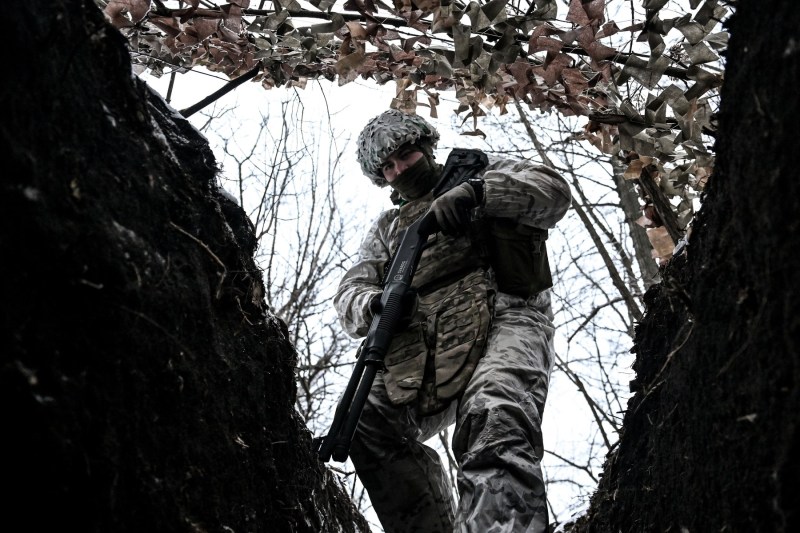
Ukrainian soldier from the artillery forces in action in the Donetsk region, Ukraine, on January 23, 2026. PHOTO: Ukrinform / Shutterstock Editorial / Profimedia
Work is currently underway to resolve the territorial issue of the Donetsk region in US-mediated negotiations to end Russia's war in Ukraine, US Secretary of State Marco Rubio said on Wednesday, describing the disagreement on the issue as a key remaining issue that is “very difficult” to resolve.
President Vladimir Putin has repeatedly said Russia will forcibly occupy Ukraine's entire industrial Donbas province, where Moscow's forces now control 90 percent, unless Kiev gives it up as part of a peace deal. Donetsk and Luhansk regions make up the Donbas province.
Kiev has made it clear that it will not cede territory to Russia that Moscow has failed to capture on the battlefield. Polls show that Ukrainians are not willing to make territorial concessions.
“It's still a hurdle to overcome. It's still a difference, but at least we've narrowed it down to a central issue, which is probably going to be very difficult,” Rubio said during a hearing of the US Senate Foreign Relations Committee.
The US is considering joining the next round of negotiations
Putin's demand that Ukraine cede the 20 percent of territory it still holds in Donetsk, about 5,000 square kilometers (1,900 square miles), has proven to be a major obstacle to any deal. Most countries recognize Donetsk as part of Ukraine. Putin says Donetsk is part of Russia's “historical territories”.
The head of American diplomacy also said on Wednesday that the US could be present at the next negotiations on Ukraine, but the main emissaries of President Donald Trump, Steve Witkoff and Jared Kushner, who participated in the previous round of negotiations, held last weekend in Abu Dhabi (in the United Arab Emirates), will not participate.
Talks over the weekend, which included a rare face-to-face meeting between Russian and Ukrainian officials, ended without an agreement, but Moscow and Kiev said they were open to further dialogue.
New negotiations are expected in Abu Dhabi on Sunday, February 1, said a US official who spoke to reporters last weekend.
Kiev is under increasing pressure from the Trump administration to make concessions to reach a deal to end Europe's bloodiest and most destructive conflict since World War II, sparked by Russia's full-scale invasion of Ukraine.
What happens to security guarantees
Rubio was also asked if security guarantees for Ukraine had been agreed upon by the US and Ukrainian sides.
“I think it's safe to say that they were agreed upon on our end. Obviously, that's where the Russian dynamic comes in. And of course, any security guarantees would go into effect after the conflict ends,” Rubio said.
The Financial Times (FT) wrote on Tuesday that the Trump administration has signaled to Ukraine that security guarantees from the US depend on Kiev accepting a peace deal, which will likely require the ceding of all of Donbas to Russia.
US security guarantees are seen by Kiev as key to any deal to end Russia's invasion of Ukraine
A source familiar with the talks, however, told the Reuters news agency that the United States is not imposing the content of the peace agreement on Ukraine and that it is “erroneous” to suggest that Washington is trying to force Ukraine to make territorial concessions to Russia.
Ukrainian President Volodymyr Zelensky recently stated that a US document on security guarantees for Ukraine is “100% ready” and that Kiev is currently waiting for the date and place of its signing.
Zelenskiy has consistently said that Ukraine's territorial integrity must be respected in any peace deal aimed at ending the war.
The Kremlin said on Monday that the territorial issue remains fundamental to the conclusion of a possible agreement.