The unseen monasteries, damaged in the heart of the mountains. What stories hide the oldest cells of the Sihaștri

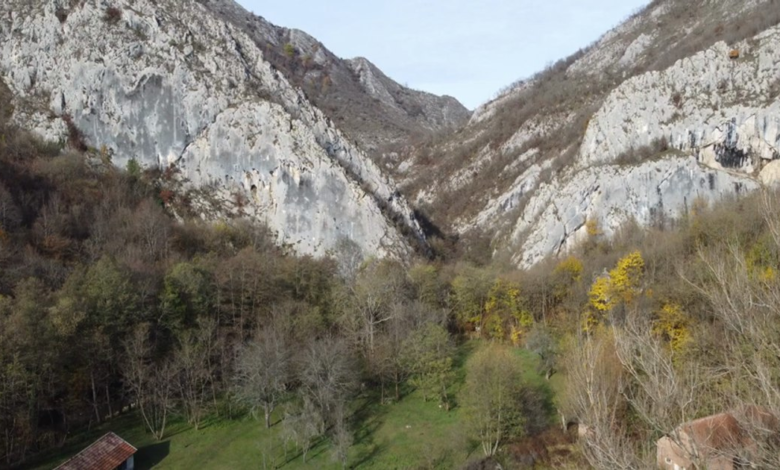
In the heart of the mountains in western Romania, some caves have kept stories about their old living, withdrawn monks, to lead their lives in faith. The Metaliferi, Șureanu and Poiana Ruscă Mountains are not only places of Dacian legends, but also of some of them mentioned in legends.
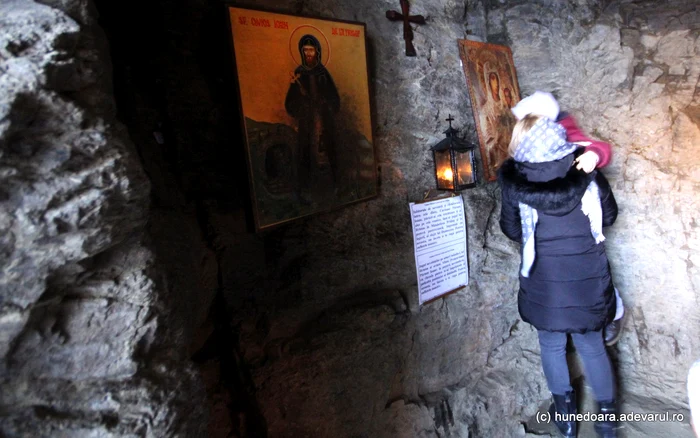
The cave of Saint John of Prislop. Photo: Daniel Guță. TRUTH
Over 300 caves and Avene were identified by speleologists in the Metaliferi Mountains, in western Romania. Many of them have been used by the surrounding communities since the prehistoric era. Over time, the caves have retained the remains of the oldest spiritual, religious and even funeral manifestations of the people who lived.
The places of the Sihaștri in the Metaliferi Mountains
The local tradition, the preservation of the old toponyms reminiscent of the cells and Sihăstrii, as well as some historical testimonies show that certain caves in the Metalifer Mountains have been inhabited by hermits since the 12th century.
The Geoagiului Valley, located on the border of Alba and Hunedoara counties, is known for its caves – some fortified to be used as a shelter in case of danger by the locals, others becoming withdrawal for monks and priests.
In the Geoagiului Valley, travelers can visit the caves built from Madei Gorges (video) and the Glodului Gorges, but also the caves near the keys, the Balșa Băcăieului keys and the keys – some carved by water and climate in the limestone slopes of the metalifers, others arranged by humans.
Some of the oldest caves transformed into cells would have been in Cib's Gorges, an isolated village in Almașu Mare commune (Alba county), where the locals kept legends about the medieval monks who would have lived in small cells, torn in places that are hard to access from the mountain.
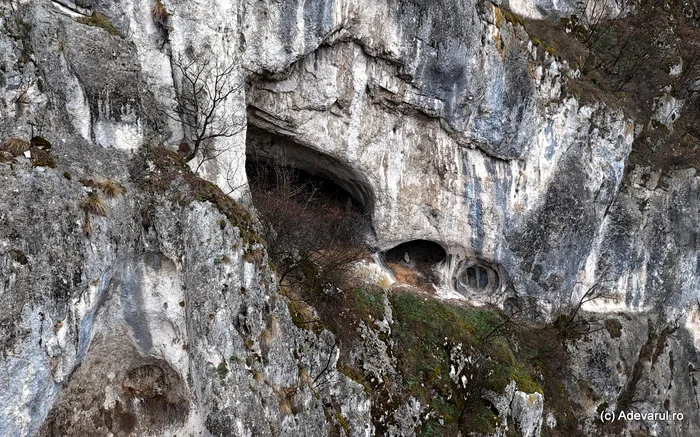
Grote at Cib's Gorge. Photo: Daniel Guță
“It is about one of the oldest Romanian rock, datable, based on the discovered ceramic material, in the 12th century. Unfortunately, no documents regarding the history of this settlement have been kept. It is believed that, over the centuries, a modest wooden church was erected here, in which, in the days, in the days, in which, in the day, Left in the eighteenth century, Sihăstria-mentioned in the Dósa Conscript of 1805-seems to have definitively concluded his mission in 1846, when, according to tradition, the last Orthodox monk in the area would have retired to another monastic settlement, located on Glod's Gorge. “informed the priest Florin Dobrei in his work “Hunedoara Sihasts-historical-theological considerations”.
In the early 2000s, a nun's monastery was erected in Cib's Gorge (video), on the site of older cells.
The caves in the Șureanu Mountains
Several caves in the area of the Dacian fortresses in the Șureanu Mountains – a mountain region where almost 500 caves were identified – would have been used by monks in the past centuries. Old toponyms such as the Boșorog's stream or the Greek stream, which refer to “Greeks” (Orthodox) or hermits, suggest that these slightly walking places would have been shelters for those dedicated to a spiritual life, far from the world.
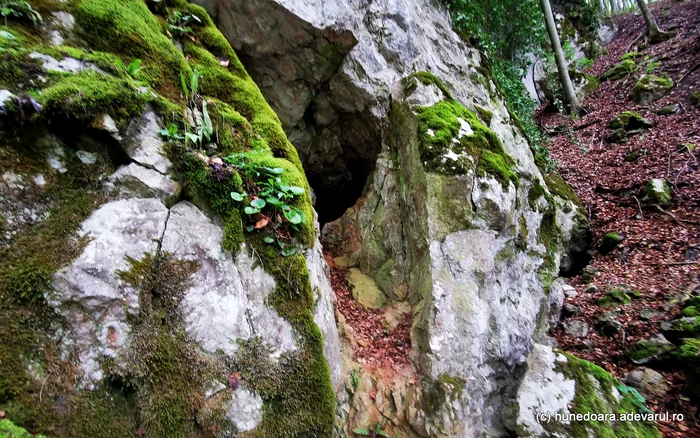
Cave from Valea Rea. Photo: Daniel Guță
Some caves inhabited in the past by monks are located at the springs of the Valea Rea stream, under the Vârtoapelor Plateau in the Șureanu Mountains, a place where, in the 2000s, a monastery was erected. The caves, the locals said, would have hidden Dacian treasures, but in the past they were especially known as withdrawal places.
“I asked (no (no local) on the road to Bodii Cave or Valea Rea Cave. Santa knew it well-here was born and childhood. The cave was easy, he told us, there is a good path there, and in the cave he entered a wooden scale. Former monks there. Cornelius Ionescu report, former explorer of the Dacian fortresses, on his blog.
There are several caves in the area of the Vârtoapelor plateau, near Sarmizegetusa Regia. Some are difficult to access, others almost impossible to explore. The places have kept legends about treasures, hermits, fairies, but also numerous ancient, Dacian and Roman vestiges, discovered and sometimes alienated over time.
The cave of Saint John of Prislop
In the Poiana Ruscă Mountains, over 100 caves and Avene were investigated. And here, in the lands of Hunedoara, traces of living have been discovered since ancient times. Some cave, according to the testimonies of the time, were used by monks, before the establishment of medieval hermitages or monasteries.
The most famous cell in the Poiana Ruscă Mountains is at the Prislop Monastery (video) and dates to at least six centuries. It was the place where St. John of Prislop withdrew, a medieval monk canonized by the Romanian Orthodox Church in 1992. The room that the monk John dug in a rock, near the medieval church and about one hundred meters from the tomb of Arsenie Boca, was known as “the House of Saint”.
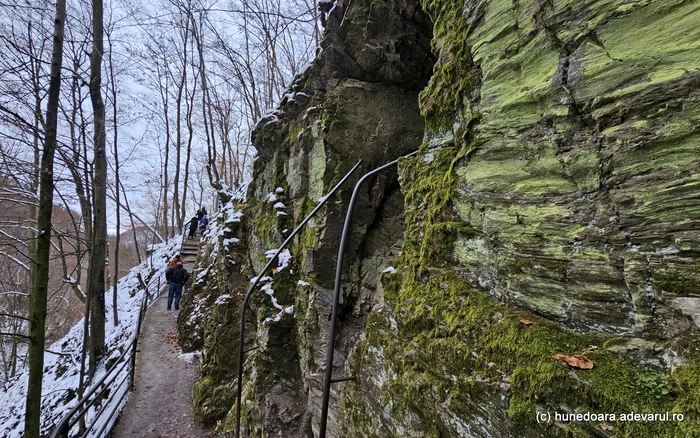
The cave from Prislop Monastery. Photo: Daniel Guță
Here the hermitage would have lived for several years, at the end of the fifteenth century. Some testimonies say that Mihai Viteazul himself would have visited him in his pilgrimages through Transylvania.
“He says the popular tradition that, as he made a window at his cell, two hunters on the other slope of the precipice shot him.”showed the historian Mircea Păcurariu, the author of the book “Romanian Saints”.
Another legend says that John was a young man from the village of Silvaș, who had left the village with the girl he had fallen in love with, and the two took refuge in the old cell of the monks from Prislop. There the girl would have died, and on her grave, at the foot of the cave, near the stream, John was found. The villagers considered him a miracle worker and, since then, Chilia has been called the “Holy House”.
“The tradition speaks to us of a monk with the name John, who led a holy life, living in the cave dug in the rock, which is still in the coast of the hill above the monastery. After his death, hearing his fame, people from the Romanian Country would have come and have taken his body, not to go to Silva. to the saint. The index finger is kept in the church in Sânpetru, near Hațeg ”wrote the newspaper Adevărul in 1928.
Over time, other monks would have withdrawn in the hidden cell, above the Slivuț stream. The Prislop Monastery was burned down in the eighteenth century, and the archives that kept testimonies about its living beings were destroyed. The monks were expelled, but the settlement has been rebuilt and today it is one of the most important orthodox pilgrimage places in Romania.
The social impact of the Sihăstarii has been limited, the austere living conditions not attractive to the majority of the population. The settlements did not have a cultural role, being places for prayer and work, especially populated by simple people, coming from poverty.
“On the other hand, many of these needers have led an exemplary spiritual life, which is why they were surrounded by the righteous people with an aura of holiness, being honest to this day. showed the priest Florin Dobrei.