

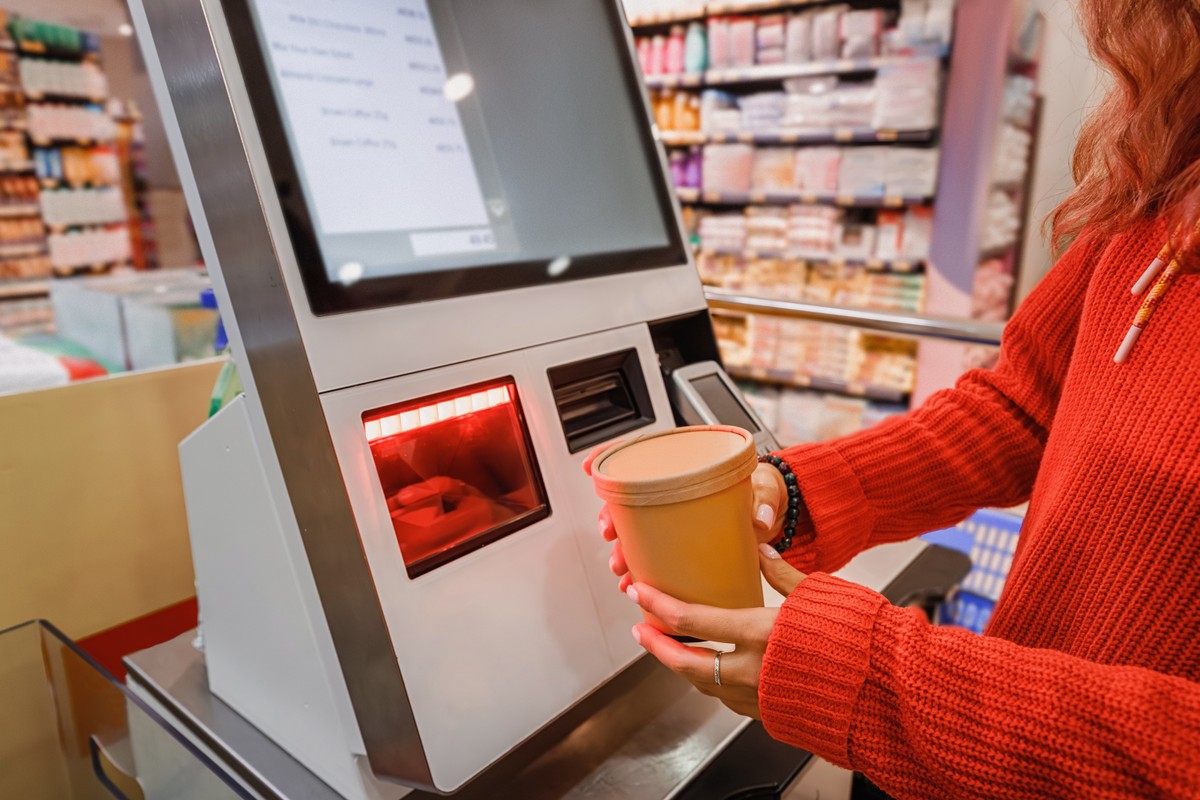
From research cited, among others, by the BBC shows that customers using self-service checkouts are much more likely to exceed their initial budget. Scientists dealing with consumer behavior point out that the lack of direct contact with the cashier changes the way decisions are made. The customer does not feel social pressure or the need to “account” to anyone for what he puts in the basket.
The text continues below the video
Similar conclusions come from research by a team of behavioral economists from Tel Aviv University, who analyzed the impact of self-service technologies on purchasing decisions. According to them, self-scanning of products reduces the so-called the psychological cost of spending money. The customer focuses on using the device, not on the amount that grows on the screen.
Read also: The chain is getting rid of self-service stations. He prefers human cashiers
A screen that sells more than you think
The “Trade News” portal, in turn, points out that Self-service checkouts are not a neutral tool. The interface, on-screen messages and price presentation facilitate additional purchase decisions. When a customer operates the terminal himself, he pays more attention to the screen than to the surroundings, which increases his susceptibility to system suggestions.
Research shows that in such conditions we more easily accept more expensive product variants or add more items to the basket. As a result, as retail market analyzes indicate, the average value of the basket at self-service checkouts is up to a quarter higher than at traditional checkouts.
Trading between convenience and frustration
Although retail chains invest heavily in automation, there are more and more opinions that self-service does not always improve the customer experience. The BBC points out that some stores are starting to test more staffed checkouts again, especially where customers make large purchases or where technology causes more problems than benefits.
At the same time, retailers admit that Self-service checkouts are an effective tool for increasing sales. It is this aspect – the increase in the value of the basket – that, despite the controversy, this technology still remains one of the key elements of trading strategies.
Read also: Self-service checkouts are a convenience for young people. Older people get lost
Shopping of the future: faster, quieter, more expensive?
Consumer behavior specialists emphasize that it is not about the technology itself, but about how it influences our decisions. A self-service checkout eliminates the moment of reflection that often occurs when contacting another person. In return, it offers liquidity, anonymity and an apparent sense of control.
As both analyzes quoted by the BBC and market data show, the end result is the same: we leave the store faster, but with a higher receipt than we planned.


