Little economic history: the second law in US history was one that imposed customs duties. President George Washington promulgated her

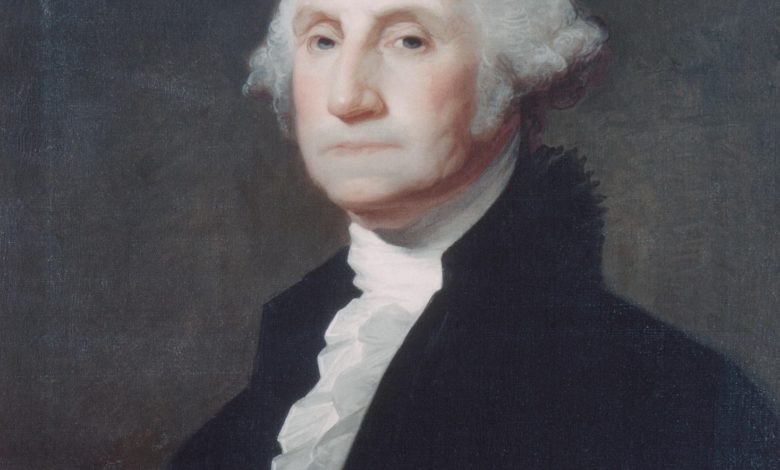
It was July 4, 1789, and the taxes entered into force on August 1, 1789. The preamble to the new law said that the import fees were necessary “to support the government, to extinguish the United States debts and to encourage and protect the manufacture.”
The first tariff program of the United States was designed in just 4 months. On April 8, 1789, two days after the Congress reunited for the first time, James Madison introduced the draft law in the Chamber of Representatives.
Invoking the urgent need for government income, Madison claimed that a customs duty should be imposed without delay, so that the imports of Europe can be taxed as quickly as possible, according to James Madison's works, edited by William T. Hutchinson and William Me Rachal. Vol .17: University of Chicago Press, 1962–1991.
Boots and shoes, nails, fish and hemp-charged
Specific taxes were imposed on thirty -six goods, such as molasses and coffee (two cents and a half on the gallon and on the delivery), spirits (ten cents on the gallon), salt (six cents on Bushel) and nails (one cent on the delivery).
A delivery has 04.45 kg and a gallon has 3.78 liters.
Most of these specific taxes have been conceived as luxury taxes on goods consumed mainly by the rich. At the same time, some of these taxes provided protection to local producers; Although native spirits were subjected to an excise duty, for example, it was much lower than the import fee. Other specific taxes have been explicitly imposed for the benefit of domestic producers, such as those for boots and shoes, nails, fish and hemp.
The income collected from customs duties increased suddenly after the federal government has taken responsibility for customs service
Most imports were subjected to four -level “ad value” taxes: 15% in carriages and pieces, 10% on porcelain, stone and glass, among other goods, 7.5% for cotton and wool clothing, hats, laminated iron and leather products, among others, and 5% for all other articles. Seventeen goods were placed on the list exempted from customs duties, including salpetru, brass, sheet, iron and brass wire, cotton and wool, skins, fur and skins.
As the first secretary of the treasury, Alexander Hamilton had the vital task of setting up the customs service in the big ports in the US and to supervise its administration. From all points of view, he managed the customs service with efficiency and attention to details, making sure that it works without problems and without corruption.
The income collected from customs duties increased suddenly after the federal government has taken responsibility for the customs service. Revenue from New York ports, Philadelphia, Baltimore and Charleston increased from nearly $ 2 million in 1785–88 to nearly $ 12 million in 1792–95. Higher revenues were largely due to the revival of foreign trade that took place after The adoption of the Constitution, but also to the increase of tax rates and improve the efficiency of the customs service in their collection.
Import fees were the most political effective way to increase income
The rates were automatically incorporated into the internal price of imported goods and avoided the “mining political field” of internal taxes, writes Brown, Roger H. 1993. Redeeming the Republic: Federalists, Taxation, and the Origins of the Constitution. Baltimore: Johns Hopkins University Press
Hamilton's fiscal program has brought a welcome change in the fiscal system of the nation, from direct taxes (poll and land) imposed by the states to the customs duties imposed by the federal government. By assuming state debts, Hamilton's program allowed states to reduce direct taxes by up to 75% in some cases (Edling and Kaplanoff 2004)
By changing the income system of the nation from direct to imported taxes, the fiscal burden, as levied by most people, has dropped abruptly. The frequent protests against state taxes of the 1780s have disappeared largely in the 1790s.
And as customs duties were less intrusive than other forms of taxation, the federal government avoided triggering a debate on its legitimacy.
Hamilton feared that complete addiction to tariff income would be risky during war and could endanger the nation's finances at the wrong time. However, the internal taxes were very unpopular, and the Congress was reluctant to adopt them.
Despite the increase in customs income that came with the extension of trade, the federal government's fiscal position remained precarious
Following the struggle for the Constitution and the uncertain public support for the new federal government, Hamilton was cautious in proposing new internal taxes, fear that might trigger an Internal political reaction, as he did with the 1794 whiskey rebellion. As a result, Hamilton managed to diversify the source of government revenues only to a small extent.
Despite the increase of the customs income that came with the extension of the trade, the federal government's fiscal position remained precarious in the early 1790s. In 1792, only the interest for the US debt absorbed 87% of the total revenues.
The United States covered their deficit only through a large loan in the Netherlands, which helped pay for previous external loans and allowed the redemption of significant amounts of internal debt, writes James Riley in 1978 in “Foreign Credit and Fiscal Stability: Dutch Investment in The United States, 1781–1794.” Journal of American History 65: 654–78.
This left Hamilton open to accusations that it was not serious to pay the debt, but political constraints either prevented the additional increase in import taxes or excise duties. As Edling points out (2007, 306), “confronted with choosing between taxes to pay the debt or acceptance of debts at least in the foreseeable future, Hamilton opted for the second alternative.”
Finance chief desperately wanted the United States to remain neutral in any European military conflict
These revenue constraints made Hamilton extremely sensitive to the government's fiscal position. He worked to manage the weak financial resources of the government and to maintain the country's solvency.
Hamilton desperately wanted the United States to remain neutral in any European military conflict, fearing that American involvement would ruin the nation's finances. To be involved in a war for which he was not prepared would increase the government spending and to collapse his income. As we will see, this fear of fiscal dislocation has deeply colored Hamilton's approach to the problem of commercial reciprocity.
In January 1790, in his first report to the Congress as secretary of the treasury, Hamilton proposed to increase the tax for Madeira wine from 18 cents to 20 cents, at Hyson tea from 20 to 40 cents on the delivery, to coffee from 2.5 cents to 5 cents.
In April 1789, when Madison revealed his plan to impose tariffs for goods imports, he also proposed taxes on the tonnage of ships entering American ports. But Madison's true goal was to discriminate against the UK in favor of France, because the United States had a commercial treaty with France, but not with the UK. Madison believed that it was unacceptable for the United States to impose relatively easy taxes on British manufacture, while major US exports, such as flour and wheat, fish and salted foods, have been highly restricted, if not forbidden on British markets.
Turning discriminatory taxes would reduce the commercial addiction of America from the UK and radically change trade with France, its ally during the war
Madison was even confident that the United States holds The economic power to force the UK to relax its commercial restrictions. About the reactions of the states that have been charged, in a future episode.
N.red: outside the sources quoted in the article, the author has used
Douglas Irwin- “Classing Over Commerce”
Peterson, Merrill D. 1965- “Thomas Jefferson and Commercial Politics”. William and Mary Quarterly 22: 584–610. Thomas Jefferson and the new nation. New York: Oxford University Press.
McCoy, Drew R. 1974. “Republicanism and American Foreign Policy: James Madison and the Political Economy of Commercial Discrimination, 1789 to 1794.” William and Mary Quarterly 31: 633–46. and McCoy, Drew R 1980. The Elusive Republic: Political Economy in Jeffersonian America. Chapel Hill: University of North Carolina Press.
Brown, Roger H. 1993. Redeeming the Republic: Federalists, Taxation, and the Origins of the Constitution. Baltimore: Johns Hopkins University Press