Astronomers discovered a new month of the planet Uranus, whom the ship “Voyager 2” did not find

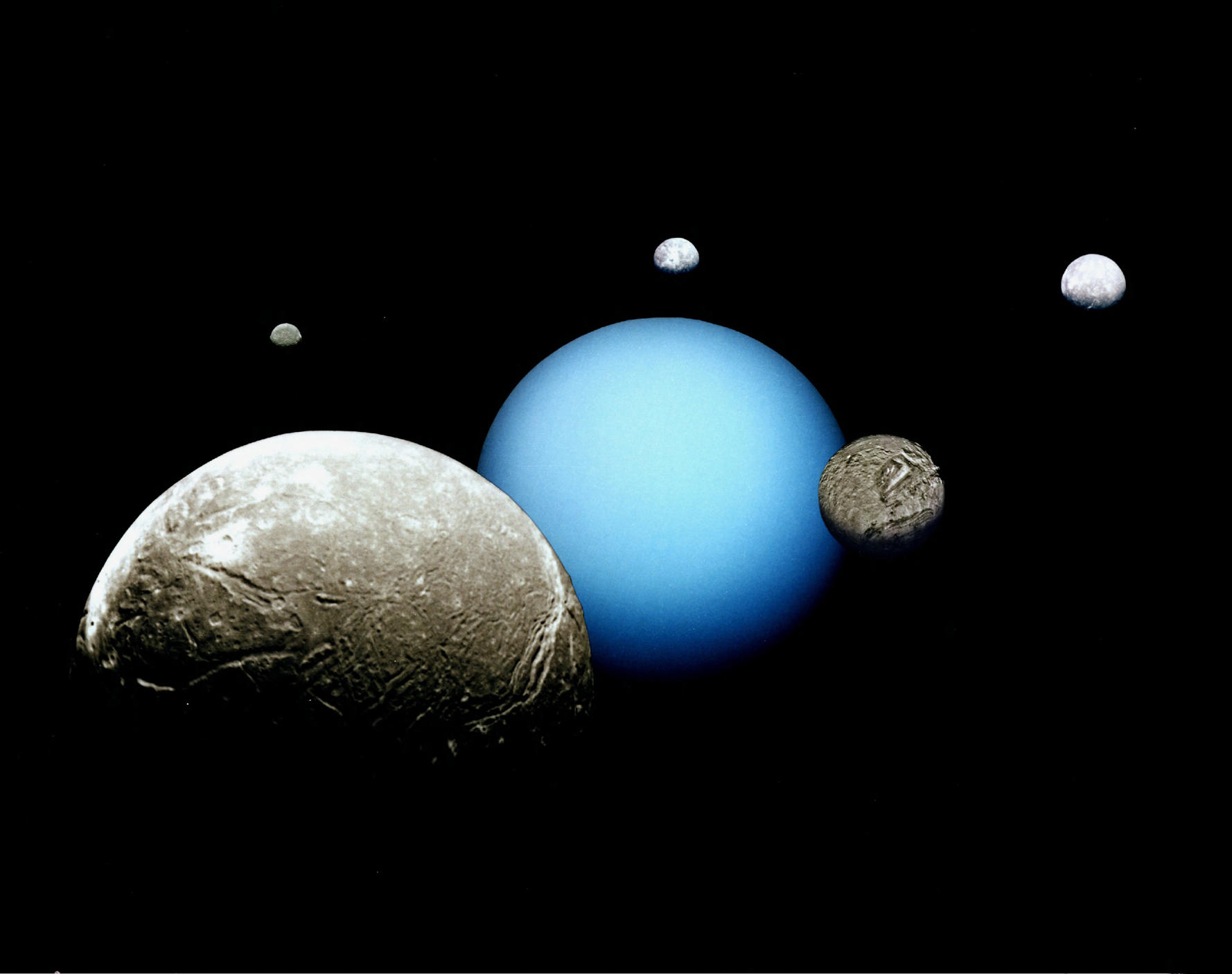
Uranus and some of his frozen months, photo: NASA Image Collection / Alamy / Profimedia Images
Uranus is the planet with the most months in the Solar System, and the James Webb space telescope has discovered an previously unknown one, with a diameter of only 10 kilometers, which raises the number of satellites to 29, reports EFE, quoted by Agerpres.
The new month was preliminary called S/2025 U1. Its official name must be approved by the International Astronomical Union (I take), the main authority in attributing official names to astronomical objects.
“It is a small month, but a significant discovery, something that not even the Voyager 2 spacecraft has seen during his flight almost 40 years ago,” said Maryame El Moutamid from the Southwest Research Institutes in the United States.
One month with a diameter of only 10 kilometers
It is estimated that this month is only 10 kilometers in diameter, which is why it would have gone unnoticed by Voyager 2 and other telescopes, the NASA's American Space Agency informed.
No other planet in the solar system has as many small months as Uranus, and their complex interactions with “suggests a chaotic history that blurs the border between a rings system and a Monday system,” says Matthew Tiscareno from Seti Institute.
The recently discovered month is 56,000 kilometers from the center of Uranus, and its almost circular orbit “suggests that it could have been formed near its current location,” according to astronomers.
It is the fourteenth and lowest in the complex system of internal months, which orbits the older months, with names such as Miranda, Ariel, Umbriel, Titania and Oberon, inspired by characters created by William Shakespeare and Alexander Pope.
This discovery emphasizes, as Moutamid said, the way in which modern astronomy “continues to be based on the inheritance of missions such as Voyager 2, which overcame Uranus on January 24, 1986 and gave Human to the first image of close to this mysterious world.”
Now, almost four decades later, Webb offers “a new perspective on the external solar system” and extends “and more this border”, say scientists.