The “lazy eye” or amblyopia is only recovered if it intervenes quickly. 5 signs that a child does not see well

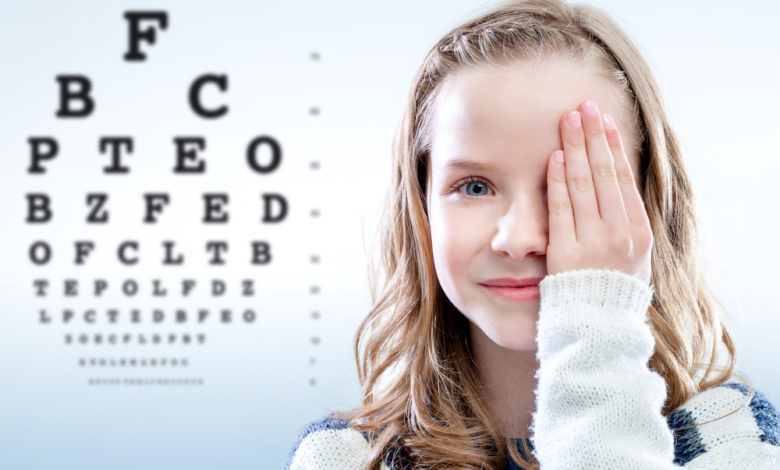
Also known as “lazy eyes”, amblyopia is a common eye condition in children. It develops when the child has an eye that does not see well because of the weak connection between this organ and the brain. Rarely, the condition may seem in both eyes. The treatment established in childhood, until the age of seven, ensures the recovery of vision in an almost total proportion. We detail the signs at which parents should be careful.
The first ophthalmological control of the child should be done before reaching the age of one year, doctors recommend. All the more so if in the family there are people who wear glasses, suffer from strabismus or other eye diseases. And not for nothing, because it is very possible that the little one will have vision problems.
Greater risk at premature
One of the most common eye diseases in children is the so-called “lazy eyes” or amblyopia. The risk of amblyopia is higher in children born prematurely, who have developing delays or a family history that includes this condition.
The American Association of Pediatric Ophthalmology and Strabism – American Association For Pediatric Ophthalmology and StrabismusAapos – defines amblyopia that condition that involves unclear vision in one or both eyes, even when the child wears glasses. Ambliopia occurs when something affects how vision develops in childhood.
When the child is small, his brain learns to see the things around. When the child suffers from amblyopia, the brain receives an unclear image from one or both eyes and does not learn to see well. This is because the connections between the brain and the eyes do not work properly. If not treated, amblyopia can cause permanent loss of vision.
Three possible causes
According to the source above, there are three possible causes of the lazy eye.
The first of them is strabismus – strabismic amblyopia – in which weak vision is caused by strabismus, that is, the wrong alignment of an eye or both. This incorrect alignment causes the brain to ignore the signals from the deviated eye to avoid the confusion caused by the double vision. As a result, the brain focuses on the clear imagination provided by the healthy eye. Therefore, the deviated eye undergoes a decrease or total loss of visual acuity.
Refractive defects are the second cause of “lazy eyes”, also known as refractive amblyopia. This means that a child can have a correct alignment of the eyes, but at the same time myopia, hyperopia or astigmatism in one of the eyes, while, at the other, no. That is, a deficient visual development as a result of the existence of refraction errors between the two eyes. When this happens, the brain becomes dependent on the better eye, ignoring the deficits of the weaker eye.
Over time, this leads to a lack of use of that eye and amblyoplie.
The third cause of lazy eyes is the obstruction of vision, known as deprivative amblyopia. The cause can be an opaque crystalline – cataract – a fallen eyelid or a corneal scar that prevents the image from reaching the retina.
The persistent inclination of the head, a sign that he does not see well. Other possible manifestations
Among the signs of the “lazy eye” are:
– the wrong alignment of the eyes,
– the gradual closure of the eyes or their mijection,
– eyes that do not move in the same direction when the child is trying to focus,
– persistent tilting of the head,
– hitting objects, especially on a certain part of the body.
The earlier it is, the higher the chances of healing. And this treatment consists, depending on the age of the child, first of all, the wearing of a patch on the healthy eye, to force the deviated to work, simultaneously with special exercises to stimulate vision. The highest chances of recovery exist when the treatment begins before seven years, before the process of growth and eye development.
In the case of the “lazy eye” caused by refraction errors, the restoration of vision can be achieved by wearing vision correction glasses or contact lenses. Wearing the right glasses that help the eye have a clear image to transmit to the brain is a very strong treatment for both unilateral (one eye) and bilateral (in both eyes).
Similar to the patch method, the treatment in the form of ophthalmic drops administered in the stronger eye, has the role of temporarily weakening its vision and restoring the connection between the brain and the weaker eye in the idea of strengthening the visual input.
As for surgical treatment, it is indicated in more severe cases, together with the therapies listed above. According to healthychildren.org. Surgery cannot be the only treatment used to treat amblyopia. A surgery for cataract removal, for example, necessary in the deprivative amblyopia, must be accompanied by the wearing of the glasses and the application of a patch.
The first results of the treatment of amblyopia may occur after a few weeks, but often the condition needs months or even years of treatment. As the vision improves, it may rarely be needed to wear the patch or to use eye drops.
Visual Screenig from birth
The detection of amblyopia can be difficult to do by parents or carers of young children because they do not complain. They will use the eye that sees better and will not realize that this is not the case. Also, the weaker eye may seem normal. For this reason, the ophthalmological consultation of the child is needed.
Visual screening, recommended by the American Pediatric Academy (AAP), helps to detect the amblyopia in time, when it can still be treated. The visual screening recommendation depends on age as follows: in newborns doctors check if there are cataracts or other eye problems.
In infants, check if the baby can follow the toys or objects around with their eyes and if their alignment is the correct one. In young children, electronic tools can be used to detect refraction errors and the need for glasses or other amblyopia signs. In older children and adolescents, vision tests are similar to those for adults and can be performed when children can identify shapes and letters.
The amblyopia should be treated as early as possible, because the treatment works better in younger children. Recent studies conducted by national health institutes (NIH) have found that starting treatment in adolescents up to the age of 14 can continue to help, in the sense of recovering it, but not as much as the start of treatment at younger ages. The key to getting the best results is starting treatment early, in small childhood.