We are no longer at the point where the question is whether the future of cars is electric, because the direction of the automotive industry is clear globally. The real question, in 2026, is how much stress are you willing to accept until we get there. Beyond speeches and European targets, real life looks like this: in the morning you go from bar to bar in the city, in the evening you go out on the highway, and at the weekend you leave with your family and a full trunk. The car should do it all without forcing you to become a charging station expert.
This is where this comeback of hybrids begins, not as a step back, but as a solution for people who want to drive electric in the city, but don't want to reorganize their lives around an outlet. The BYD Sealion 5 DMi enters exactly this transition zone: a car that promises low costs in daily use and peace of mind over the long haul, in a market where pragmatism is starting to outweigh technological enthusiasm.
Another important argument is the ratio between size, technology and cost. The launch price for the BYD Sealion 5 DM i starts at 27,600 euros, VAT includedand at this price level the model is positioned as the most affordable plug-in hybrid in the SUV-C segment.
In terms of efficiency, the declared average consumption is 2.1 l/100 km, in a mixed-use scenario, with predominantly electric driving in the city. It is exactly the type of combination that responds to one of the main concerns of Romanian drivers: low costs in daily use, without giving up space and comfort.
Why BYD Sealion 5 DM-i meets the real needs of a family
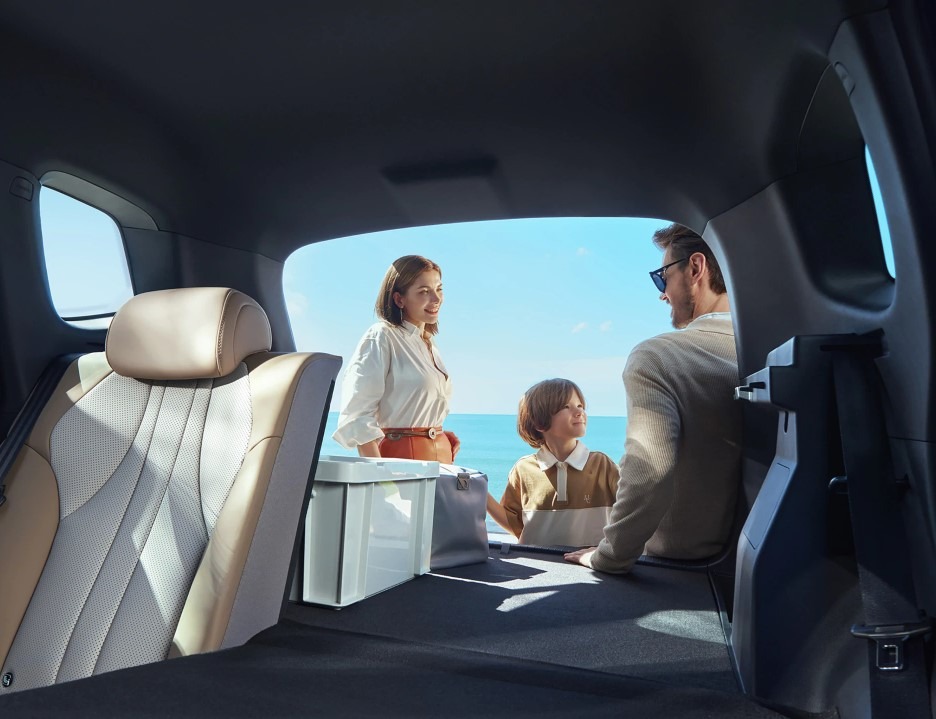
In Romania, the car is more than a means of transport. The car is storage space, commuter vehicle, holiday companion and sometimes mobile office. The BYD Sealion 5 DMi is built for exactly this kind of mixed use, as an SUV geared towards family and everyday life, not as an exercise in futuristic design.
The dimensions of the model support this positioning. With a length of 4,738 mm and a footprint specific to the SUV-C segment, the Sealion 5 DM-i offers real space for passengers and luggage, without compromising on comfort. The cabin is airy with a premium feel, and the interior architecture is designed for intuitive use, not to impress with unnecessary complexity.
Technology is present where it matters. The 8.8-inch digital instrument cluster and 12.8-inch center screen with Apple CarPlay and Android Auto are complemented by “Hi BYD” voice commands and OTA updates. For everyday life, the small details make the difference: four USB-C ports, front and back, 15 W wireless charging for the Design version and NFC access with your smartphone, functional even without a phone signal.
Outside the city, the Vehicle-to-Load function, with power up to 3.3 kW, adds extra versatility for weekend trips, camping or outdoor activities, without turning the car into a complicated gadget.
What does a plug-in hybrid mean, concretely, for the Romanian driver
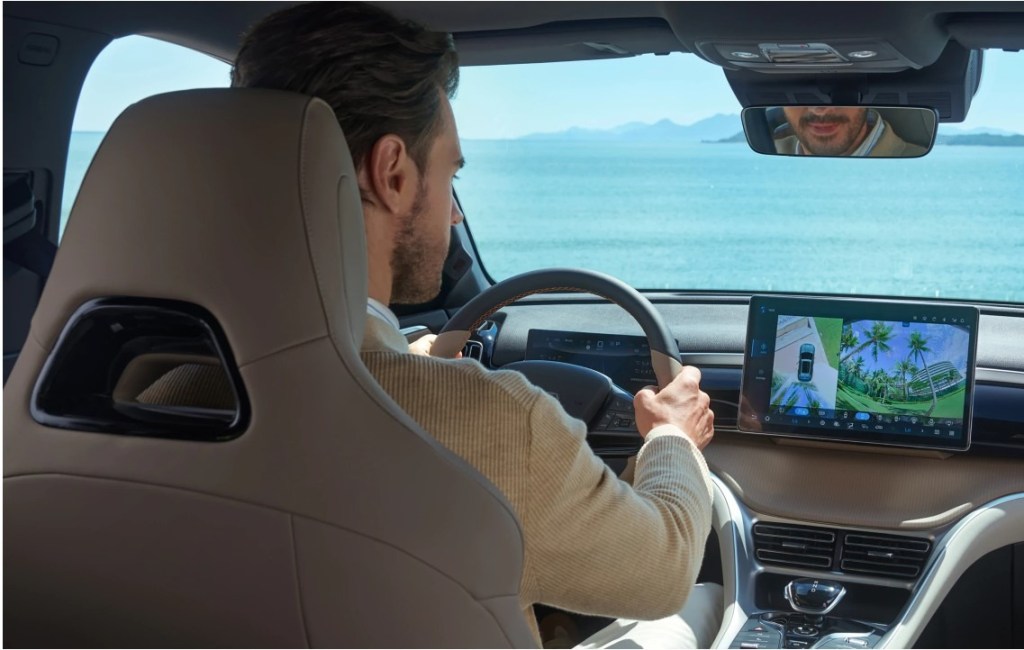
For many, the plug-in hybrid is the first real contact with electric driving. Andrei Pană clearly marks this intermediate stage:
“For many, these models are a natural first step towards electrification: in the city they can be used electrically, and for longer journeys the internal combustion engine offers safety and peace of mind.”
In daily use, this translates simply: urban commuting in electric mode, emission-free and low-cost, plus the freedom to go on a long journey at any time, without calculations related to stations or charging times.
The DM-i technology developed by BYD is built on exactly this logic. The system works predominantly electrically, and the thermal engine has a secondary role, supporting and extending the autonomy. As Andrei Pană explains:
“With Super Hybrid DM technology, the system is centered on a powerful electric motor, supported by a high-capacity battery, and the combustion engine plays a secondary role, providing an electric-like driving experience.”
The conclusion is that hybrids will not return in 2026 because the market is abandoning electric, but because the market demands functional solutions, especially in a context where charging stations remain concentrated predominantly around large cities. The plug-in hybrid responds to a concrete reality: the desire to drive electric in the city and the need for safety on the long road.
BYD Sealion 5 DMi enters this trend with a coherent, mature proposal adapted to the local market, as summarized by Andrei Pană:
“It combines generous space with advanced technology and efficient fuel consumption, resulting in an SUV designed for modern families who want comfort, top-of-the-line amenities and an intuitive experience, whether they're driving around town or hitting the road.”
Why hybrids are making a comeback in 2026: real numbers and trends
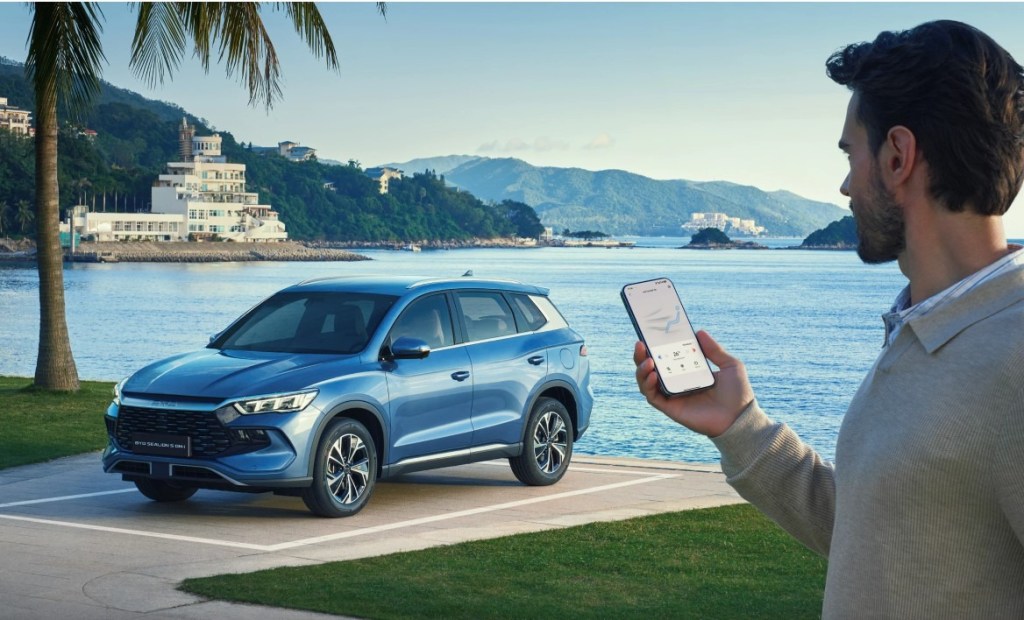
Trends in the European car market show that although electrics are gaining ground, hybrid models, including plug-in hybrids, remain a dominant choice for consumers. Data published by the Association of European Automobile Manufacturers shows that hybrid electric vehicles accounted for approximately 34.5% of all new car registrations in the European Union in 2025, surpassing both petrol and diesel models as well as all-electric models in terms of market share.
In Romania, the trend is similar, but even more pronounced in the plug-in hybrid segment. Statistics from the local market show a 144% increase in sales of plug-in hybrids in December 2025 compared to the previous year, while electrics stagnated, highlighting the growing appetite of Romanians for electrified solutions that offer extended autonomy without exclusive dependence on the charging infrastructure.
Andrei Pană, BYD Romania Product Manager, directly explains this return of interest:
“I think the growing interest in PHEVs comes from the market's desire to reduce running costs without having to rely solely on charging infrastructure.”
This need for control and predictability defines 2026 better than any sales target. The public does not reject electric, but demands a logical transition, adapted to the local reality.
Article supported by BYD Romania