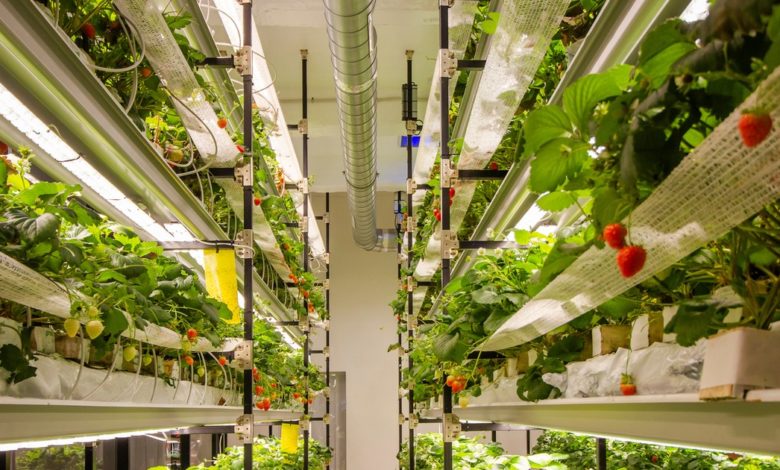
Urban agriculture appears as a way to increase local immunity: food production close to the consumer, without pesticides, with minimal resource consumption. In addition, it is an ideal solution for developing urban vacancy.
As Anna Bąk Leader argues the ARUP Polska Sustainable Development Team: “The property owner does not bear the loss, you do not have to demolish or build anything – just look at what we already have and adapt the space to new needs.” Will the future of food production look like?
Vertical farms – maximum use of free space
The last report of the advisory and engineering company ARUP shows how you can adapt various urban spaces-from roofs and parking lots to industrial halls and historic mills-for food production. The Farm in Chicago works side by side with restaurants and educational spaces, and a greenhouse and a social garden operate on the roof of the Australian shopping center.
Experts emphasize that vertical farms can reduce water and surface consumption by up to 90 %, and with a controlled climate they allow year -round production. For deciduous vegetables, yields from one square meter can reach 80-120 kg per year.
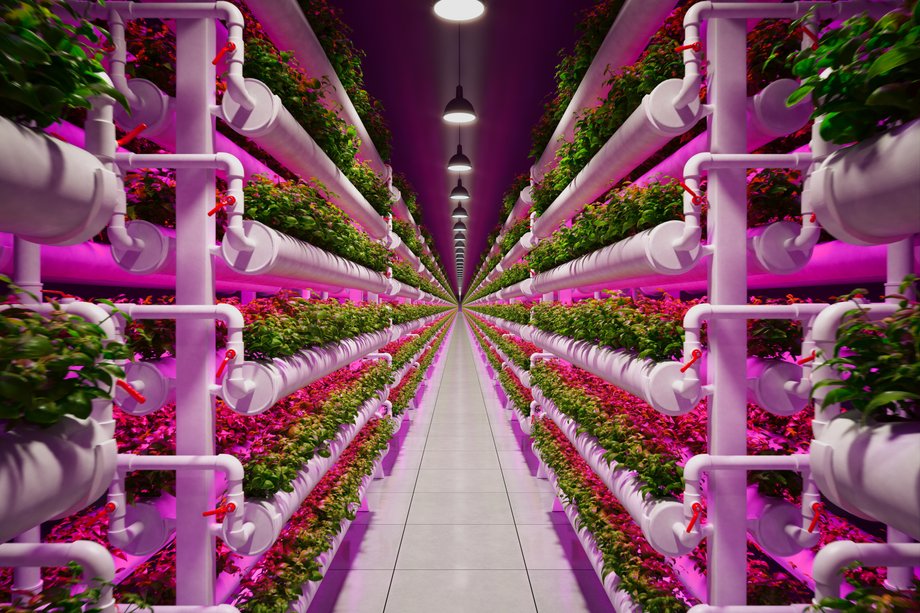
The hydroponic vertical farm uses the maximum surface
|
Dabarti CGI / Shutterstock
It should be remembered, however, that although vertical farms eliminate the need for pesticides, their hermetic environment also carries a risk: if there is an infection or attack of pests, pathogens can spread quickly, and the lack of natural barriers and predators makes it difficult to fight the threat. In practice, this means the need for constant monitoring, biosecurity and expensive detection systems.
Urban agriculture in Singapore
Singapore is a leader among countries investing in high -sets urban agriculture, which wants to produce 30 percent locally. food until 2030, although it currently produces less than 10 percent, government investments and innovations of companies such as Artisan Green, City Sprouts and Eco-Ark show that even in a country without fields you can grow vegetables and breed fish and insects. But – as local authorities admit – the cost of such food can be four times higher than imported, but from conventional crops and breeding.
Urban agriculture is not only plants. The Singapore company INSECTTA processes organic waste into feed and biomaterials thanks to Much breeding. In turn, the floating Eco-Ark farm uses solar energy and closed water circuits for fish breeding, limiting the impact on the marine environment.
Urban agriculture also has social functions. In city social gardens, residents grow vegetables, share yields and gardening knowledge. These projects support the building of the community and the inclusion of groups at risk of exclusion, such as the elderly, migrants or people with disabilities.
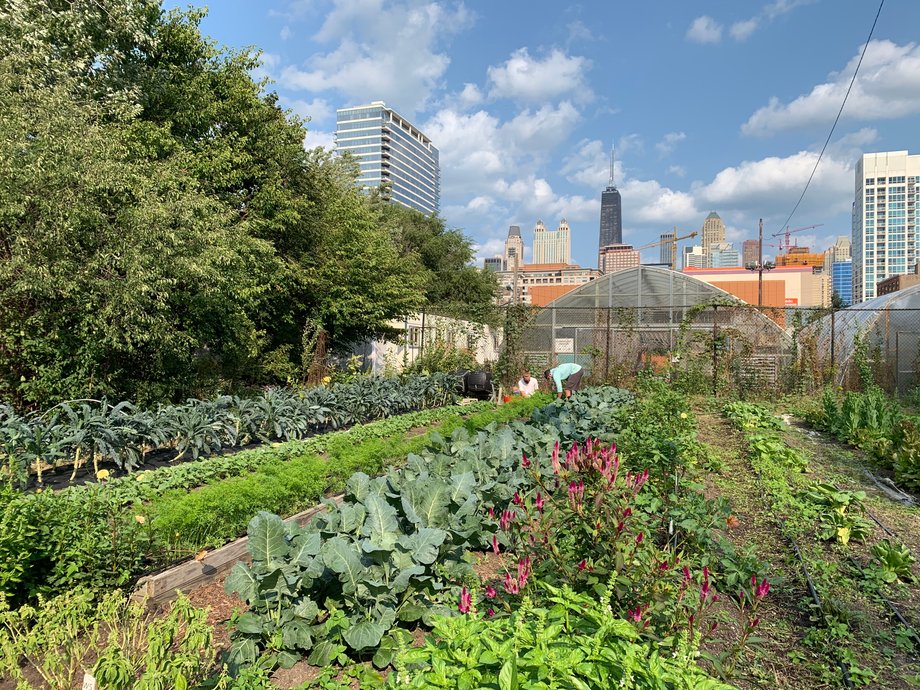
Municipal Social Garden in Chicago
|
360 / Shutterstock
Food production in the city is an expensive investment
In recent years, many companies from this sector have suffered large financial losses or collapsed: American APPHarvest, Kalera, Bowry Farmings, or Infar founded in Berlin – they all attracted hundreds of millions of dollars of the investment, but were unable to achieve profitability. High investment expenditures meant that a kilo of vertical farm lettuce cost up to five times more than from the field.
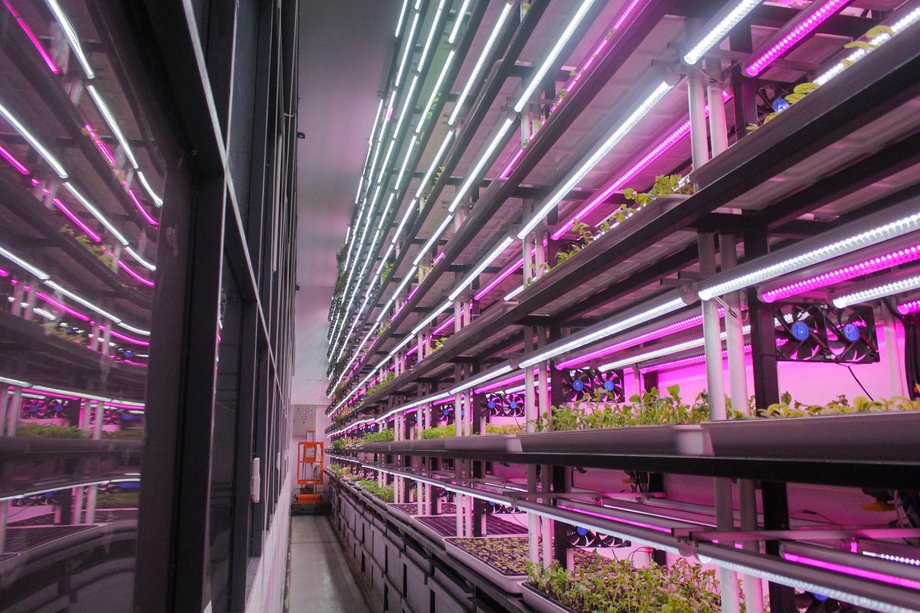
Some urban farms, like the one in Alam Sutera in Indonesia, supply directly restaurants
|
CEACECT / SHTERSTOCK
Energy costs remain the subject of the dispute – according to some analyzes, they constitute only 10 percent. total food production costs, while other sources talk about up to 55 percent. participation in operating costs. The discrepancy may result from differences in the level of automation, local electricity prices or calculation methodology.
Many players have also overestimated the scalability of the model, investing in huge objects and complex automation before confirming their profitability on a smaller scale. Treating farms like technological startups turned out to be fatal – agriculture has a completely different logic than software.
There was also no strategic approach to the selection of crops. Most farms focused on deciduous vegetables, such as lettuce or arugula, which have low margins and it is difficult to compete with them with field production.
Strawberries de luxe and premium tomatoes
One of the exceptions that shows an alternative path is Oishia-a Japanese-American company specializing in strawberry cultivation by vertical method. Its founders did not focus on the mass production of lettuce, but on the niche: luxury strawberries inspired by Japanese varieties, known from intense taste and quality.
Their New York farm was founded in a former plastic production plant and is powered by solar energy. Thanks to the analysis of data, AI and dust monitoring robots, Oishia reaches 95 percent. effectiveness and collects fruit throughout the year. At the same time, they managed to increase the yield from one plant five times, and the price of their products dropped from $ 50 to $ 10 per package. Recently, the company has expanded production with Cherry tomatoes.
Green revitalization or greenwashing?
Proponents of Urban Farming emphasize its role not only in the food system, but also in the revitalization of urban spaces. ARUP designers propose to transform office vacancy, department stores and halls into farms, which can also perform educational, social and gastronomic functions. In this sense, urban agriculture is part of the philosophy of circular economy, reconstruction of local communities and ecological design of cities of the future.
Skeptics, however, emphasize that without a technological breakthrough – especially in the field of energy and automation – vertical farms will not go beyond the phase of the experimental, luxurious curiosity.
Contrary to appearances, vertical agriculture is not always more environmentally friendly. If the farm does not fully use renewable energy sources, its carbon trace may be higher than in the case of traditional agriculture. And even if it is powered by green energy – there is a question about the alternative cost: is it better to spend pure energy on the production of lettuce in the hall, or maybe on the decarbonization of the transport sector or industry?
Urban agriculture will not replace arable fields, do not feed everyone or solve the climate crisis. But it can be an important element of local immunity, especially in sensitive regions (such as the Middle East or Asia) and where politics supports green innovations. Realistic vision is not the self -sufficiency of cities, but local production with effective energy management, reasonable selection of crops and integration with the needs of residents.