The rotation of the earth continues to accelerate. Tomorrow could be the shortest day in history, exceeding the record set on 9 July

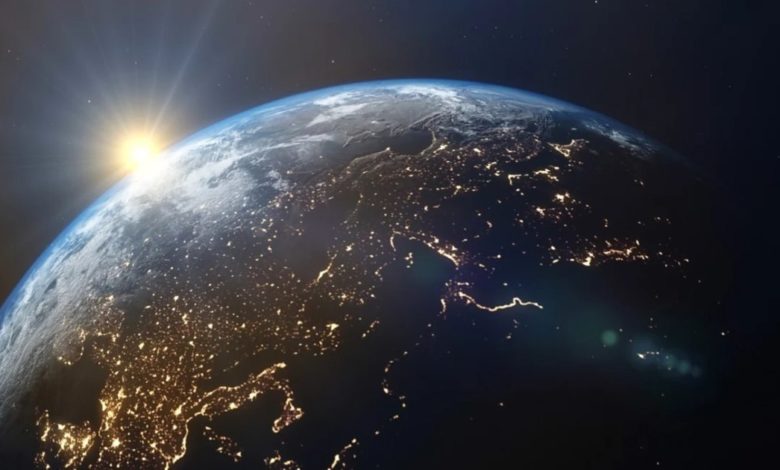
The researchers announced that the day of July 22 could be the shortest day in history, exceeding a record set two weeks ago.
Photo: Shutterstock
This is because the rotation of the Earth continued to accelerate, and it is expected to be even faster than July 9, when the day was 1.3 milliseconds shorter than normal, writes the Daily Mail.
New data revealed that the Earth seems to have rotated and faster a day later, on July 10, which makes the day with 1.36 milliseconds shorter than usual.
A millisecond is equal to a thousandth of a second, which is so impossible to measure that an atomic clock is needed to follow the numbers, measuring what is called “Duration” or Lod.
Lod marks the time needed for the earth to rotate once, until millisecond. Normally, this process takes exactly 86,400 seconds, or 24 hours, to complete.
However, the rotation of the Earth has accelerated in recent years. Although the cause is still a mystery, new NASA researches have suggested that it could be related to the gravitational attraction of the Moon.
The major speed increase this summer has led to the possibility that scientists have to add a negative intercalation second in the calendar by 2029, which means that our watches will be deleted by one second to keep them synchronized.
Although the small change may seem insignificant, the researchers found that the shorter day can affect everything, from the satellite systems and the precision of the GPS to the way we measure the time itself.
What affects the ground rotation
The rotation of the earth is affected by a number of different factors, both on the planet and in space.
Potential motifs include changes in the atmosphere, melting glaciers around the world, which changes the volume of water, a change of movement inside the Earth's metal core and a weakened magnetic field.
NASA researchers have also suggested that this year's acceleration is actually a result of the fact that the Earth hit “The ideal orbital point ” of the Moon, which causes the planet to receive a small speed increase.
Before this recent acceleration of the ground rotation, the planet was slowly slowing, because of the gravitational attraction of the Moon, which extended our days in the 24-hour cycle that we are living now in modern times.
Geologist Stephen Meyers, a professor at the University of Wisconsin-Madison, found that, as the moon goes away, its gravitational impact on the Earth will make the days gradually longer.
However, scientists have recently observed variations in the rotation of the planet, causing the planet's acceleration in 2020, 2022 and 2024.
On July 9 and now again on July 22, the Moon will be at the farthest point by the Earth's equator, which changes its gravitational attraction on the axis of our planet.
In simpler terms, the moon spinned the earth like a van, holding the planet in the middle, which is usually closer to the Moon than the North or South Poli.
On July 22 and again on August 5, the gravity of the Moon will exert a stronger attraction on the Earth's poles, practically rotating our planet at its upper part, which makes it natural to rotate faster.
The fastest day registered so far was a little over a year ago, on July 5, 2024, when the Earth turned 1.66 milliseconds faster than the 24 -hour standard.