
The world should brace for shocks. Donald Trump has a proven weapon


Over the past three months, Trump has announced at least five times plans to raise tariffs on various countries — Canada, China, France — in an attempt to force them to subordination to his foreign policy goals. Not only did the White House not implement these tariffs, it also rolled back other existing or planned tariffs on certain foods, furniture and computer chips to address concerns about domestic prices.
Trump's latest — and most high-profile — change in stance on the tariffs he threatened eight European countries over Greenland came just a day after markets plummeted on news of a potential trade war between the United States and Europe. Treasury Secretary Scott Bessent spent much of Tuesday trying to argue that markets were spooked by Japanese bonds, not Greenland, but Trump's own comments at the World Economic Forum in Davos, Switzerland — coupled with the tariff rollback and subsequent stock market rebound — suggest otherwise.
This underscores the diminishing returns and growing risks of using Trump's favorite diplomatic tool in 2026, in the run-up to mid-term electionswhich will likely depend on the economy and cost of living pressures. And these may deepen as a result of new trade wars and market instability.
– Affordability issues have become a huge problemthat needs to be confronted, said a former USTR (Office of the United States Trade Representative) official who now lobbies the administration on trade policy and who asked not to be identified. — Public opinion linked tariffs to affordability.
Dangerous consequences
But while business leaders are relieved that the White House has backed off its most extreme tariff plans, they warn a sharp change in exchange rate has economic consequences. Even some of Trump's close associates sound the alarm that the threats themselves have a negative impact — especially when they are directed at the country's most reliable trading partners.
“The erosion of sentiment in allied countries toward doing business in the United States is real,” said Neil Bradley, vice president of the U.S. Chamber of Commerce. “That in itself has consequences.
Over the past few months, Trump has rolled back several of his signature tariffs, exempting more than a thousand agricultural products that cannot be grown in the United States. In addition, it suspended planned tariff increases on consumer goods such as upholstered furniture.
Last week, Trump also delayed potential broad tariffs on key minerals and semiconductors, focusing instead on issuing executive orders to build a domestic supply chain. Meanwhile, the White House has yet to impose any of the tariffs the president announced on social media over the past few months: on countries doing business with Iran, on Canada in retaliation for anti-tariff advertising, and on French wines and champagnes that have not yet been hit by tariffs.
White House aides say Trump backed down on his promise to impose tariffs on Greenland just because he achieved what he wanted: the concept of an Arctic agreement.
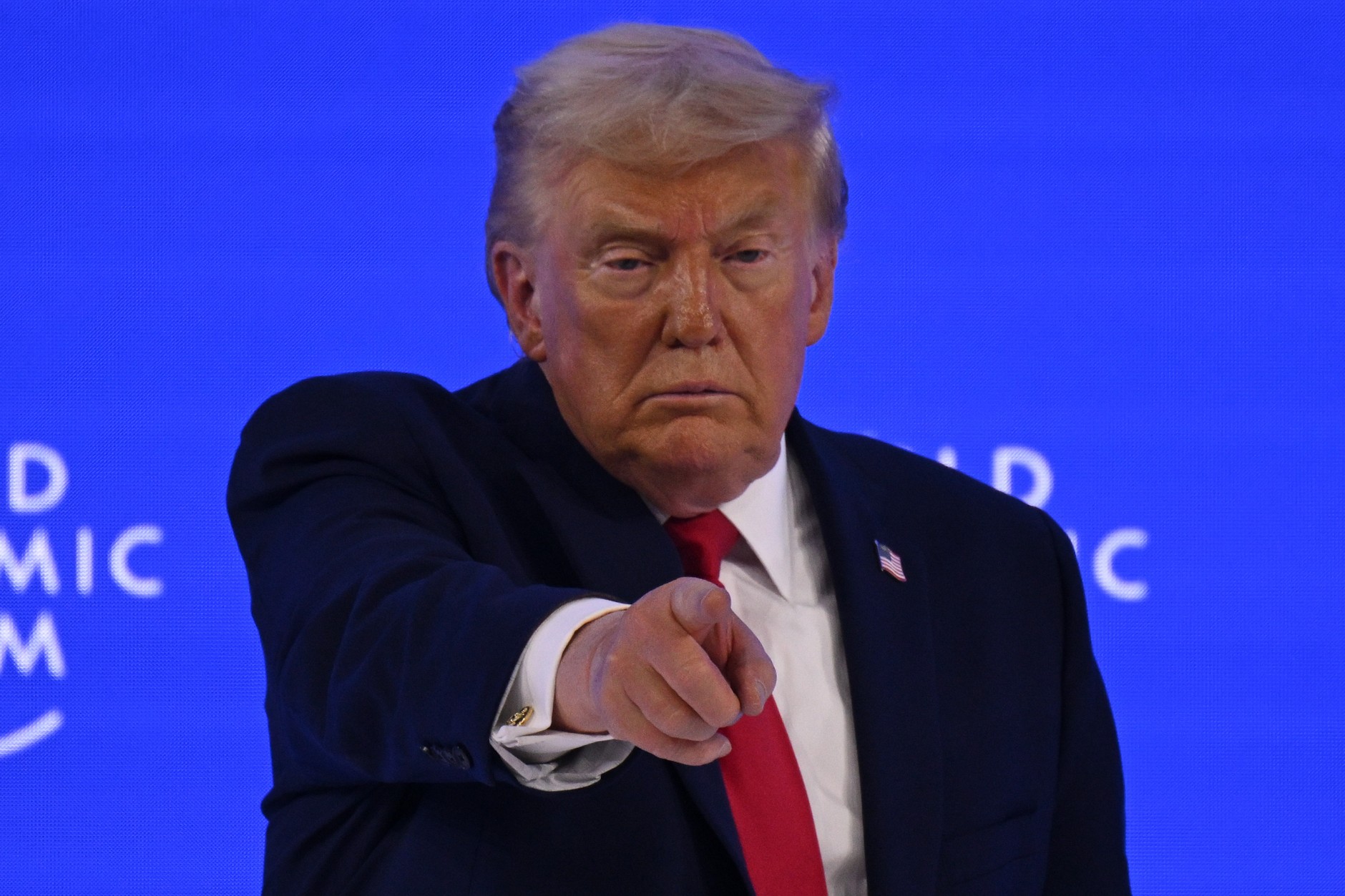
US President Donald Trump in Davos, January 21, 2026.Harun Ozalp / Getty Images
Trump's strategy
People close to the president also reject the idea that the president has been inconsistent in applying tariffs at all. They argue that Trump is following a familiar strategy: threaten tariffs, force concessions, and then strike a deal. One piece of evidence is Trump's September threat to impose a 100 percent tariff on brand-name drugs, which led to pricing agreements with individual drug companies.
— America's average tariff rate has almost increased tenfold under Trump, who used tariffs to reach more than a dozen trade and peace deals around the world, White House spokesman Kush Desai said. — President Trump is always trying to make a deal, but he has proven time and time again that he is not afraid to use all the tools at his disposal to put Americans and America first.
Stock investors have coined a less benign term for this — TACO, short for “Trump always chickens out.”
“He talks his sharpest right before he gives up,” said William Reinsch, a trade policy expert who served as undersecretary of state for commerce in the Clinton administration. — That's why someone came up with the acronym TACO last year.
Despite uncertainty about the president's trade agenda, markets remained relatively stable in the second half of 2025, thanks in part to this confidence.
But last week's events have shaken a business community that has welcomed relative calm — and no tariff increases — over the past few months, after a year of fierce tariff threats and rushed trade negotiations.
Uncertainty in the EU
— The rapid escalation of threats to impose retaliatory tariffs on both American-produced and imported alcohol is causing significant uncertainty in our industry at a time when domestic sales and exports of alcohol are already declining, lamented Chris Swonger, president and CEO of the Distilled Spirits Council of the United States.
The value of trade relations between the United States and Europe, amounting to $1.5 trillion. (PLN 5.3 trillion), it also seems more and more fragile. EU diplomats say the threat to impose tariffs violates the terms of the trade deal they reached with the US last summer. In response to Trump's threat of tariffs on Greenland, the European Parliament suspended the ratification process of the agreement this week. Trump administration officials were already irritated by the slow pace of European action.
— Europe has done nothing to implement the trade agreement. Nothing, US Trade Representative Jamieson Greer said in Davos earlier this week. — The Europeans have not reduced any customs tariffs for us. They have their procedures, I understand that. My point is that these actions do not change the status quo of outcomes.
Speaking at an event hosted by Axios on Wednesday, Greer also rejected allegations that Trump is withdrawing from the broader trade agreement. — We have a trade agreement that we agreed with the EU last summer. It was not comprehensive. “It wasn't an agreement that said, 'Here's the agreement, and if there are any other issues, we just won't discuss them. We won't talk about them and we'll pretend they don't exist,'” he said.
But some outside observers say Trump's latest actions could raise questions among other trading partners and businesses about the durability of trade deals with the administration.
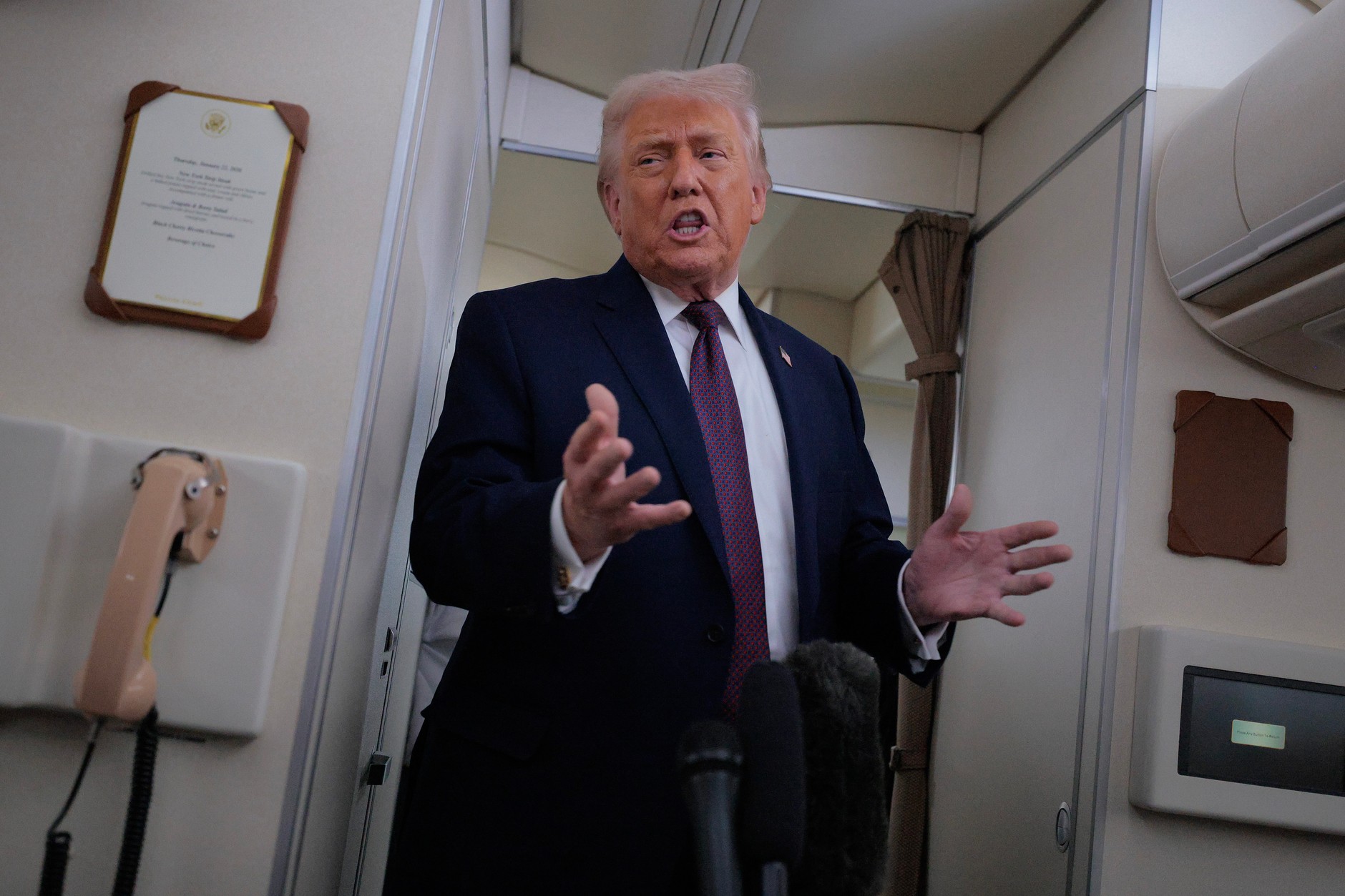
US President Donald Trump returns from Davos, January 22, 2026.Chip Somodevilla / Getty Images
Economic vision
— I think that this whole situation can unfortunately leave us permanent damage in the form of loss of trust said Peter Harrell, who served as senior director for international economics on former President Joe Biden's National Security Council. — Not only among foreign government officials, but also among global investors who are starting to become a little more concerned about political risks in the United States.
Indeed, Danish pension fund AkademikerPension made headlines this week (and faced heavy criticism from Bessent) by announcing plans to sell all of its US assets.
At home, Americans are still worried high costs. According to a study by the University of Michigan, consumer sentiment dropped by 25%. compared to January last year. While Trump continues to dismiss concerns about affordability as a “hoax,” White House Chief of Staff Susie Wiles told reporters this week that the president plans to limit his foreign travel in the near future and instead visit different parts of the United States each week to promote his economic achievements.
Stephen Lamar, president of the American Apparel and Footwear Manufacturers Association, suggested the president consider how his recent series of tariff threats affect that economic vision.
— Tariffs are finally here a tax on American consumers, American businesses and American workers employed at these companies, said Lamar, whose trade association represents major clothing brands such as Ralph Lauren and Levi Strauss. — Given these rates, tariffs should not be used as a foreign policy tool without consensus between Congress and the administration and clearly articulated, widely shared policy goals.


