The world according to Musk. Tesla's boss has a vision for the world. “Era of Prosperity”


For years, the World Economic Forum in Davos was the height of boredom for Elon Musk – “boring as fuck”, as he once called it on his X platform. He ridiculed the “self-proclaimed world government” that no one elected, and provocatively asked: “are they trying to be the boss of the Earth!?”
Now Musk breaks his taboo regarding the forum: at the last minute, however, it ends up on the program, and not anywhere, but in the large hall of the convention center in Davos.
Musk wouldn't be himself if he didn't set a completely different tone at Davos. While concerns about political partnerships and the division of economic labor dominated the debate almost everywhere, the world's richest man announced perhaps the most radical promise heard by world economic leaders this week: We are not heading towards an abyss, but towards an “era of abundance”.
In a conversation with BlackRock CEO Larry Fink, who recognized Musk as the most successful entrepreneur of the century, the CEO of Tesla and SpaceX outlined a future that couldn't be brighter. Of course, artificial intelligence and robotics technologies must be approached with caution. — We don't want to end up like a James Cameron movie, Musk said, referring to “Terminator” and then returning to technological euphoria.
For Musk, this future is not a distant utopia.
“We live in the most interesting period in history”
Musk's vision is there radical: wants to sell already in 2027 humanoid robots private persons. — Who wouldn't want to have a robot that takes care of children, pets or elderly parents? – he asked rhetorically. When humanoid robots take over, productivity will increase so much that goods and services will be abundantly available to everyone, Musk said.
Since economic productivity is the product of the number of workers, i.e. humans and robots, and their productivity, global gross domestic product will increase significantly. According to him, this would effectively eliminate poverty.
“We live in the most interesting period in history,” Musk exclaimed to the audience.
For Musk, this future is not a distant utopia, but a tangible reality. According to him, by the end of 2026, robots are expected to take over more complex tasks in industrial environments. Autonomous cars are a “fundamentally solved problem” and their entry into service in Europe is just around the corner.
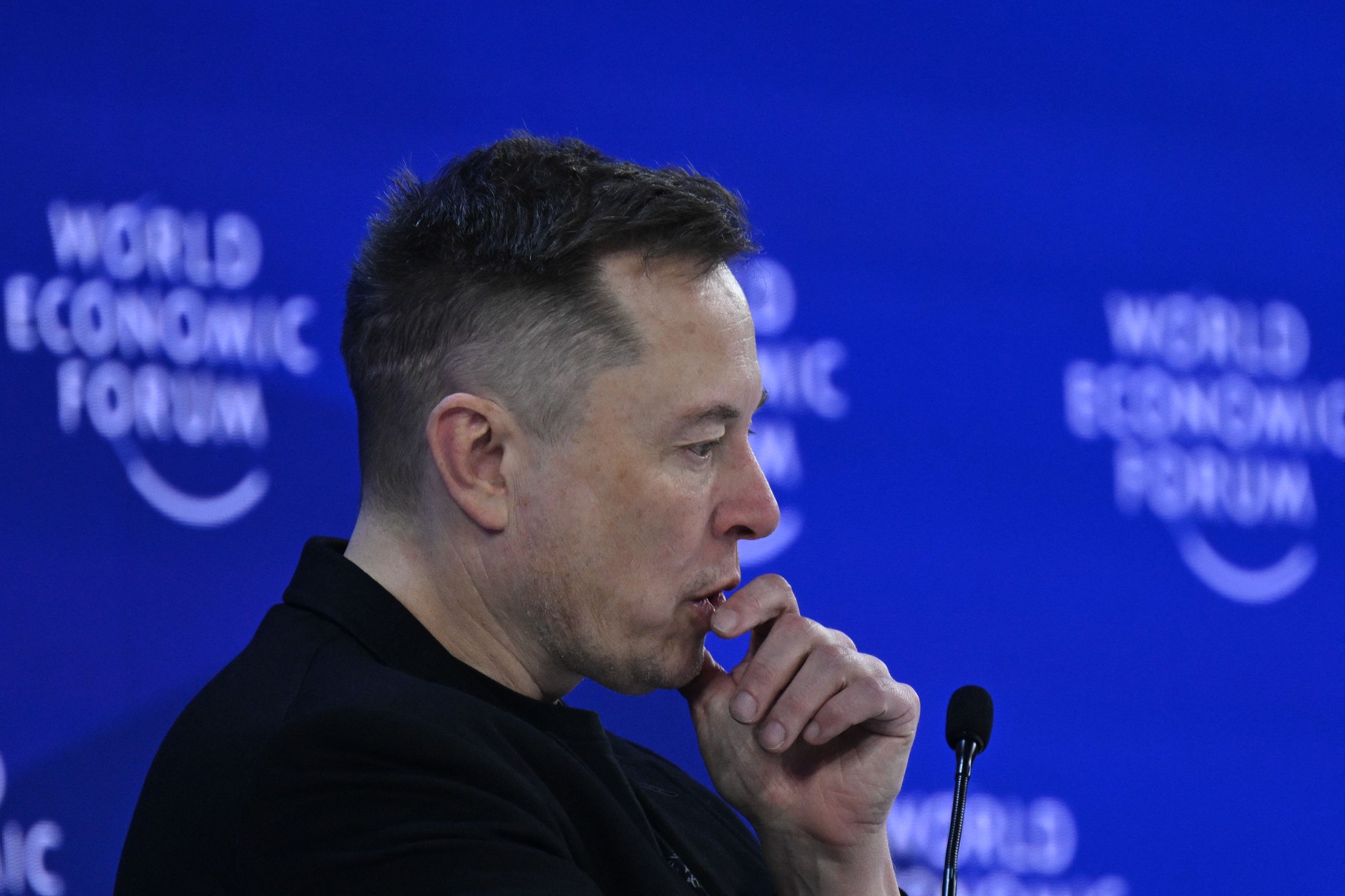
Elon Musk at the World Economic Forum in Davos, January 22, 2026.Harun Ozalp / AFP
Musk's solutions
But his predictions go far beyond transportation and domestic help. — In 2030 artificial intelligence will be smarter than all of humanity combined – he said. In two to three years, the use of artificial intelligence in space will be the cheapest because solar energy works there five times more efficiently than on Earth.
Despite all this euphoria, Musk also pointed out some critical ones bottlenecks your vision. While AI chip production is growing exponentially, electricity production is only increasing by three to four percent per year.
“We will soon produce more chips than we can power with electricity — perhaps as soon as this year,” he warned. The exception is China, which has a huge increase in electricity consumption and 100 gigawatts of nuclear power.
Musk sees the solution in the massive expansion of solar energy. He calculated that an area of 160 by 160 km of solar panels would be enough to power the entire United States. Virtually all the energy in the solar system comes from the sun.
Optimists
But Musk's optimism isn't limited to the economy. He talks about preserving the “light of consciousness.” His pursuit of Mars and the stars is not an escape, but a final escapean expression of human curiosity and joy of life. Even aging is not fate for him, but “a problem that can be solved.”
However, Musk is not the only optimist in Davos. For example, just before the World Economic Forum, the McKinsey Global Institute released a comprehensive report titled “A Century of Plenty: A Story of Progress for Generations to Come.” Economists from this consulting firm predict “a world in which every person enjoys at least today's standard of living in Switzerland.”
In their opinion, this thesis has been tested and “yes, it is physically possible.” “We will have enough energy, food, metals and minerals. We will be fast enough in our innovations – and we can achieve all this while protecting our planet,” the authors say.
This is a message that Elon Musk also supports. — The optimists were on the right side of history and we believe it will be like this again – he said. Or, as Musk said at the end of the public part of his short visit: “when it comes to quality of life, it's better to be optimistic and wrong than pessimistic and right.”