Thirty seconds until the disaster: how the Boeing 787-8 of Air India aircraft collapsed. “Something like this has never happened again.”

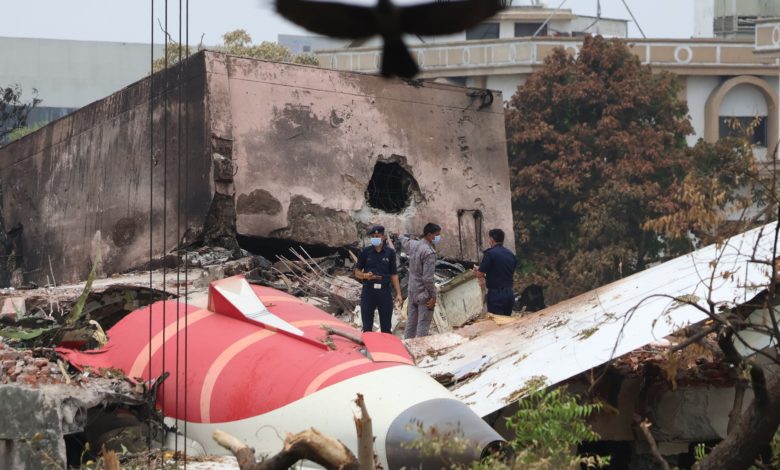
Less than 40 seconds. So long lasted Air India 171 before the Boeing 787-8 plane collapsed into a dense populated neighborhood in the Indian city of Ahmedabad, in one of the most shocking aviation disasters in India, reports the BBC.
Investigators now have the dark task of researching the wreck and putting together the information provided by the voice recorders and the flight data of the Boeing 787-8 “Dreamliner” aircraft, to reconstruct what went catastrophic in the after-taking seconds.
According to the international norms established by the International Civil Aviation Organization (ICAO), the UN Aviation body, a preliminary investigation report must be published within 30 days, and the final report should, ideally, completed in 12 months.
The aircraft with the destination of London Gatwick, piloted by Captain Sameet Sabharwal and the co -pilot of Clive Kundar, took off the last Thursday from the city of Ahmedabad in western India, at the local time 13:39. He had 242 people on board and almost 100 tons of fuel. Shortly after, an emergency call (“Mayday”) was transmitted from the cabin. It was the last communication. There was a quick loss of altitude and a collapse that led to a huge explosion.
Captain Kishore Chinta, a former investigator at the Indian Bureau of Investigation of Aviation Accidents (AAIB), considers this accident as “the rarest of the rare ones” – a controlled flight that hits the ground just 30 seconds after take -off. “As far as I know, something like this has never happened again,” he told the BBC.
The first tracks to be investigated in the event of Air India Flight
Did they give up both engines due to impact with birds or fuel contamination? Were the flaps incorrectly extended, reducing the portance of an air -loaded plane? Was there an irregularity in terms of motor maintenance? Or an involuntary crew action interrupted the fuel supply of both engines?
Investigators will analyze all these possibilities and others. Investigations in case of plane accident are based on triangulation and elimination – the correlation of physical evidence from the wreck with the yield data recorded by the aircraft devices, to build a coherent image of what went wrong.
Each carbonized cable, damaged turbine pale, aircraft maintenance journal and signals and sounds recorded by “black boxes” – flight and voice data recorders – will be examined.
The first indications from the ground could come from the two engines, three investigators told the BBC.
“It can be deduced from damage if the engines generated power to impact – the turbines are different when they rotate at high speed,” explains Peter Goelz, former general manager of the National Transport Council (NTSB) in the US. “This is the first indication of what went wrong,” he points out.
Turbines are essential rotary components that play a key role in extracting energy to generate traction.
“If the engines did not produce power, the investigators have a serious problem – and the attention will suddenly focus on the pilot cabin,” explains Goelz.
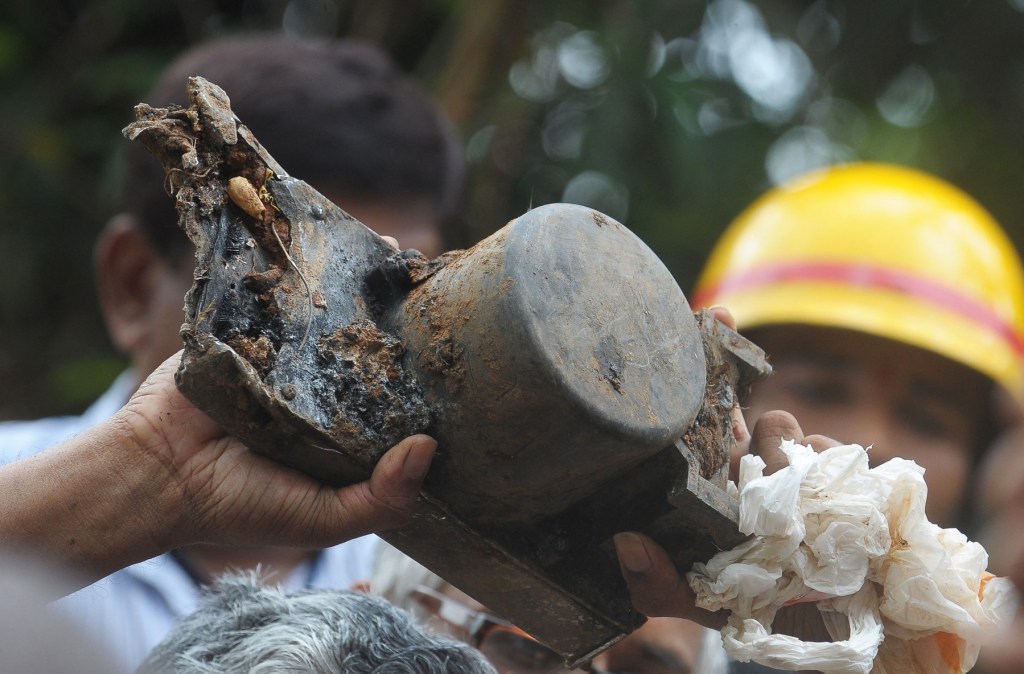
Black Boeing 787-8 plane boxes were recovered shortly after collapse
What happened in the cabin will be revealed by the advanced flight recorders of Boeing 787 (EAFR) – or “black boxes” – who, investigators, will help to reconstruct the story. Indian authorities say the recorders have been completely recovered from the place of collapse.
These devices record detailed flight and audio data from the cabin – from pilots radio calls to ambient sounds. The vocal records come from the individual microphones of the pilots, the radio transmissions and an ambient microphone that captures the background noises in the cabin.
The data recorders follow the position of the landing train and flaps, traction settings, engine yield, fuel flow and even activation of fire extinguishing buttons.
“If the recorder shows that the engines were operating in maximum power, then the attention will turn to flaps and volumes. If they are found in the correct position, then the investigation becomes extremely difficult,” says Goelz.
Flaps and volumes increase the portance at low speeds, helping the plane to take off and land safely, allowing them to fly slower without losing portance.
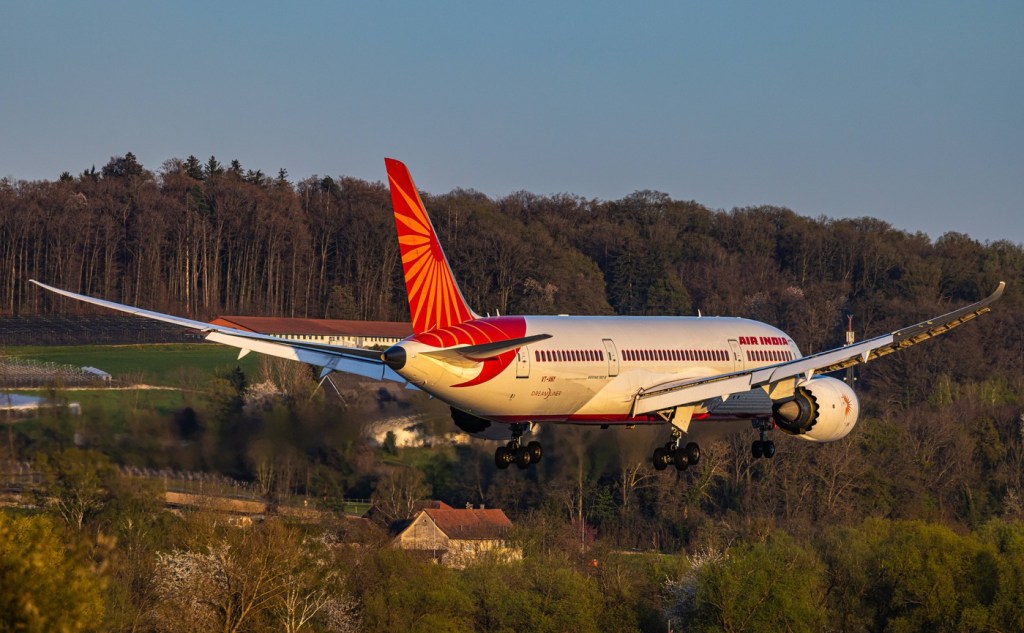
Concerns for boeing and aeronautical industry
“If the indications lead to a problem in the flight management control system, this would raise serious concerns – not only for Boeing, but for the entire aeronautical industry,” explains the former director of the NTSB.
The flight management system for a Boeing 787 is the automated assembly that manages navigation, efficiency and guidance. It integrates data from many sensors to optimize the flight trajectory and the efficiency of fuel consumption.
With over 1,100 Boeing 787 aircraft in the world operating in 2011, investigators must determine if it was a systemic problem that could affect the entire global fleet – or an isolated failure, unique to this flight. “If the indications lead to a system problem, the regulatory authorities will have to make harsh decisions very quickly,” emphasizes Goelz.
So far, there are no indications on any guilt. The Ministry of Civil Aviation of India said on Tuesday that a recent inspection of the Boeing 787 Air India – 24 out of 33 aircraft have been checked so far – “has not shown any major safety problem,” adding that the maintenance aircraft and systems meet the standards in force.
President and CEO of Boeing, Kelly Ortberg, said on June 12: “Boeing will leave the Indian aircraft investigation (AAIB) to provide information on Air India 171, according to the ICAO protocol.”
The data analysis will take place in the AAIB laboratory in Delhi and will be led by Indian investigators, with the support of the Boeing experts, the engine manufacturer GE, Air India and the Indian regulatory authorities. Investigators from the US (NTSB) and the UK will also participate.

Each plane piece will be tight and analyzed with meticulousness
“From my experience, teams can determine what happened quickly,” says Goelz. “But understanding why it happened can take much longer,” he says.
The wreck could offer other clues. “Each piece – wire, screw, nut – will be collected with meticulousness,” says Captain Chinta within AAIB.
Usually, the wreck is moved to a hangar or in a nearby secure installation, and is “stretched” to identify the muzzle, tail and tips of the wings, then reassembled. Depending on what the flight and vocal records will reveal, a complete reconstruction may not be necessary.
Experts remember that the importance of wreck varies from one accident to another. For the flight of Malaysia Airlines MH17, shot down above the east of Ukraine in July 2014, it was essential – the reconstruction of the muzzle clearly revealed damages caused by Şrapnel from a rocket made in Russia.