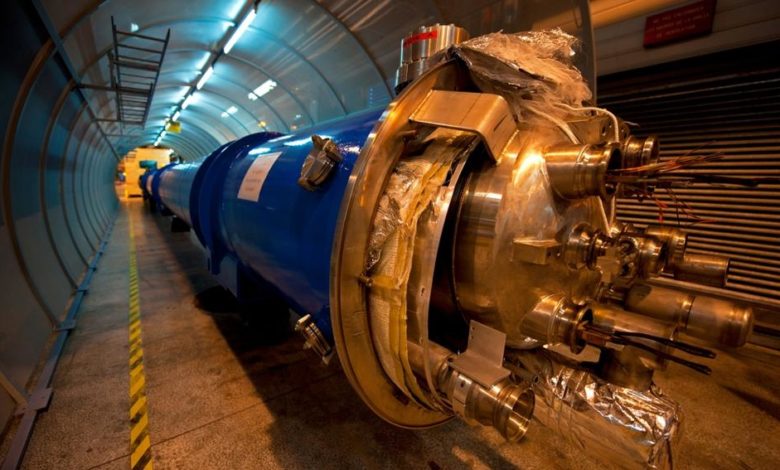
Next year, in the large Hadron collide (LHC) in CERN, technical downtime will begin, which will last – together with the start – almost four years. Dr Malika Meddahi from CERN explains PAP that the modernization of HL-LHC costs about 1 billion francs (about PLN 4.5 billion) and will allow you to collide more particles in a smaller volume than today.
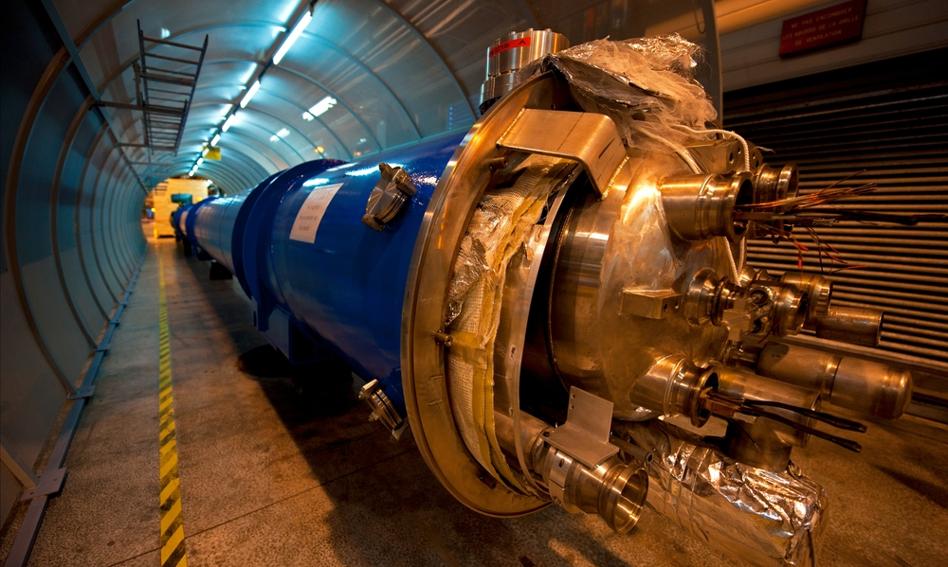
“As part of the modernization, which will start next year, we do not plan to increase the energy of collisions, but the number and quality of collisions,” emphasized Dr. Malik Meddahi in an interview with PAP, during a visit to Poland at the Women in Tech Summit perspective conference.
After the modernization, LHC will receive a new name-a large highlight (high-luminosity LHC).
The large Hadron collide is the world's largest particle accelerator. It is located at the European Nuclear Research Center CERN, near Geneva. Two beams of hadrons – charged particles, usually protons – circulate in opposite directions in two separate vacuum pipes, in a tunnel with a circumference of about 27 kilometers, 100 meters underground. The accelerator also works with ions, e.g. lead.
Protons moving in opposite directions collide together at four specially designated points, in the heart of particle detectors. Huge energy is released in the places of collision (currently around 13.6 Teraelektronta – TEV), in which exotic particles appear for fractions of a second – those that existed right after the big explosion. Detectors distributed at collision points record data on these phenomena. An in -depth analysis of this data allows scientists to better understand the properties and impact of elementary particles.
From the beginning it was clear that LHC work would be divided into phases. The first phase of data collection – so -called Run 1 – lasted in 2010–2012. Run 2 took place in 2015-2018. The current phase, Run 3, began in 2022 and will last until June 2026. Between these stages the accelerator passed regular modernization and maintenance work, which increased its reliability and performance and enabled new records.
This time, downtime is needed to improve its light. In the physics of accelerators, lightness means the number of collisions arising during a collision of particles of particles. The new beam will contain not only more particles, but will also be more focused, which will increase the likelihood of collisions. The LHC modernization is to increase the total number of collisions up to ten times. LHC more “light” will allow more accurate measurements of new particles and observation of processes, which until now remained beyond the range of detectors. Thanks to this, it will be possible to detect rare phenomena and broaden our knowledge about the universe at this energy border.
However, greater lightness is serious technological challenges. As part of the modernization, new square magnets are needed to keep the beam, cooling systems must also be improved, and the diagnostic systems of the beam and new devices protection systems implemented so that they do not damage. Detectors and IT systems must also be modernized – so that they cope with the growing number of data for processing.
Dr. Meddahi explained that the complex of four preliminary accelerators, in which the particles are accelerated before injecting them to LHC, has already undergone a thorough modernization that was implemented and successfully launched. Pods in line with the HL-LHC specification are already routinely obtained.
In the LHC ring itself, on both sides of the Atlas and CMS experiments, new superconduible quadrupal magnets that focus the bundles just before the collision will be installed. They will be made of new superconducting material based on the niobi and tin.
“Modernization is a huge undertaking. To install new magnets, we must open all kilometers of the accelerator. At the same time we will carry out maintenance and modernization of the existing infrastructure,” explained Dr. Meddahi.
As explained by Dr. Meddahi, a large part of the research and development activities in CERN currently focuses on making new devices more efficient-that they use less energy and, where possible, less water for cooling. Energy recovered from the installation could be used, for example, for heating infrastructure in nearby towns.
The expert from CERN also described what would happen during a long downtime. First, the whole system must gradually warm up from minus 271 degrees Celsius to room temperature. “Only then will hundreds of people be able to enter the tunnel every day and work on their equipment. This is a huge task. Then everything must be combined, tested, cooled again – which takes a few months – and tested again. Preparation of the machine for restart after completing the work will take almost a year” – she noted.
The researcher added that for scientists cooperating with CERN the break in LHC does not mean a break at work. They will be involved in the design, assembly and testing of new components. Data collected in the ongoing phase of Run 3 will also be analyzed – which is a much more time -consuming process than just collecting data.
“What we do at our Institute is real learning for peace. People from 110 nationalities work here who put geopolitics to the side and unite to better understand where we come from, what particles exist during the great explosion, where the missing mass and energy of the universe are found … These are all fascinating questions and we should deal with them. She conducted in these studies – they have a really great value, “said Dr. Meddahi.
The Polish press agency was the media patron of the Women in Tech Summit perspective (June 4-5).
Ludwika Tomala (PAP)
lt/ bar/ mhr/