The Pope spoke about artificial intelligence, when more and more people lose faith in it / What are the biggest fears

The Pope's warning about the dangers of artificial intelligence is already coming on a ground of distrust. A major human innovation does not seem to enter public life with enthusiasm and optimism, but with suspicion, fear and a long list of risks. What has changed from previous technological innovations?
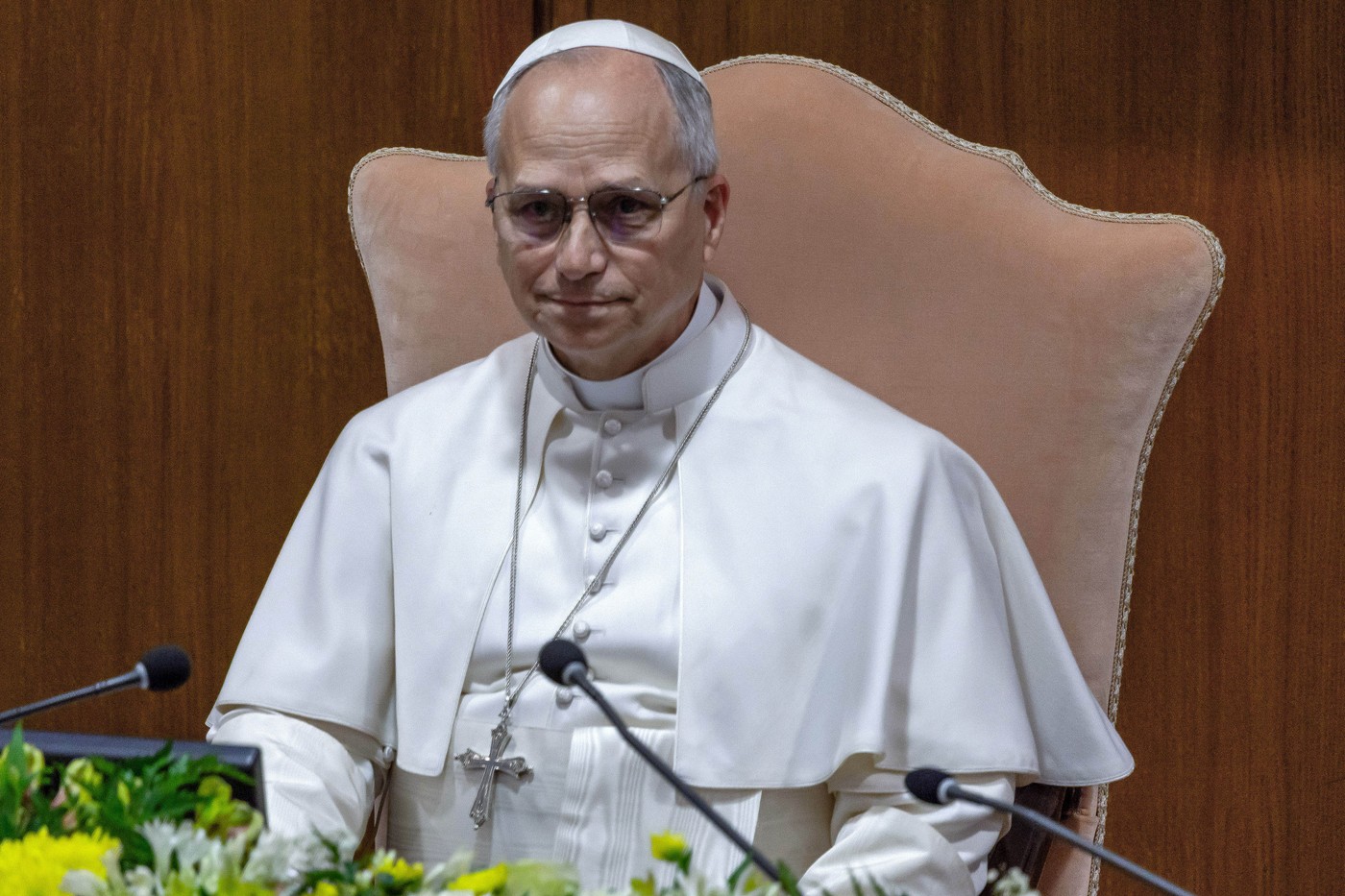
Pope Leo XIV on Monday presented a broad vision of the future of artificial intelligence to political leaders, business and society at large. He warned that AI development must be controlled so that it does not affect human dignity and autonomy.
In an encyclical of more than 40,000 words, he pointed out that technology is not in itself hostile to man, but can become problematic if it is guided solely by profit, especially when it ends up replacing jobs without protection or conversion for employees.
It called for regulation of private companies in the field, retraining programs for workers, education to develop critical thinking about AI, and measures to protect children from fake, violent or sexualized content.
This message from the Pope does not appear in a vacuum, but in a context where more and more people are losing faith in artificial intelligence and more and more are becoming aware of the possible harmful effects it can have.
Half of Europeans believe that AI will have a negative impact on society
In the United States, a Pew Research Center poll shows that about half of Americans say they are “worried rather than excited” about the rise of AI. The level of concern has increased significantly in recent years, from 37% in 2021 to 50% today.
The situation is not different in Europe either. Recent data shows that only about 25% of Europeans say they would feel comfortable with AI taking over administrative tasks at work, and almost 50% of highly educated Europeans think their jobs are now at risk because of AI. Half of Europeans believe that AI will have a negative impact on society.
Another study shows that Europeans are skeptical of AI and when it comes to information. Even though nearly half of respondents (49%) say they have used AI tools like ChatGPT for political topics, only 30% believe the benefits of AI outweigh the risks. At the same time, perceptions of the impact on democracy are divided: only 32% see AI as an opportunity rather than a threat, while 39% already see it as a risk.
The difference from previous waves of technological innovation is considerable. It is enough to think about how the Internet was perceived in the 90s and early 2000s. It entered the public sphere almost as a universal promise. It was presented as a technology of emancipation: connecting the world, democratizing information, creating opportunities. The possibilities were endless. Even when there were fears, they were secondary to a dominant imaginary of progress: more freedom, more access to information, more power for the individual.
For Romanians, the Internet was equivalent to the West
In Romania, techno-optimism arrived a little later, but perhaps even more intensely, precisely because it came after the post-communist transition. The Internet was associated with the idea of entering the world, with rapid modernization and access to the West.
In the early 2000s, the advent of broadband connections, internet cafes and then the first online services was accompanied by a strong sense of recovery from the historical gap. For much of the public, the Internet was a symbol of normalization and integration into a supposedly more advanced world.
It's a stark contrast to how we now view the advent of AI in our lives. The advent of the Internet has been accompanied by an almost uncontested narrative of progress. It was a time when technology was still perceived as a relatively neutral tool, and its social effects seemed largely dependent on how people chose to use it, not on an intrinsic logic of the system.
In the case of AI, this neutrality is much harder to find. Technology is seen differently: it can replace work, generate content, influence decisions and shape information without direct human intervention. There are things that inevitably completely change the trust ratio. We are no longer talking about an infrastructure that facilitates human action, but about a system that risks starting to make decisions instead of people.
AI is eroding an already eroded trust in technology
Beyond that, AI is emerging in a world already scarred by the side effects of the previous digital revolution. Social media, recommendation algorithms and the attention economy have over time eroded trust in the way these technologies have shaped our society. AI can seem like an acceleration of an already uncomfortable transformation.
Facebook scandals, debates about algorithmic manipulation, the explosion of misinformation, massive collection of personal data and political polarization have profoundly changed the way the public views technology. For many people, Big Tech is no longer synonymous with progress, but with a lack of control, and the “move fast, break things” approach is no longer tolerated.
If we look at the labor market, things get even more complicated. This is where the tension between industry discourse and public perception is most clearly seen. On the one hand, AI is promoted as a productivity tool, an assistant that streamlines work and reduces repetitive tasks. On the other hand, the same tech ecosystem conveys to investors the idea that the same systems will reduce costs by replacing part of the workforce.
It is possible that, in this context, the big question of the AI revolution may not be a technological one, but a social one. It remains to be seen whether society will have the patience and confidence to accept the deep integration of AI into everyday life. A technology perceived primarily as a tool of layoffs, digital fraud, information manipulation, or the concentration of power in the hands of a few giant companies may generate resistance and a permanent suspicion of each new step forward. Inevitably, politicians will sense the social climate and adapt to it, and that could bring strong regulation.
These are scenarios, but from what AI has shown us, innovation is no longer met with the presumption that it automatically makes our future better, but rather with restraint and pragmatism.