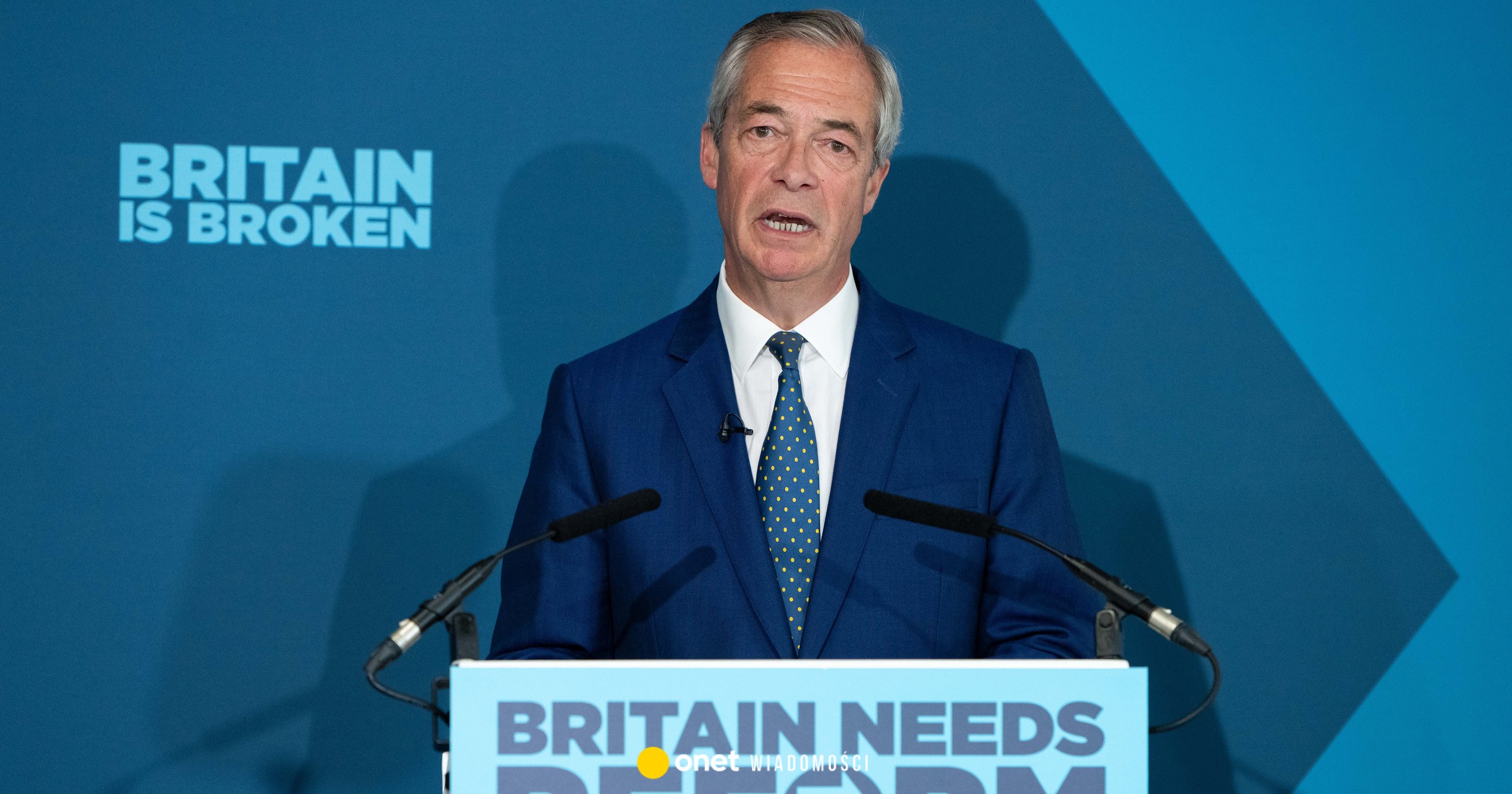
Nigel Farage is a member of the British House of Commons. In the years 2006–2016, with a short break, he was the chairman of the United Kingdom Independence Party (UKIP), whose main goal was the exit of Great Britain from the EU. In 2019, he was co-founder and for three years leader of the Brexit Party, which was renamed Reform UK in 2021. From 2024, he serves as party chairman again.
Mathias Doepfner: You have been traveling around the country for eight weeks.
Nigel Farage: Yes. Today I am exceptionally in London – this is my only day here devoted to media appearances and party work. But other than that, I'm on tour. It gives you energy. I talk to tens of thousands of people, hundreds of employees of small businesses – from hairdressers to scrap dealers. And I think that gives me a better sense of where the country is than people in Westminster who only listen to each other. But I also do it because I simply enjoy it.
While you are traveling in England, King Charles met with Donald Trump in the USA. Is this a diplomatic alternative to the British Prime Minister?
Trump loves the royal family, especially the queen. This isn't posing, it's honest. I think meeting her was one of the most important moments in his public life. I think Karol's journey [do USA] was a great success.
He approached it with humor and lightness. Even Melania was smiling – and that's rare. We need better relations with the US. Starmer made a huge mistake when he first banned the Americans from using Diego Garcia [strategicznego atolu na Oceanie Indyjskim będącego częścią Brytyjskiego Terytorium Oceanu Indyjskiego i służącego jako wspólna baza wojskowa USA i Wielkiej Brytanii] to the first attacks on Iran – and then backed down two days later. In the end, the result was the same, except that we angered our most important allies. Without the Americans, let's be honest, we are quite defenseless.
What would change under your rule?
We would have closer relations with the US than we have had in the last 10 years. Of course there would be differences of opinion – but friends argue, families argue too. Trust and personal relationships are crucial.
Is Trump a political role model for you?
Not in everything. But he kept his word. He promised to stop illegal migration at the southern border, and he did it. He promised to move the embassy to Jerusalem and he did so. Many only talk, he acts.
Polarization, attacks and violence are growing. What's going wrong?
This starts in the education system. Schools used to say: here are two points of view, decide for yourself. Today, young people are taught: one is good, the other is bad. This inevitably leads to polarization. And yes, there is the far right. But in the contemporary left, intolerance and sometimes even violence are increasingly accepted. What is being said about me on the internet is extreme – and the police are doing nothing. This creates a culture that is dangerous. After the assassination attempts, Trump showed something that reminds me of Margaret Thatcher: steadfastness. The message is: you will not break us.
Are you concerned about your safety?
I had a serious accident, cancer, plane crash. I have looked death in the eye many times. Once you experience it, you don't think about it much anymore.
Do you feel polarization in the election campaign?
In college towns, yes. Where young people are ideologically shaped, this is clearly felt. But in the rest of the country you meet mostly open and decent people. Extremists are a minority.
Does Starmer have to leave after the local elections on May 7?
Only if we defeat Labor in its strongholds. And that's exactly what will happen. I know it sounds bold, but I believe we will shake up the Labor Party in a way that no one in Westminster has yet truly understood. If I'm right, Starmer will be gone by mid-summer.
Do you want to become prime minister?
Yes. But not because I always dreamed about it. I never aspired to that. However, I believe that this is the only way to bring about real change – on migration, on the economy, on law and order, on respect for culture and history. Right now I think I'm the only person who can make this happen. And the only one who has the courage to actually do it.
The article continues below the video
There is speculation in the UK that you would rather remain an opposition politician than actually take over government responsibility.
I am 62 years old and I have been publicly fighting for issues that are important to me for almost 35 years. I guess you could say that I changed public opinion or the direction of many debates on various topics more than anyone else during this period. Being an outsider, criticizing from the outside, proposing different visions is not enough for me. By the way, none of my constituents have ever voted against anyone – they have always voted for the policy proposals and vision I presented to them. It's time to try to put them into practice.
The Tories claim that your economic policy is not conservative but left-wing.
The same Tories who raised taxes, scared away investors and squandered Brexit opportunities? I don't take their criticism seriously.
Brexit was an economic disappointment.
Our problems do not result from Brexit, but from bad policy. Net Zero, i.e. zero CO2 emissions, has brought us the highest energy prices in the world. We have lost industry, companies have moved out and we have not freed ourselves from EU regulations. Brexit itself is not the problem.
What is your solution?
Energy, energy and more energy. Without cheap energy, there is no industry. We must abolish absurd oil and gas taxes, end Net Zero and harness our own resources. And we should stop repeating the nonsense that our own gas does not change anything. Of course it changes. We currently import gas from America, incurring huge transportation costs. This is absurd.
What do you think about Germany giving up nuclear energy?
It's an act of self-harm, there's no other way to call it.
Should Germany return to nuclear energy?
If they want to be an industrial country again, then yes. Reliable energy is crucial. Look at South Korea, where nuclear energy is used efficiently and safely. Germany will not be able to avoid this.
The AfD is the strongest force in Germany. Is this a conservative alternative?
The AfD is a diverse group. Some are easy to work with, others are problematic. I believe that approaching Vladimir Putin is a mistake. But the cultural core [AfD] — the desire to preserve identity and lifestyle — is justified. He is being unfairly demonized.
How does your vision differ from those of the AfD?
First of all, foreign policy and attitude towards authoritarian regimes. And partly also economic policy. But the emotional core — the need for cultural stability — makes perfect sense to me.
Migration is also a key topic for you.
We voted for border control and then millions came to us [migrantów]. At the same time, we let illegal immigrants into the country, provide them with a living, and give them perspectives. No wonder people are angry.
How exactly do you intend to solve this problem?
We don't even know exactly how many illegal immigrants there are in the country, we estimate about 600,000. We will opt for a voluntary return – we will pay for the ticket, give some money for the start and they will leave. This works more often than many people think.
Who would you like to let into the country?
People who work and accept our values. It can't just be about the economy. In the past, people wanted to become part of this country. Today there are too many who want to impose their values on him. This is the conflict.
Anti-Semitism is growing and taking on more and more brutal forms.
And the government is responding with “thoughts and prayers.” It doesn't do anything. There is a lack of political will. At the same time, the impression is created of the existence of a rule of law divided into two classes. This is very dangerous.
Has the cultural battle been resolved?
No, but common sense is back. People are fed up with moral self-promotion. They want results, not ideology.
Your criticism of the EU is fundamental. Do you fundamentally reject Europe?
NO. I reject the EU. I believe in the cooperation of sovereign nations. The EU is a centralized, undemocratic project. Europe lives thanks to diversity – different countries, cultures, traditions. This is what we should keep.
What is the typical stereotype of Germans for you?
That they have no sense of humor. That's not true. The differences are smaller than many think. The British and the Germans have more in common than it seems.
I’m Ashley Davis as an editor, I’m committed to upholding the highest standards of integrity and accuracy in every piece we publish. My work is driven by curiosity, a passion for truth, and a belief that journalism plays a crucial role in shaping public discourse. I strive to tell stories that not only inform but also inspire action and conversation.