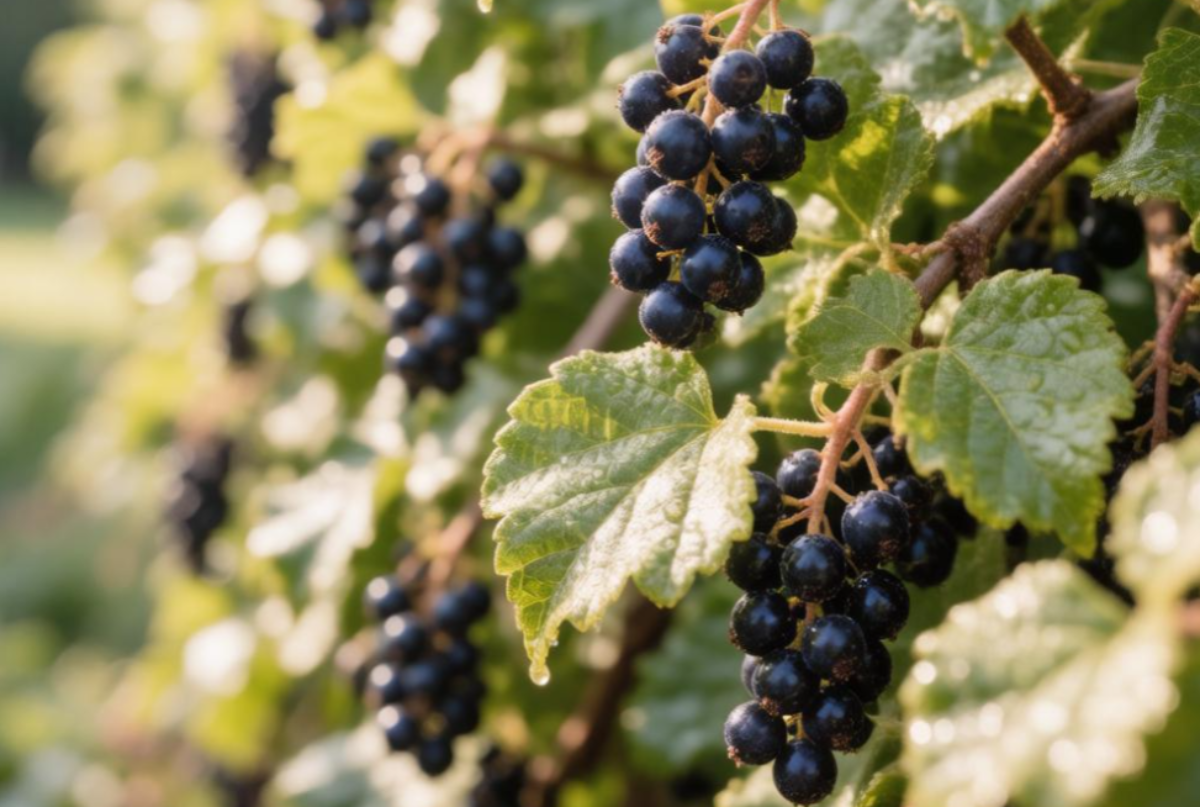
If your currants produce almost no berries, do not rush to uproot your plantings. Most often, the reason lies in basic care errors. It is enough to correct a few points to restore strength even to an adult plant and get a stable harvest this season.
In order for currants to actively bear fruit, they need regular care. Problems arise from overcrowding, shallow watering, shade or lack of pruning. Sometimes the bush simply wastes its energy on old shoots and stops producing berries.
Plant bushes at the correct distance. The currant root system grows widely, so closely planted plants compete for water and nutrition. It is better to maintain a step of one and a half meters so that each bush has enough air and light.
The landing site should be level and sunny. In the lowlands, after rains there is water, which provokes root rot and shedding of ovaries. Currants love moisture, but not a swamp. During dry periods, water deeply once a week, directing the water strictly to the roots.
If the bush has become dense, cut out old and broken branches. The lush crown is poorly ventilated, the berries ripen slowly and are often affected by fungi. Regular thinning pruning directs sap to young fruiting shoots and increases yield.
If the plant is older than seven years and does not respond to feeding, try radical anti-aging pruning or replace it with a new seedling. Modern varieties begin to produce a full harvest already in the third year after planting and do not require complex treatments.