Failed drilling for OMV in the Black Sea near Neptun Deep: “We didn't find enough gas reserves, so we plugged them and abandoned them”

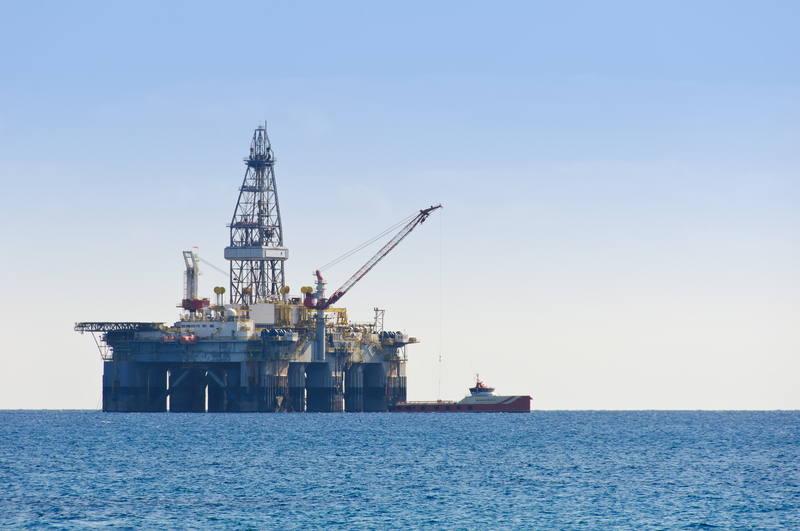
OMV Petrom and the NewMed Energy company, which are operators in the Han Asparus offshore perimeter in the Bulgarian perimeter of the Black Sea, announce that they have abandoned drilling in this area, writes Profit.ro.
“We drilled two wells in Han Asparuh. Unfortunately, we failed to find significant natural gas resources there. We plugged and abandoned both wells,” said OMV Petrom CEO Christina Verchere.
According to her, “the two wells cost about 170 million euros. However, this is the gross amount. Our exposure to this cost was about 30 million euros, because we attracted partners. When you attract a partner, he bears a larger part of the costs as part of entering these wells”, said the CEO of OMV Petrom, Cristina Verchere.
Progress in the Neptun Deep project
On the other hand, at the beginning of May, OMV announced that the works on the offshore pipeline that will take the gases from the Black Sea and bring them ashore have started, marking an important progress within the Neptun Deep project, and the first of the vessels installing the 160 kilometer pipeline, Castoro, has arrived in Romania, Agerpres reported.
“Neptun Deep is a strategic project for Romania and for the energy security of the region, with investments of approximately 4 billion euros and an estimated annual production of approximately 8 billion cubic meters of natural gas. In 2026, we will advance with major steps here in Romania: the installation of the offshore pipeline, the submarine equipment, as well as the production platform. All activities are carried out at the highest safety and quality standards, with the objective of starting production in 2027”, said the general director of OMV Petrom, Christina Verchere, at an event organized on Monday in Tuzla.
She pointed out that the Neptun Deep project has been discussed for a long time, but now it is moving from concepts to reality and it is starting to be seen that the project is coming to life in the Black Sea.
“I start with the theme of partnership and collaboration – how the two companies bring together international experience and local expertise to bring this project to life. We achieved this by working together as teams to make the project a reality. (…) We have talked about this project many times, but we consider it more than just a gas supply project. It is a project for Romania. It puts Romania clearly on the map and demonstrates what we can achieve in the Black Sea, contributing to the development of energy security in the region.
(…) It is a big project. We have a lot of work, many challenges, many debates and discussions. But there is one constant: the pride that keeps us upright. We are very proud of this project – both for our companies and, especially, for Romania,” Verchere said.
Cristian Hubati, member of the OMV Petrom Directorate responsible for Exploration and Production, stated that the installation works planned for this year involve the mobilization of a fleet of approximately 50 vessels, and up to 10 of them are involved in the pipeline installation works.
“These are internationally leading vessels specialized in subsea installations, including some of the largest offshore units in the world. The integration of maritime, subsea and onshore operations is essential to deliver the project safely and within an ambitious time horizon,” explained Hubati.
He signaled that Neptun Deep, the largest gas project of the European Union, is currently entering the phase where all that means equipment manufactured in various parts of the world begin to gather in the Black Sea and will participate in the construction of the project.
“What do we see today? We see the gas treatment and delivery station in the National Gas Pipeline Transport System to Transgaz. We will also see the arrival of the pipeline from offshore to the sea in the land side. (…) What I would like to tell you is that big things remain in history by numbers. Trafalgar remained in history by 60 ships that were involved, but did not cooperate. Neptun Deep has 50 ships that basically have to cooperate like clockwork Swiss. Things are much more difficult, because you have to know what to do, what to do to the right. From one end to the other, we will have to deliver. An extremely important project that is being carried out in Indonesia This year, the legs of the platform in Sardinia are almost finished. So, from now on, we will see more and more tangible things happening in the Black Sea, which should make us proud. Let's see how it will be delivered in Indonesia I can tell you exactly when we will leave there, for various reasons. What I can tell you is that it will come around Africa and enter the Mediterranean, after which it will come to the Black Sea,” said Hubati.
For his part, the general director of Romgaz, Răzvan Popescu, emphasized that the start of the installation works of the main gas pipeline represents the achievement of an essential objective in the development of the Neptun Deep project.
“Another very important moment in the Neptun Deep project: the start of the installation of the underwater pipeline that will connect the Neptun Alfa production platform with the on-shore surface infrastructure. It is 160 km long and the fact that we have started this installation indicates that we are on schedule with the delivery of this project. I would like to touch on a very important point: it is about collaboration, the collaboration that took place between OMV Petrom and Romgaz, between us and the project team, which did an extraordinary job to deliver a project of such technical complexity for Romania and which, starting in 2027, will change and improve the role of Romania, regionally, and will show a benefit for the Romanian final consumer. (…) The completion of the investment and the introduction into the commercial exploitation of the natural gas fields will strengthen Romania's position, bringing an asset of energy resilience, both at the national and regional level,” stated Răzvan Popescu.
Aristotel Jude, deputy general director of Romgaz, also emphasized that, within the framework of the strategic project, the main gas pipeline will be part of the infrastructure related to the production of natural gas, this year the project will move from a global execution dimension to a local one, with an ample mobilization of resources for the installation and connection of underwater equipment off the Black Sea.
According to a press release from the two companies, the first vessel in the fleet needed for the development of the Neptun Deep project has arrived in Romania: Castoro 10 will install the first section of the pipeline, in the shore area. The connection will be made through the microtunnel already built in Tuzla, a technology that increases the safety of the works and minimizes the impact on the environment.
The pipeline installation stage is an essential component of the project. The pipeline will be approximately 160 km and will consist of thousands of 30″ (76 cm) diameter steel pipe segments and will carry natural gas from the offshore production platform to shore, where it will be metered and fed into the National Transportation System.
The Neptun Deep infrastructure includes the offshore platform, three submarine systems, 10 production wells – four already drilled in Pelican Sud and six in progress on Domino – and the onshore gas measurement and control station in Tuzla.
“Pipeline installation vessels operate as real factories in miniature. Pipe joints are aligned, welded, tested and sealed on board, before being lowered in a continuous line to the seabed. This system allows for rigorous quality control at every stage and high efficiency even in offshore operating conditions”, the statement emphasizes.
The main vessels involved in the installation activities are: Castoro 10 – vessel for the installation of pipelines and for works in the shore area, with a length of over 160 meters; Castorone – one of the largest and most powerful offshore pipeline installation vessels in the world, with a length of approximately 330 meters; JSD 6000 – one of the most advanced multi-purpose deepwater pipelay and heavy-lift vessels currently in service. This will carry out the installation of the submarine infrastructure in the deep water area, ensuring the connection of the wells to the production platform. These vessels will be supported by supply vessels, tugs, barges and units operated by Remotely Operated Underwater Vehicles (ROVs), ensuring efficient and safe offshore operations.
OMV Petrom is the largest integrated energy producer in Southeast Europe, with annual group-wide oil and gas production of approximately 38 million boe in 2025. The group has a refining capacity of 4.5 million tons per year and operates a high-efficiency natural gas power plant of 860 MW. On the retail oil products distribution market, the Group is present in Romania and neighboring countries through approximately 780 gas stations, under two brands – OMV and Petrom.
OMV Petrom is listed on the Bucharest Stock Exchange with 28.1% of freely tradable shares. At the end of 2025, Romanian shareholders owned about 45% of the shares, of which the Romanian state owned 20.7%, and 24.4% were owned by Romanian pension funds, as well as by other Romanian natural persons and legal entities. OMV Aktiengesellschaft owned 51.2% of OMV Petrom shares, and the remaining 3.7% were owned by other foreign investors.
SNGN Romgaz is the largest producer and main supplier of natural gas in Romania. The company is admitted to trading on the market of the Bucharest Stock Exchange (BVB). The main shareholder is the Romanian state with a 70% stake. The company has extensive experience in the field of exploration and production of natural gas, its history starting more than 100 years ago, in 1909. Romgaz carries out geological exploration in order to discover new gas deposits, produces methane gas by exploiting the deposits in the company's portfolio, stores natural gas underground, performs interventions, capital repairs and special operations on wells and provides professional technological transport services.
On August 1, 2022, Romgaz became the sole shareholder of Romgaz Black Sea Limited (established ExxonMobil Exploration and Production Romania Limited), as a result of the completion of the acquisition transaction and the transfer of all shares issued by (representing 100% of the share capital of) ExxonMobil Exploration and Production Romania Limited which holds 50% of the rights acquired and of the obligations assumed by the Petroleum Agreement for the deep water area of the XIX Neptun offshore perimeter in the Sea Black.