May 26, 1945
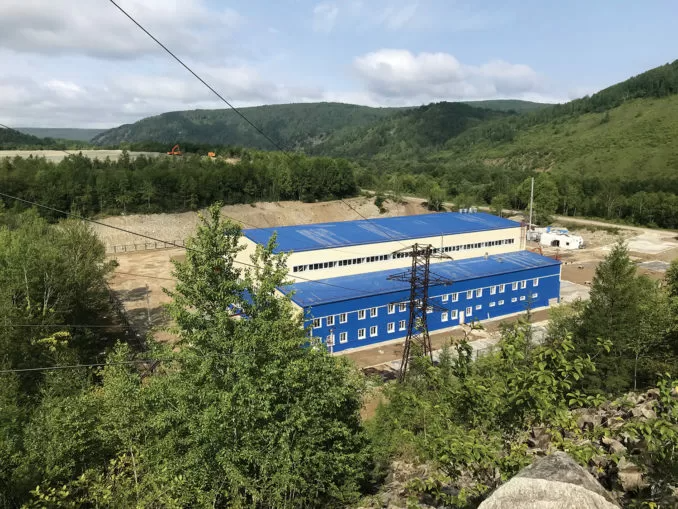
In accordance with the decision of the State Defense Committee, the Khingan Mining and Processing Plant was created on the basis of the Khingan tin ore deposit.
The first geological exploration expedition arrived in Khingan in the late 30s. It was headed by geologists M.I. Itsikson and A.P. Prokofiev.
“The first samples taken from outcrops on the top of the hill closest to the camp gave remarkable results: a block of tin ore lay right under our feet! Nearby there was another, a third… The deposits of Khingan cassiterite, the heads of the geological department told the government, are of great industrial interest.” However, during the Great Patriotic War, work was stopped, but resumed by the end of the war.
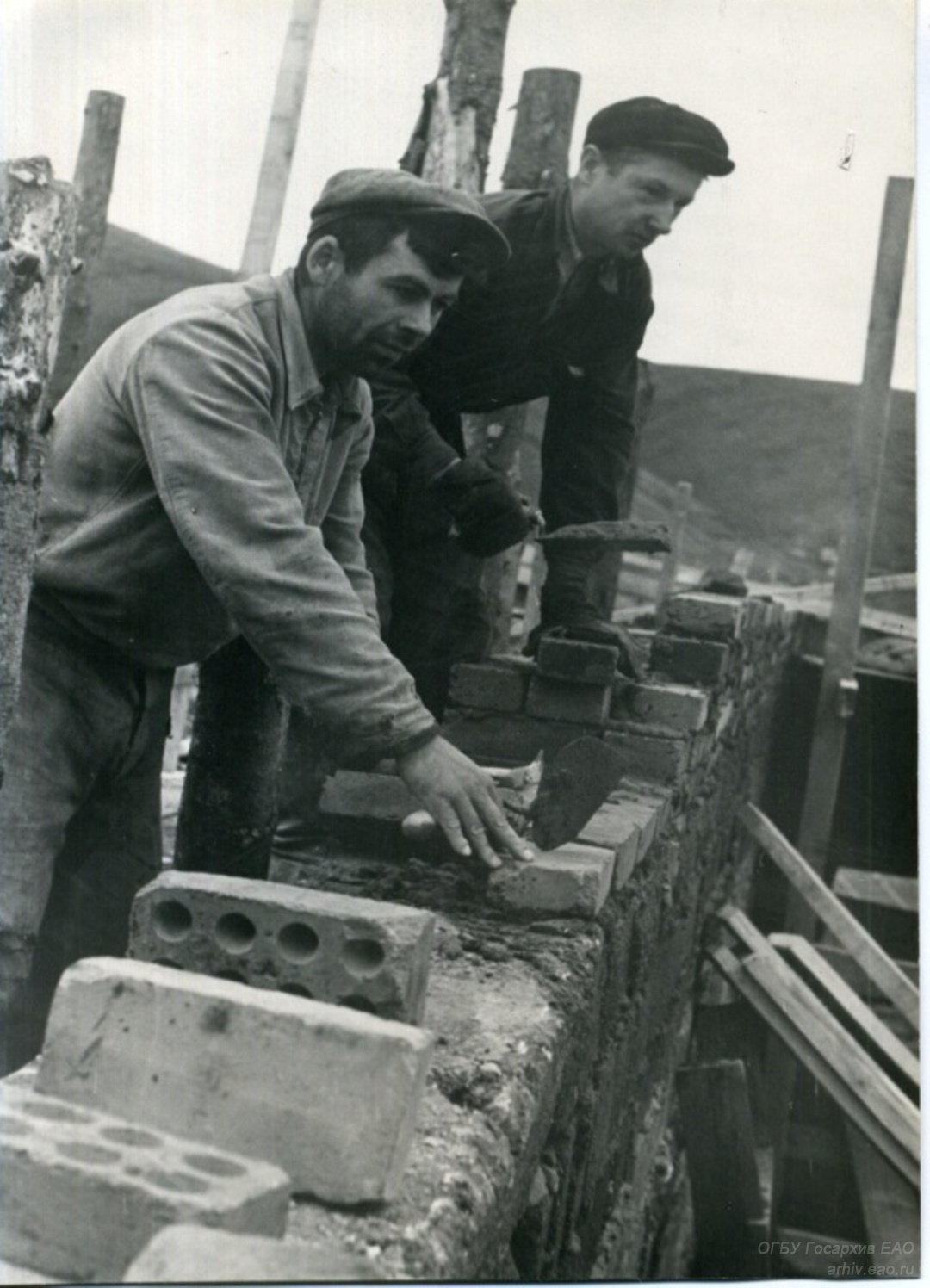
Khingan Mining Department of the Vostsibolovo Combine. Photo: Photo: State Archive of the Jewish Autonomous Region
On May 30, 1945, the foreman of prospectors Ershov handed over the first 14.3 kilograms of tin concentrate to the “tin purchase.” A month later, there was already a whole chest of heavy dark gray grains, and on one July day, the drivers of the old ZIS-5 Polezhaev and Rytov took Khingan tin to Obluchye.
On August 1, 1948, the prospectors of the Pobeda artel read order No. 1, signed by the director of the Khinganolovo plant, E.F. Aleksandrov: “At 8.00, switch to state tin mining.” Now the plant began to develop at a rapid pace, increasing metal production day by day. Already in 1950, compared to 1946, ore processing increased by 750, tin mining by 390%, an enrichment plant and a thermal power plant were built, excavators, 10-ton ore carriers YaAZ-210, and ZIF-12OO drilling rigs appeared in the quarry.
In the mid-50s, the plant was going through a difficult period. Surface ore deposits have been mined, and the question of liquidating the enterprise arises due to the lack of cassiterite reserves. But geologists of the Far Eastern Territorial Administration are in no hurry to agree with this decision. The famous mineral explorer, now Hero of Socialist Labor V.V. Onikhimovsky, comes to Khingansk. He is confident that tin lies deep and proposes to drill the northern part of the mine being mined. One of the wells literally crashed into rich ore. Thus, the “Northern” zone was opened, the approach to which was already carried out through the shaft of the “Kapitalnaya” mine, commissioned in 1962. Already from the workings of the mine, new zones “Northern-deep”, “Dalnyaya”, “Yubileinaya” were opened.
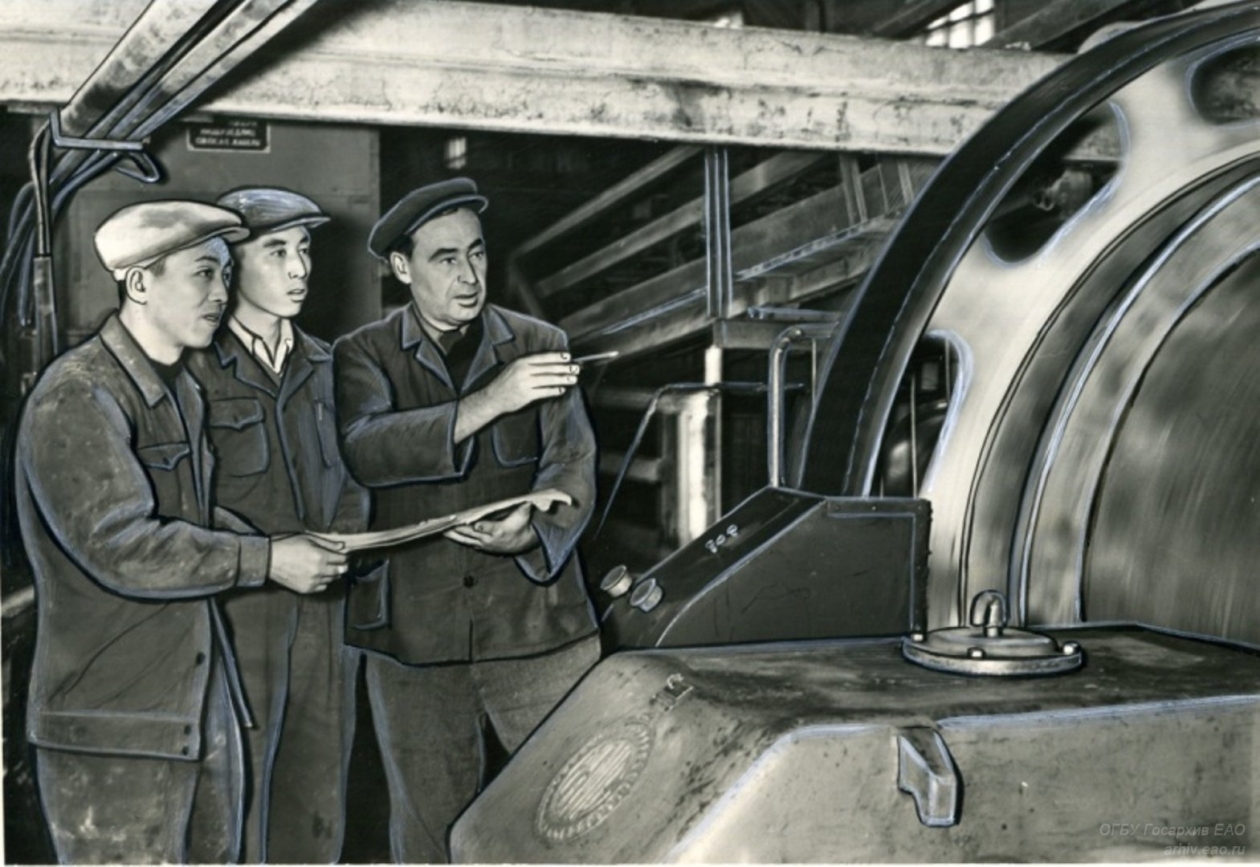
In the early 60s, geologist Yu. Afonin discovered a new occurrence of tin at great depths. The Kapitalnaya-Glubokaya mine was built, the last working horizon, which was located at a depth of 730 m. Later, around the village. Several more deposits were discovered in Khingansk – Berezovskoye, Nezametninskoye, Tayozhnoe, Karadub, etc.
The plant achieved the highest percentage of tin concentrate extraction from ore in the country. Along with cassetterite, the valuable mineral fluorite is extracted from the ore. Processing was carried out first in a quarry, then in underground mine workings.
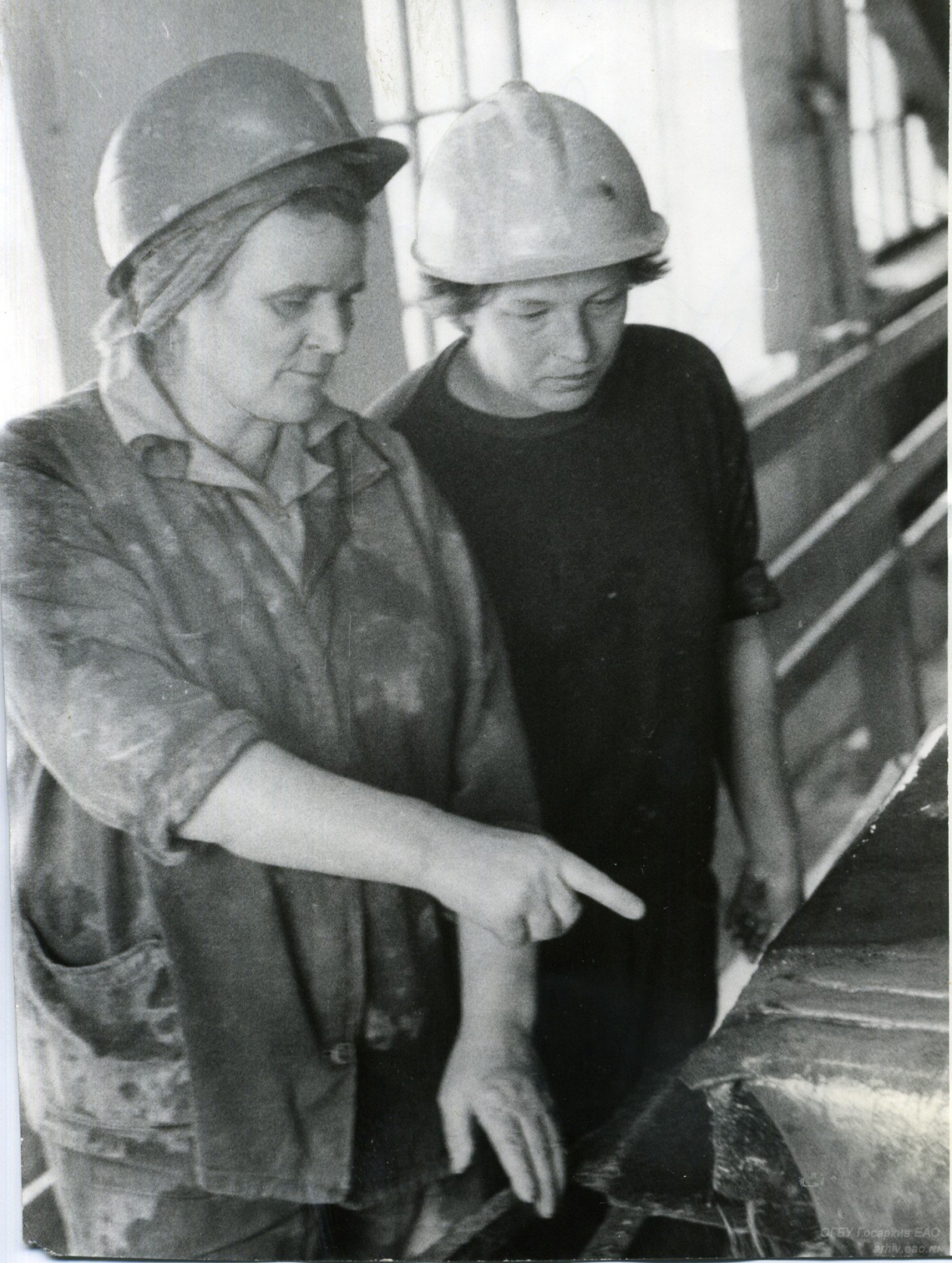
Leading workers of the Khinganolovo plant Brovok and Lyubimova. 1978. Photo: Photo: State Archives of the Jewish Autonomous Region
In the 90s of the 20th century, like many enterprises, the plant experienced a deep financial crisis. With the organization of the new enterprise OJSC Khingansky Tin, a controlling stake of which is owned by the Novosibirsk Tin Plant (NOK), the restoration and retrofitting of the Khingansky mine and the processing plant began. The shaft of the Glubokaya mine was restored, and excavation was carried out at a horizon of minus eighty meters. For this horizon, according to the competition held, a state order was issued for geological exploration work by the Ministry of Natural Resources of the Russian Federation. The implementation was entrusted to the Khingan Olovo enterprise. At the horizon of minus thirty meters, both geological exploration and mining work are being carried out.
Unexpectedly, in the spring of 2006, the company went bankrupt. When the bankrupt enterprise was completely exhausted, there was no money to pay for the electricity that powers the pumps that pump out underground water from the mines. Pumping of water was stopped, first at the lower and then at the upper levels, groundwater filled the workings with millions of cubic meters of water, the mines stood abandoned for ten years.
In 2017, the territory began a new successful stage of development. It is inextricably linked with the implementation of an investment project here for the construction of a mining and processing plant of the Lesser Khingan Resources company.
In 2019, the Khingan Mining and Processing Plant produced about 340 tons of tin concentrate. The planned development period for the tailings reserves is 5 years. Then they want to switch to ore from nearby deposits. The Lesser Khingan Resources company owns licenses to develop the nearest tin deposits, Central and Berezovoye, located 4 km and 8 km away, which means that the life of the factory will be extended for many more years.
May 26, 1965
The Bureau of the Regional Committee of the CPSU considered the issue “On the leadership of the Obluchensky District Committee of the CPSU through lecture propaganda.” The resolution noted that at many enterprises, on collective farms and at the place of residence of workers, lectures, reports, and conversations on political, economic and natural science topics are regularly held. Lecture work is conducted by 283 freelance lecturers from the district committee of the CPSU and the Knowledge Society. Uniform political days are held monthly. The Bureau demanded that the district party committee increase the role of lecture propaganda in mobilizing the working people of the region to fulfill the plans and commitments made for 1965 in the communist education of the working people.
May 26, 1967
The regional committee of the CPSU held a meeting dedicated to the transition of enterprises to a new system of planning and economic incentives. It was attended by economic managers, workers of economic services, secretaries of party organizations of industrial enterprises, and workers of party committees. The meeting participants shared their experience of managing things in a new way and talked about how preparations are underway for the implementation of the reform.
The meeting opened with a speech by the first secretary of the regional committee of the CPSU G. E. Podgaev. Deputy Director of the Dalselmash plant for economic issues M. Ya. Gomon made a report on the main content of the work to prepare the enterprise for the transition to a new management system. For combine builders, this training had a positive impact on strengthening the enterprise’s economy.
The meeting participants listened with interest to the speech of the head of the planning department of the Khinganolovo plant, E. I. Zubkova. She shared her experience in improving production and identifying new, unused reserves. The provision on inter-shop cooperation, developed taking into account the specifics of the enterprise, justifies itself… The results of the mine are now determined not by the tons of ore mined, but by the amount of tin concentrate extracted from it. This increased the material interest of miners in extracting high-quality ore.
The director of the Birobidzhan knitting factory of communist labor, G. T. Klimenko, spoke about the experience of material stimulation of production in new conditions, about measures to improve the quality of products. The head of the planning department of the power transformer plant, P.V. Pivkin, shared his experience in the development of in-plant economic accounting. The speech by the head of the planning department of the textile and clothing factory, M. S. Nalivaiko, was dedicated to the preparations being carried out at the enterprise for the transition to a new management system.
May 26, 1983
The Bureau of the Regional Committee of the CPSU approved the initiative of the advanced collectives of the region to develop socialist competition for a worthy celebration of the anniversary of the region under the motto “50 shock labor weeks to the 50th anniversary of the region!”
The adopted resolution noted that more than 37 thousand workers, about 600 workshops, sites, 1.1 thousand brigades assumed increased socialist obligations. Party, Soviet, trade union, Komsomol bodies and organizations, and economic leaders have been instructed to launch broad organizational and mass political work to spread the initiative of leading enterprises.