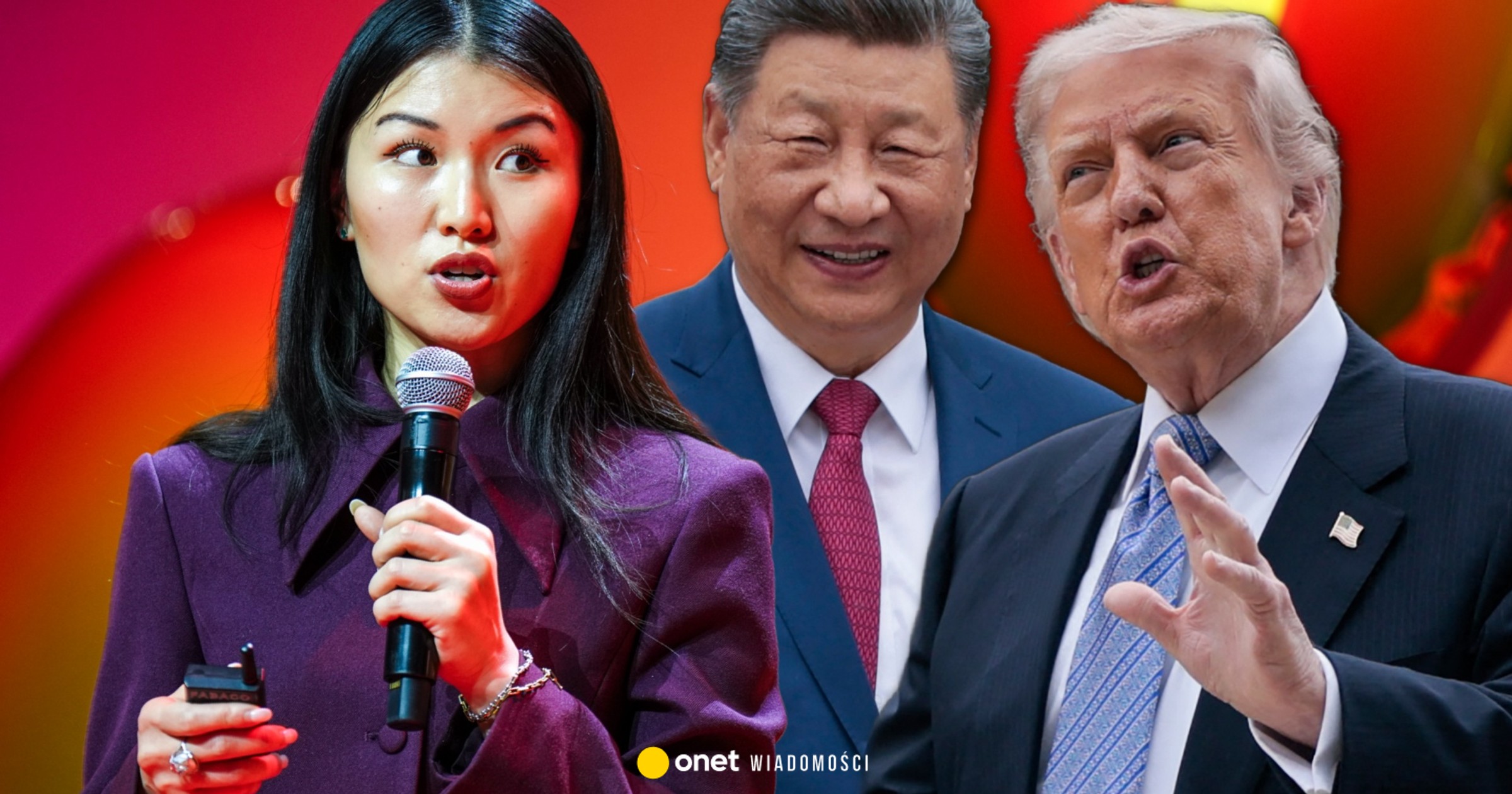
Bartosz Oleszko-Pyka: Two former Chinese defense ministers, Wei Fenghe and Li Shangfu, were sentenced to death, suspended for two years, which in practice means life imprisonment. This is a common practice in China that makes it impossible to appeal against a prison sentence. Earlier, there were major changes in the Chinese army. During the purge initiated by Xi Jinping, of the six members of the Central Military Commission, the highest military body of the Communist Party of China, only one remained in office. What is the reason for this?
This can be interpreted in different ways. None of us were in the room where decisions were made. We do not have a full picture of what led to the initiation of these investigations into the military. I am inclined to believe that there are many factors at play.
Corruption is probably at its root, and the accusations are partly the result of the scandal in the missile and artillery forces in 2023 – it concerns abuse of office, but also the unpreparedness of the artillery forces for combat operations. Corruption also occurred within the party and the People's Liberation Army (PLA), promotions were for “their own”, and cliques and rival factions were formed.
Yes, Xi Jinping is pushing for centralized command. And when he feels that his direct subordinates, regardless of their position, oppose him, he uses the whip to fight corruption. These two gentlemen [Wei Fenghe i Li Shangfu] they will probably get the life sentence you mentioned. There are two main conclusions from this.
Xi Jinping has concentrated so much power in his hands that there is currently no significant, relatively independent figure who could control him. Does this make it easier for him to invade Taiwan? Xi Jinping has repeatedly spoken about the need to reunite China's “provinces”, as he calls Taiwan.
Looking back at history, since the founding of the Communist Party of China (CPC) and the People's Republic of China (PRC) in 1949, the Taiwan issue has always been at the core of the party's strategic pursuits. Xi Jinping is following the same course. However, over the past month or two I have sensed a major change.
Xi Jinping is more interested in a political solution than a military one, and in particular improving relations with Taipei.
Why do I think so? What is significant is the fact that he invited the chairman of the Kuomintang (KMT), Cheng Li-wun, and the fact that he increasingly talks about improving relations on both sides of the strait. This is to be achieved through trade, tourism and closer cooperation in various other areas. These actions suggest that Xi Jinping is not taking a strictly military approach, such as conducting exercises around Taiwan's defense zones.
He also wants to try to tip the scales in the next elections in Taiwan. They will take place in January 2028. Currently, KMT is not the favorite to win them.
This is one scenario. But if Xi Jinping replaces the Central Military Commission — the elite level, highest state and party body that manages the military — with yes-men, he may decide to go all in on the invasion of Taiwan. Although I think deep down, compared to Putin for example, he is a more risk-averse person. So I don't think he would take that risk.
In the short term, he bets that Taiwan will be weakened not only by the energy crisis, but also by the fact that Trump has no real means of deterrence in the region. The Chinese hope to restore the KMT to power.
In your presentation at Impact, you mentioned that if an invasion were to occur, it could upset the balance in the AI sector. Could you expand on this topic?
What people in the US and Silicon Valley don't care enough about is the fact that AI calculations rely almost entirely, and certainly most of them, on one island – Taiwan – and one company, which is TSMC.
If TSMC went bankrupt today, no one would be able to produce at scale the chips used and created by Nvidia. These chips support the training and computation used by all AI models. I don't think Americans understand this. But the Chinese already understand this. They know that the semiconductor supply chain is absolutely crucial in the AI race.
I don't think people in America, especially in Silicon Valley, think about it seriously enough. TSMC built a factory in Arizona to try to produce some of its resources in the U.S., but it won't be enough.
If China even catches up with semiconductor technology and reaches the point where it no longer needs U.S. imports of chips like the H200 or Nvidia's Blackwell chips, the U.S. will not have the resources not only to stop China's technological growth, but also its development in the field of AI.
Would Trump protect Taiwan in the event of an invasion?
I think Trump, of all presidents, would be the least likely to do so. Iran was the biggest test of his attitude. It seems obvious that in the early spring, in March and April, Trump had the military option of sending ground troops in response to the Iran crisis. However, he decided not to use it because he did not want to shed American blood on Middle Eastern soil.
If that isn't evidence enough that Trump will be reluctant to fight in a conflict over Taiwan, I don't know what is. I think this president is not willing to sacrifice blood and money for Taiwan, no matter how important Taiwan is.
This is just my opinion regarding the global technology supply chain. I think that's obviously factored into some of the calculations in Beijing. But let's remember: Trump has at most less than three years left in his presidency as the so-called lame duck [red. Amerykanie nazywają tak prezydenta, którego władza maleje, ponieważ nie kandyduje ponownie]. There may be a very different president who takes deterrence more seriously when it comes to Taiwan.
“China benefits from US mistakes and mistakes”
US President Donald Trump met with Chinese leader Xi Jinping in Beijing. What is Trump's approach to China?
Trump presents an alternative view of China compared to his Republican colleagues. This is worth emphasizing. He belongs to the camp that wants to reach an agreement with China and maintain good relations with it, especially with Xi Jinping.
I think the fact that Elon Musk and Jensen Huang [CEO Nvidii] were with him on Air Force One when he landed on the tarmac in Beijing is an indication that he is also interested in business deals with China. Trump's arrival in China is a sign that he wants to have good personal and trade relations with China and Xi Jinping.
Xi Jinping and Trump in Beijing, May 15, 2026.Evan Vucci – Pool/Getty Images, China pool/Getty Images
But what he wants from China more broadly, I think, is not just a recognition of American dominance, but also a solution to some of the current issues that concern him.
Remember that he is influenced by the Reagan-era policies of the 1980s. He is concerned about the trade deficit, which has been largely reduced thanks to recent tariffs. Another thing I think he cares about, apart from tariffs and personal relations with Xi Jinping, is ensuring stable economic, geopolitical and military relations. I think this is a key theme for this presidency.
Trade plays an important role in China-US relations, and the conflict in the Strait of Hormuz is decisive in this regard. Was this the main topic of conversation in Beijing?
I think Trump wanted this to be the main topic. He believes, rightly or wrongly, that Xi Jinping has influence he can use to pressure the Iranians to back down and reopen the Strait of Hormuz.
I was in Beijing just two weeks ago. From the perspective of the Chinese, I think they do not want to get involved in a crisis that was actually started by the United States.
Their attitude is therefore one of wait-and-see and getting involved where necessary, especially supporting the Pakistanis who are the real behind-the-scenes negotiators between Iran and the US.
However, from a geopolitical point of view, in the short term, China actually benefits from US mistakes and mistakes when it comes to the Middle East and the Strait of Hormuz. If the war is prolonged, it will have further serious consequences. I think China definitely doesn't want to get involved on the American side at this point.
How does China benefit from Trump's Middle East policy?
We see the Gulf states getting closer to China. They worry about the consequences of Iran taking them hostage. Iran has shown that it is willing to bomb its neighbors to obtain better terms in negotiations [red. zmusza w ten sposób państwa Zatoki do wywarcia presji na USA w celu szybkiego zakończenia konfliktu].
This is not just a short-term risk for the Gulf states. It's also a long-term risk. That's why these countries are acting very quickly. High-level meetings of representatives of the Persian Gulf countries were held in the UAE and China.
There will be a summit between Arab states and China in the next few months. There is discussion about increasing yuan transactions in the oil trade.
Is Trump pushing his allies into China's arms? I don't just mean the Gulf states. China is more predictable and does not behave as chaotically as Donald Trump.
Yes, one hundred percent. Many European leaders traveled to Beijing earlier this year. Friedrich Merz, the German chancellor, surprisingly stated that he might even consider a free trade agreement with China.
This turn of Europe still lacks substance, but symbolically Europe wants to get closer to China because it believes that the Americans have failed not only in Ukraine, but also in the Middle East.
Europeans know that they cannot put all their eggs in one basket when looking to the future. However, we must remember that Trump is just an episode in the history of the United States.
He has less than three years left in his presidency. Whoever replaces him, I think that by returning to earlier standards, he will bring the party and the country back to working with transatlantic partners, containing China, and viewing China as the number one threat.
However, at the moment, in the short term, China may benefit from the actions of Trump, who is very trade-oriented and quite conciliatory towards China, and more skeptical towards his allies.
I’m Ashley Davis as an editor, I’m committed to upholding the highest standards of integrity and accuracy in every piece we publish. My work is driven by curiosity, a passion for truth, and a belief that journalism plays a crucial role in shaping public discourse. I strive to tell stories that not only inform but also inspire action and conversation.