Strait of Hormuz blockade hits another sector. The consequences will be painful

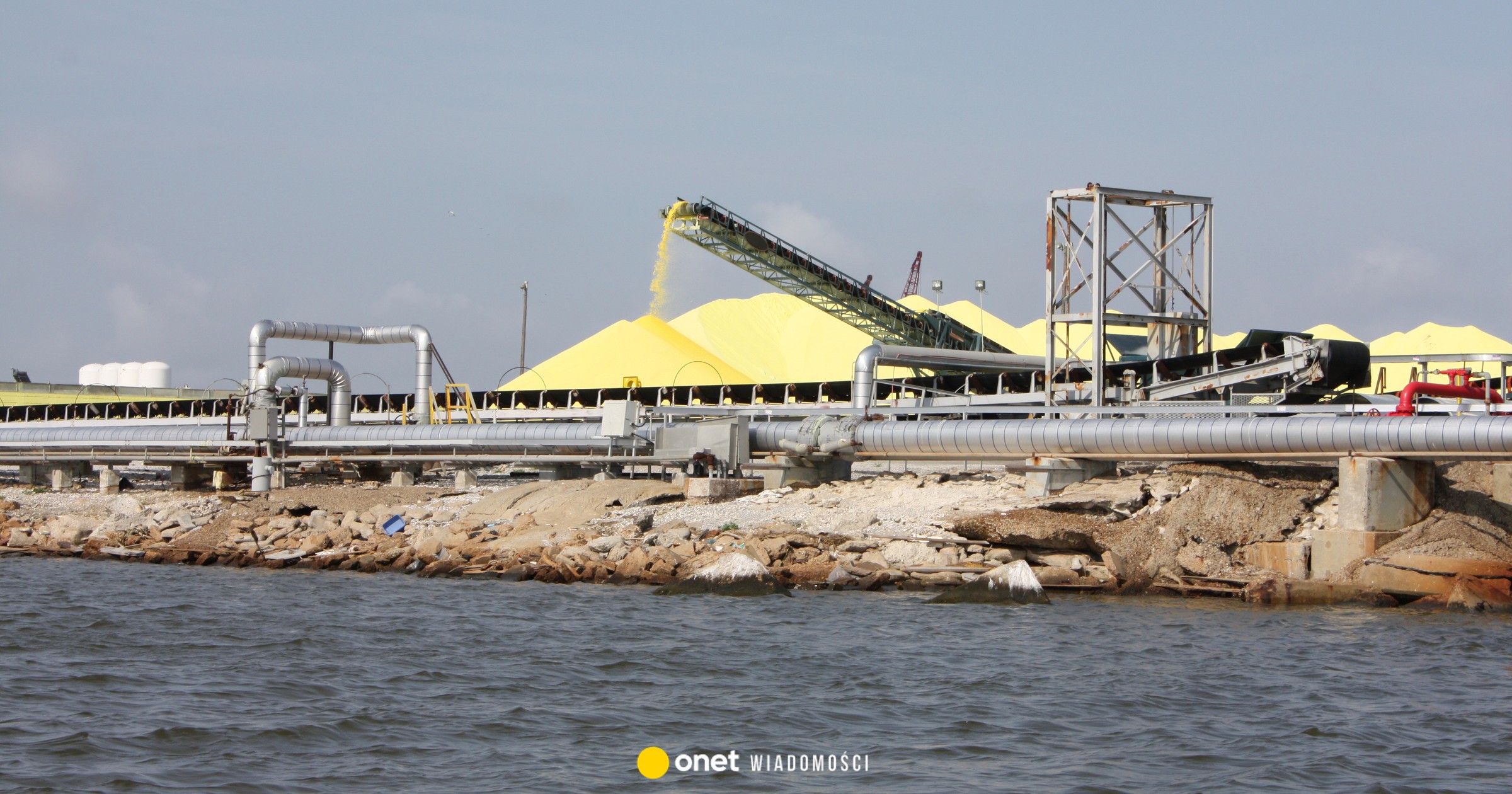
A matte black electric limousine, a charging station under a carport or expensive strawberries sold in winter. Few people suspect that the production of all these goods depends on a substance that is unremarkable: sulfur.
This substance is found under the earth's surface and is formed mainly as a by-product of oil and gas processing. Processed into sulfuric acid, it is so important for the world economy that it is called the “queen of chemicals”.
Sulfur—mixed with oil and gas—also comes to the surface during resource extraction.
In further processing, it is largely removed from oil and gas. Otherwise, burning fuels would produce too much sulfur dioxide, which contributes to acid rain.
However, as a by-product, sulfur is suitable for further use. Okay. 90 percent global supply reaches the world market thanks to this process. Many consumers later convert the sulfur into sulfuric acid.
Sulfur deficiency
Sulfur deficiency affects: two key industries: fertilizer production and metal processing. They are responsible for approximately 70 percent. world consumption of sulfuric acid. Both industries now compete for available resources, which threatens both global food security and the development of renewable energy.
Due to the expansion of offshore wind farms, hydrogen installations and battery parks, global demand for industrial metals such as copper and nickel is growing rapidly. However, many easily accessible deposits have already been exhausted. Nowadays, drilling rarely finds deposits with high copper or nickel content.
Metals that occur in trace amounts in large blocks of rock must be chemically extracted. This is done using sulfuric acid. Paradoxically, the energy transformation is based precisely on the by-product of the industry that it actually wants to replace.
Prices soaring
In addition, sulfuric acid forms the basis of phosphorus fertilizers, without which global crop yields will decline. Resulting from this food shortage causes its prices to increase. This is a phenomenon that has repeatedly led to social unrest in the past.
For example, in Egypt during the Arab Spring protests in 2011, just before people began to rebel against the regime, food price inflation in the country was almost 19 percent. In retrospect, the price increase is considered the main one factor causing the uprising.
Whether the energy transition will be successful and global food security will be maintained depends crucially on the availability of sulfur. Battery metals currently command higher profit margins than the fertilizer industry. Therefore, their producers are able to pay higher prices for sulfur. If fertilizer producers want to stay on the market, they must bow to price pressure.
The price increase is therefore first felt in the case of food, and in the long run it increases the costs of the energy transformation. Residents are usually particularly affected poorer countrieswho have the hardest time coping with rising food prices.
Market under pressure
However, only the situation in the Persian Gulf fully shows how dramatic the consequences can be in the event of interrupted supply chains. Other oil and gas exporters, such as Canada and the United States, are unable to ease the tense situation in the short term. Extracting larger amounts of fossil raw materials just to obtain their relatively cheap by-product would be simply unprofitable. Even if the price of sulfur increased threefold, it would still be lower than the price of oil when converted into the same unit of measurement.
Currently, there would be enough customers for the surplus of oil and gas, but production from existing sources can only be increased to a limited extent. Obtaining new sources of fossil fuels usually takes years, costs a lot of money and is a risky game. No manufacturer would do this for a cheap by-product. The truth is also that oil and gas producers are benefiting from scarcity and higher prices, and there is currently little incentive to increase production.
Although most of the sulfur comes from the oil and gas industry, there are two other processes: first, direct extraction from natural deposits underground, which is, however, much more expensive and energy-intensive. On the other hand, sulfur is also produced as a by-product in the metal industry.
However, these processes cannot be intensified enough to meet demand from the fertilizer or metals industries.
A wider crisis
In some applications, sulfuric acid can be replaced by other chemical processes, but so far only on a small scale. Moreover, it is too expensive to be a competitive solution.
The situation now forces the first countries to protecting their economies. So Türkiye imposed a ban on sulfur exports. India and China are also considering introducing export restrictions.
Even if shipping traffic in the Persian Gulf returned to normal soon and there was no food crisis, renewable energy development would still struggle. structural problem: Forecasts assume that the amount of oil and gas processed will peak in 2035 and then begin to decline – and sulfur supply along with it. According to the study, this will create a supply deficit.
It is true that new metal recycling methods could reduce the demand for sulfur. The International Energy Agency estimates that recycling could reduce the need to open new copper mines by one third by 2050. However, for other essential metals, it predicts much lower recycling rates. For now, the rule applies: the sooner the world turns away from fossil energy, the less sulfuric acid will be available for the energy transition.