April 21, 1913
Boosie Miller. Photo: Photo: Regional Library
Busie Miller was born on April 21, 1913. After finishing the seven-year school, he worked as a student and then as a worker in one of the Kharkov factories. In 1932, he became a student in the literary department of the Kharkov Pedagogical Institute, and a year later he transferred to the Lenin Moscow Pedagogical Institute. After graduating from university in 1936, he was sent to the Far East, to Birobidzhan. Since then, his entire life has been connected with the Jewish Autonomy.
He worked as a teacher at secondary school No. 2, where he taught Russian and Jewish languages. In 1938 he became a member of the editorial board of the magazine “Forpost” (12+), in 1940 – its executive secretary. In 1940, he was accepted as a member of the Union of Soviet Writers, for eight years he was the chairman of the local writers' group, and also a member of the editorial board of the magazine “Soviet Gameland” (12+).
For almost four decades, until his retirement, except for those harsh years that he spent in Stalin’s camps, Boris Izrailevich worked for the newspaper “Birobidzhaner Stern” (12+), and from 1941 to 1948 he was its editor.
Miller is the author of the collection of stories “Under the Rainbow” (0+), the stories “Birobidzhan” (0+), “Clarity” (0+), “At Full Speed” (0+), the novel “To Each Generation Its Own” (6+), the collection of poems “The Bright Source” (0+), several plays, etc. In 1986, the Moscow book publishing house “Soviet Writer” published his book “While Man Lives” (6+).
Boris Izrailevich died in Birobidzhan on January 25, 1988, just three months shy of his 75th birthday.
April 21, 1938
The newspaper “Birobidzhan Star” (12+) in the heading “To help agitators and propagandists” published an article “Ten Years of Birobidzhan” about the development of industry in the Jewish Autonomous Region.

Clippings from the newspaper “Birobidzhan Star”. Photo: Photo: Regional Library
The article said that in 1928 the first artels were created on the basis of local raw materials: a brick artel in Tikhonkaya, which already in 1929 produced 100 thousand bricks for construction, a lime artel in Bir and a tar artel in Razdolny, a wagon artel “Wheel of Revolution” in Birobidzhan, a tailoring and shoe artel and others.
“Since 1930, the mothballed timber mill in Nikolaevka has been restored. In the same year, construction of a timber mill in the city of Birobidzhan began.
In 1931, construction of the state lime plant in Londoko began. At the end of 1932, a small garment factory began operating in Birobidzhan.
In 1929 there were five artels in the region, in 1930 – 10 artels, in 1932 – 14 artels. In 1934, the production of the artels had already reached a significant amount of 9 million rubles.”
“The region comes to the 10th anniversary of Birobidzhan with a significant network of state industry.
The first stage of a garment factory in the city was launched. Birobidzhan. The first stage has been launched and the construction of the second stage of the lime plant in Londoko is ending. The first stage of the convoy plant in Birobidzhan was launched. The timber mill of the People's Commissariat of Forestry operates in Nikolaevka. The main building of the mechanical repair plant is ending. Gold mining in the region has increased significantly.
Sites and design materials have been prepared for the construction of a shoe factory and a mechanized brick factory.

The number of workers in state industry, not counting forestry, is about 4 thousand people.
In the timber industry system in 1934 there were 6 artels and there were 544 members; The artels produced 3,360 thousand rubles worth of products at constant prices. In 1937, there were 10 artels, which produced products worth 9,291.8 thousand rubles.
In the system of the multi-industry union in 1934 there were 10 artels, which produced products at constant prices worth 2,641 thousand rubles. In 1937, there were 22 artels, which produced products worth 10,483.2 thousand rubles.
Among the industrial cooperative enterprises in the region, we have such large and significantly mechanized ones as the furniture factory named after. Dimitrova, plywood factory, Detal factory and others.
Industrial cooperation produces such important products as bricks, lime, marble, building parts, furniture, resin, turpentine, cooperage products, various food products and others.”
The fishing cooperation has unlimited local resources for its development in the Jewish Autonomous Region: hard and soft wood, clay, lime, marble, fiber-rich Far Eastern sedge, pine nuts, wild berries, grapes, etc….”
April 21, 1947
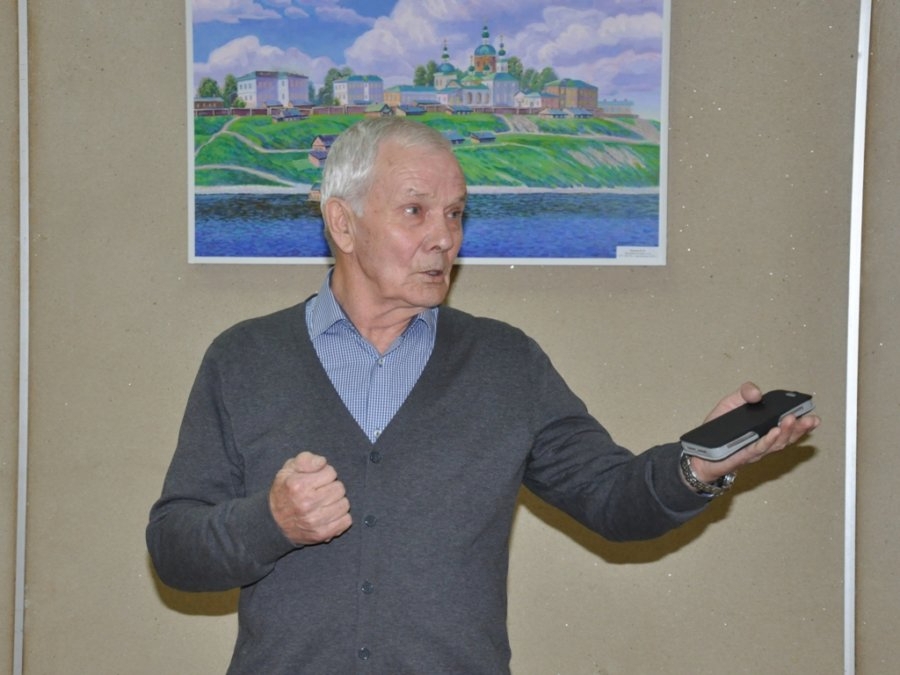
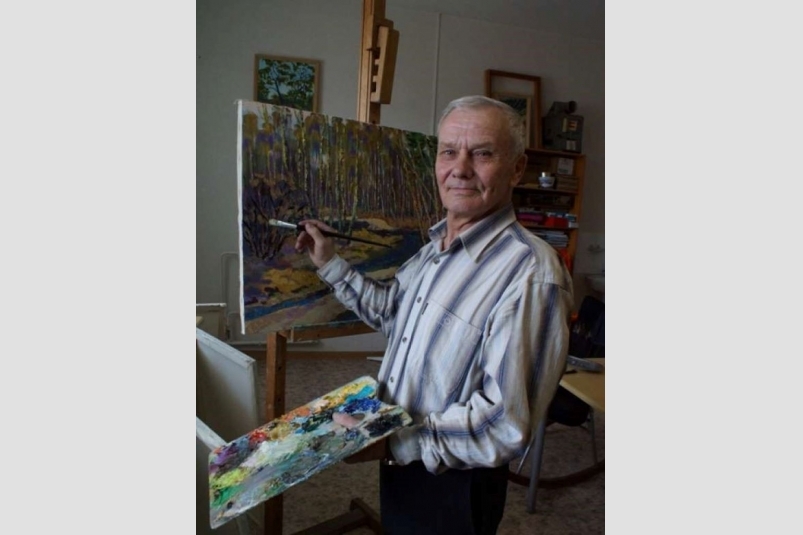
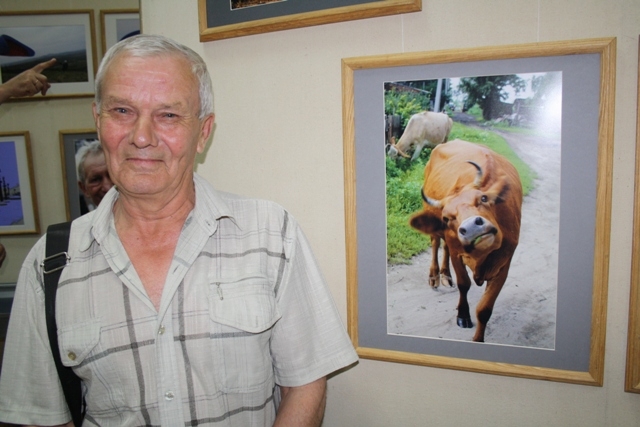
On this day, Korovin Valentin Ilyich, Honored Worker of Culture of the Russian Federation, member of the Union of Artists of Russia, was born in Belogorsk, Amur Region.
In 1965, he graduated from the art and graphic department of the Birobidzhan Pedagogical School. After graduating from college, he worked as an art teacher at a school in Belogorsk (until 1966). In 1971 he graduated from the art and graphic department of the Khabarovsk State Pedagogical Institute. After graduating from the institute, he was sent as an art teacher to one of the Birobidzhan schools. Since 1988, he taught at the Children's Art School in Birobidzhan, which he then headed.
The artist worked in watercolors for a long time; in recent years he switched to oil painting.


Valentin Ilyich is a participant of regional, regional, all-Russian, international and foreign exhibitions. He held more than 20 personal exhibitions in Russia and abroad. He is a regular participant in all “Autumn and Spring” opening days (0+) at the Museum of Modern Art.
On the initiative of Valentin Ilyich, a regional branch of the Union of Artists of the Russian Federation was created, which he headed for many years.
For creative achievements and great contribution to the development of fine arts, Valentin Korovin was awarded the Vasily Surikov Medal.
Works by V.I. Korovin are in the Museum of Contemporary Art of the Jewish Autonomous Region, in the Regional Museum of Local Lore (Birobidzhan), in the Museum of Fine Arts in Komsomolsk-on-Amur, the art gallery named after A.M. Fedotov (Khabarovsk), in private collections in Russia and abroad.
April 21, 2015

Clippings from the newspaper “Amurskaya Niva”. Photo: Photo: Regional Library
The regional newspaper “Amurskaya Niva” (12+) (Leninskoye village) in the section for the “70th anniversary of the Victory” published an article by the head of the archive department of the government of the Jewish Autonomous Region, Z. Kharkovskaya, “Home Front during the War” about the selfless work of the Komsomol youth brigades of the Leninsky district during the war years (1942-1943).
“In 1943, six Komsomol youth brigades for silage and haymaking were created in the region. On the collective farm “Trevoga” there are two brigades led by Glazova, on the collective farm “Lenin’s Way” Ladyzhskaya, “Mukhina” – Podoynitsyna, “Red Lighthouse” – Pershin and on the collective farm “Yarkiy Ray”.
Komsomol members and youth cleared 24 pits in the region and laid 1,345 tons of silage. The work in the school brigade of the collective farm named after. Kirov (head of Buzin). The second-grader Asya Semirenko works especially well in this squad. Schoolgirls in grades 6-7 of this detachment Ksenia Kolesnikova, Anya Doroganova, Maria Shakalova and Maria Ageeva, who were awarded certificates last year for good work on the collective farm, committed to working at least 150 workdays.”