The message of a Russian star to Putin, seen 26 million times. “People are afraid of you. Do you know what the risk is?” / The Kremlin reacted


Russian blogger Victoria Bonya warns in a viral video that the country's problems are at risk of getting out of hand. The clip with 26 million views forced a reaction from the Kremlin, according to The Guardian.
Bonya, who became famous in 2006 on the Dom-2 reality show, says in the recording that the authorities are too scared to criticize Vladimir Putin. His message comes as the Russian president's approval rating has fallen for the sixth consecutive week.
“People are afraid of you, artists are afraid, governors are afraid,” she said in the Instagram video, which has garnered more than 1.3 million likes in the past four days.
She claims that no regional authority dares to communicate the country's serious problems directly to Vladimir Putin: floods in Dagestan, oil pollution in the Black Sea, the plight of animals in Siberia, internet blackouts and economic pressure on small businesses.
“Do you know what the risk is?” asked Bonya, who lives in Monaco. “That people will no longer be afraid, that they are compressed like a coiled spring, and that one day that spring will suddenly spring.”
Victoria Bonya is a constant presence at major international events, such as the Cannes and Venice film festivals, and although in the past she was considered a supporter of the regime, she recently began to attack the way officials hide the reality of the country from Putin.
An unexpected response from the Kremlin
On Thursday, Moscow made an unusual gesture and publicly acknowledged the blogger's criticism. The authorities have stated that they are already working on solving the problems identified by Victoria Bonya, writes The Guardian.
This quick reaction, and the fact that Bonya did not directly mention Putin or the war in Ukraine, led to speculation that the intervention was coordinated with Moscow. This scenario would be aimed at showing that public grievances are taken into account before the parliamentary elections, note the analysts cited by The Guardian.
But political analysts said the outbreak was unlikely to have been coordinated, but rather reflected a spontaneous reaction to simmering discontent across the country.
“War fatigue is really starting to set in,” said Andrei Kolesnikov, a Moscow-based political scientist and author of a recent book on Putin's ideology. “People are beginning to understand that everything that is happening is a consequence of the war.”
Kolesnikov added that authorities are finding it increasingly difficult to explain the conflict's impact on daily life, from economic problems to internet restrictions.
Abbas Galyamov, a former adviser to Putin in exile, believes that the messages of stars such as Victoria Bonya can accentuate social discontent. “Bonya is attracting a whole new audience to the opposition camp that didn't exist before,” he said.
“Their discontent is also growing; there are problems with the Internet, prices in shops are rising, the war is testing their nerves. The state is interfering in their private lives,” he added.
Critics from the pro-war camp as well
Putin's approval and trust ratings have fallen to their lowest level since the invasion of Ukraine in February 2022. The data appears in recent polls by both state and independent organizations.
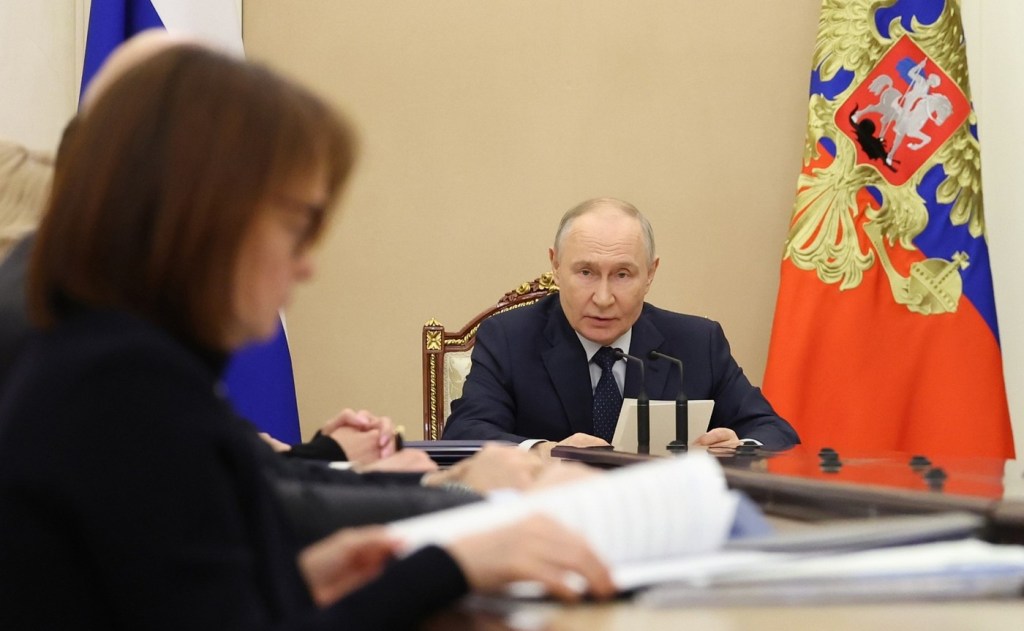
At a meeting with senior officials on Wednesday, the Russian president tacitly acknowledged strains in the economy, pressing the government and central bank to explain why performance has been below expectations this year.
Putin is also facing the wrath of pro-war bloggers, some of them on the front lines. They are increasingly frustrated by Moscow's slow progress and mounting losses on the battlefield. The situation is described by Andrey Filatov, a reporter for Russia Today, who recently wrote:
“Real losses are either hidden entirely or staggered over time, creating the impression at the top that the situation is not so critical. As a result, the military does not adapt.”