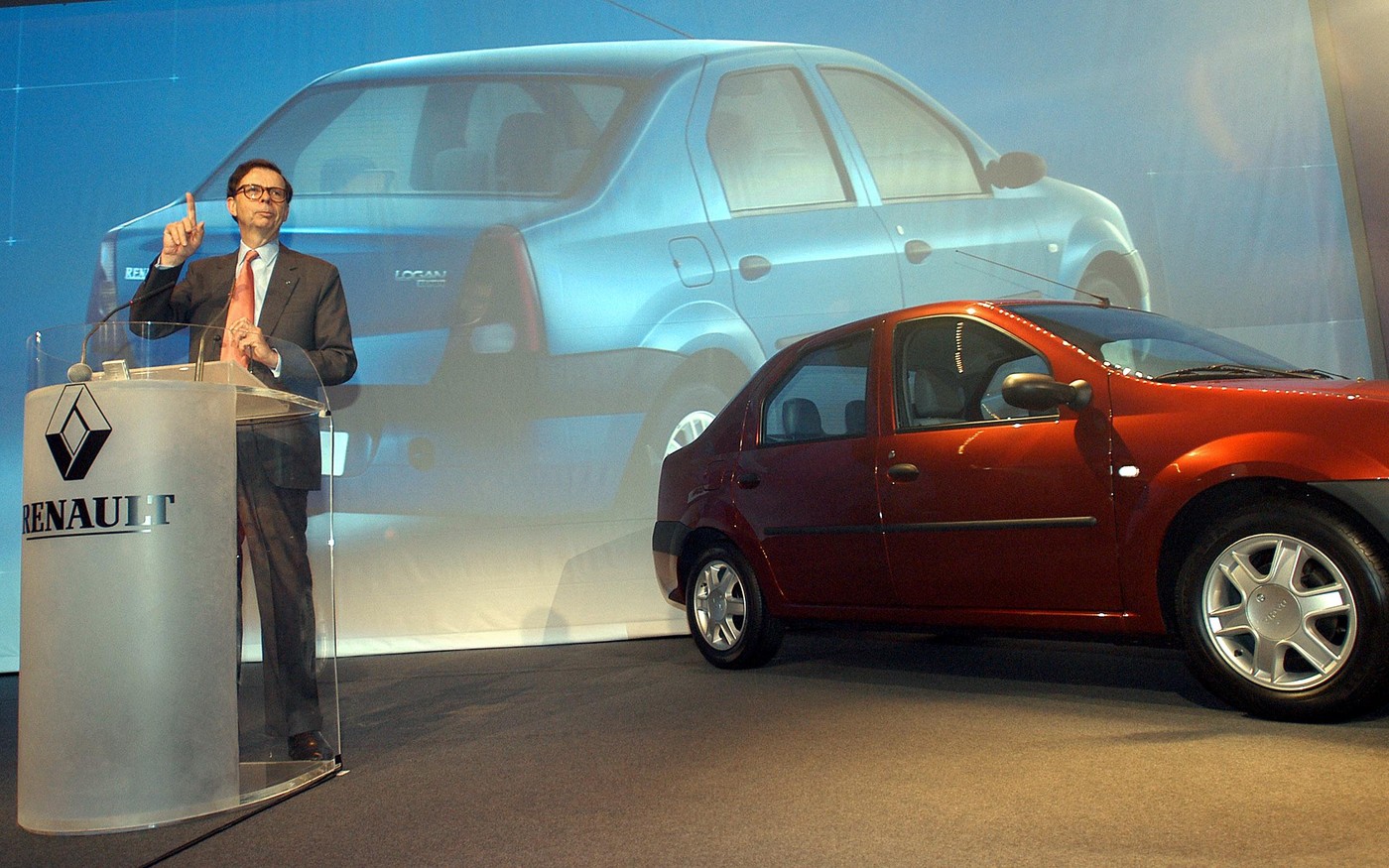
Louis Schweitzer, the man who oversaw the privatization of Renault as well as the acquisition of Nissan, Dacia and Samsung Motors, died last week at the age of 83, according to an announcement by the French group carried by foreign media.
On November 7, Renault officials, which includes Dacia, announced the death of Louis Schweitzer, the group's president and general manager between 1992 and 2005.
“On behalf of the Renault group, I would like to pay tribute to Louis Schweitzer, a visionary and courageous leader, whose commitment and high standards contributed to the modernization and internationalization of the group, through flagship launches such as Twingo and Megane, the acquisition of Dacia and the creation of the Renault-Nissan strategic alliance. He also promoted a humanistic vision of business, combining economic performance with social responsibility,” said Jean-Dominique Senard, current chairman of the board of directors administration of the Renault group, quoted by Le Monde.
Who was Louis Schweitzer?
Louis Schweitzer, it was the one who orchestrated the apparently difficult rescue of Nissan by Renault, notes the auto site carexpert.com.
Born in Geneva, Switzerland, in 1942, Schweitzer was a member of a prominent family from Alsace, France. She was related to philosopher and playwright Jean-Paul Sartre and great-grandson of Albert Schweitzer, physician, theologian and musician, who won the Nobel Prize for Philosophy in 1952.
His father served in the Resistance during World War II and later became head of the International Monetary Fund. After earning degrees from the Paris Institute of Political Studies (Sciences Po) and the National School of Administration, Schweitzer followed in his father's footsteps and joined the civil service.
In 1981, he was noticed by the government of François Mitterrand and became chief of staff to Laurent Fabius, the minister of the budget. He followed Fabius in various positions, including prime minister, in the Mitterrand administration, and was embroiled in a series of scandals.
In 1986, he left the Mitterrand administration to join Renault, which had been under government control since its nationalization in 1945. After the assassination of CEO Georges Besse in late 1986 by Action Direct, a communist guerrilla group, Schweitzer was promoted to finance director.
He was later appointed deputy managing director before becoming CEO of the automaker in 1992. His first few years at the helm were shaky, with merger talks with Volvo failing in late 1993 and Renault's profits falling.
With Volvo seemingly out of the picture, the French government gave the green light to privatize Renault in 1994, and the task fell to Schweitzer, who during his tenure in the Mitterrand administration oversaw a series of corporate nationalizations.
After the privatization of Renault in 1996, Schweitzer hired Carlos Ghosn from Michelin to become the automaker's director of purchasing, production, development and research, as well as the company's general manager for South America. “Le Cost Killer” and his radical restructuring medicine returned the company to profitability and laid the foundations for the next stage.
Burdened by heavy debt, a sea of losses and a range of vehicles indulgently described as clunky and boring, Nissan was in a sorry state and its continued existence was repeatedly called into question.
After negotiations with DaimlerChrysler, the parent company of Mercedes-Benz and Chrysler, failed, Renault stepped in, with Schweitzer proposing not a takeover but an alliance that respected the two companies' different cultures.
In March 1999, Renault took a 36.7% majority stake in Nissan and gained control over board appointments. The two companies later established a formal alliance company to manage joint development, procurement and manufacturing operations.
Ghosn was named Nissan's chief operating officer and quickly began closing factories and streamlining the product line.
What happened to Dacia?
In 1998, Schweitzer personally contacted Constantin Stroe, then director of the Mioveni plant, asking him to stop the privatization process to Hyundai, and a year later Renault took over 51% of the shares of the Romanian company for 50 million dollars, committing to invest over 200 million by 2003.
The contract signed on July 2, 1999 between the Romanian state and Renault provided for the industrialization, under the Dacia brand, of an accessible vehicle – the future Logan, which would become the model that put Romania on the map of the European car industry.
Thus, under the leadership of Louis Schweitzer, Dacia was transformed into an internationally competitive brand, becoming the symbol of the success of an emerging economy.
In 2005, Ghosn also took over as CEO of Renault, and Schweitzer stepped down as chairman of the group.
After retiring from Renault, he was appointed the first president of the French Commission for Equal Opportunities and Combating Discrimination by then-President Jacques Chirac. He has also served on the boards of major corporations, cultural institutions, and non-profit organizations, including animal rights groups.