Everything you need to know about the elections in Hungary. Five decisive issues

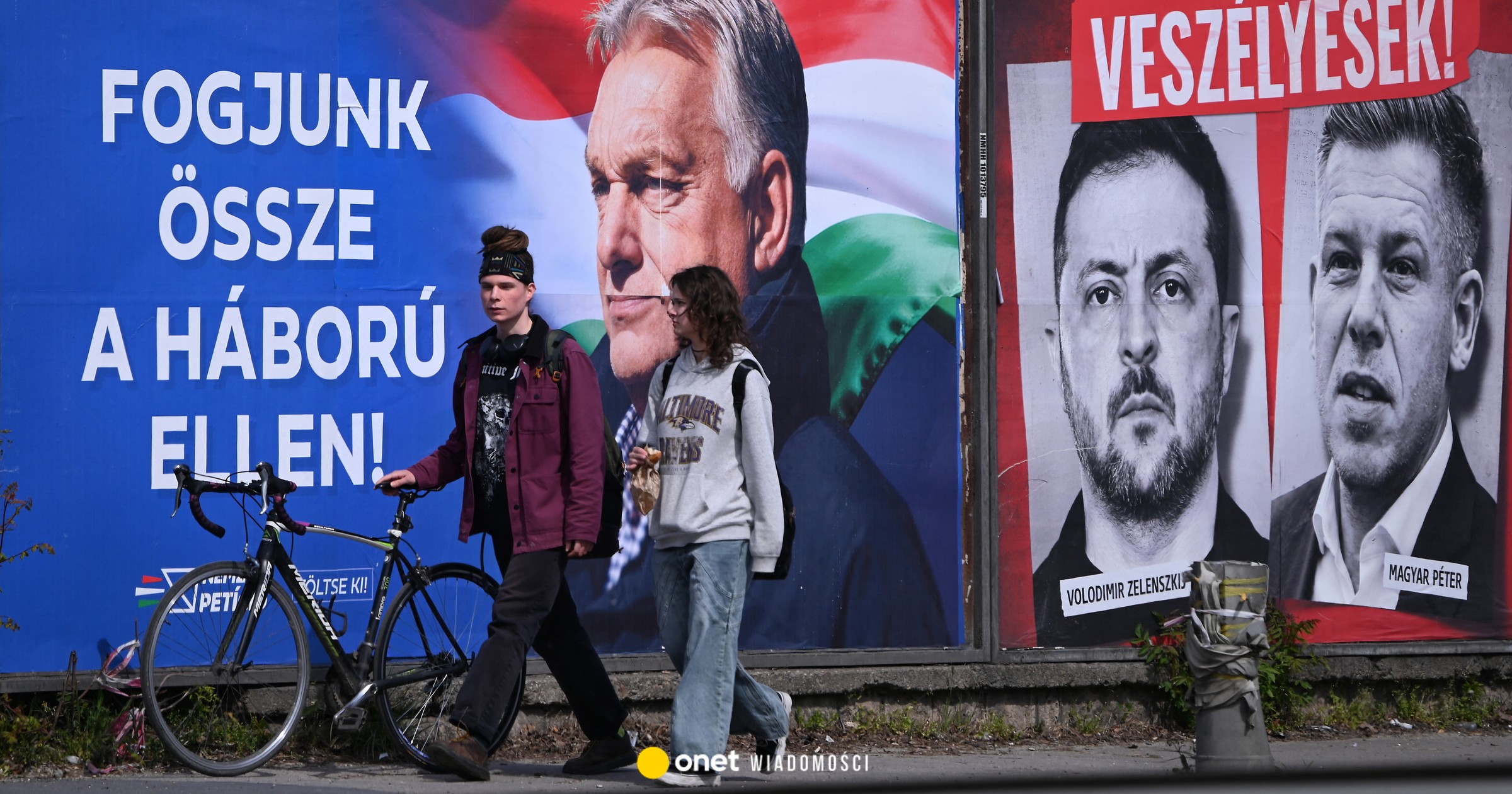
The election race is being closely watched around the world due to Orban's enormous influence as a top ally of both US President Donald Trump and Russian President Vladimir Putin.
A POLITICO poll suggests the prime minister is currently in trouble, with rival Peter Magyar and his center-right Tisza party enjoying a comfortable lead.
However, poll results do not necessarily translate into parliamentary seats – especially in Hungary's complicated electoral system.
A majority of voters will choose both a district candidate and a party-list candidate, with districts redrawn in favor of the ruling party and foreign votes added.
It's not the easiest race, but here's everything you need to know before the first results come out.
Voting logistics
Polling stations will open at 6.00 a.m. and closed at 7 p.m. April 12. Voters who are already in line when the polls close will still be able to cast their votes.
All Hungarian citizens over 18 years of age can vote; as do some over 16 if they are married.
Most will donate two voices: one for a candidate who can win a seat in direct elections in his or her constituency, the other for a party list that covers the entire country. Voters belonging to a registered ethnic group can also vote for a list based on national affiliation – although only the German and Romani minorities have enough votes to elect a representative.
Peter Magyar, April 10, 2026Balint Szentgallay / NurPhoto via AFP / AFP
What do the polls say?
The results of Hungarian surveys vary significantly depending on the research centers and organizations that commissioned or conducted them.
POLITICO excluded some pollsters because they did not meet criteria regarding sample size, methodology or transparency about funding and commissioning. If these results were also included, the gap between the two parties would narrow – but would not turn in Orban's favor.
However, polls on voting intentions rarely perfectly match election results, and given Hungary's electoral system and rigged division of electoral districts, vote shares do not correspond to ultimate political strength.
This result gave Fidesz 135 of 199 parliamentary seats – or 67.8 percent.
This does not yet take into account Imre Ritter, a representative of German Hungarians and former Fidesz member, who usually supports the ruling coalition.
Complex vote counting mechanics
The Hungarian parliament has 199 seats, of which 106 are vacant in district elections. The rules of these elections are simple: the candidate with the most votes wins the seat.
The remaining 93 seats are being filled from nationwide party lists — and this is where things get complicated.
Only parties that receive at least 5 percent votes, they can win seats from party lists. However, the calculations for these seats are not based solely on votes cast for party lists. It would be too easy. Instead, part of the votes counted for these 93 seats include votes cast in 106 district elections.
This includes not only votes cast for candidates who were not elected, but also votes that the winners did not need to overtake their closest competitors. This is the result of a 2011 reform that has since been blamed for introducing a winner-takes-all element to the system.
The seats are distributed proportionally according to the D'Hondt system, but the electoral threshold is lower for candidates from nationality lists.
Time for results
Constituency election results usually come out first, while party list voting results remain fluid throughout the night due to complex calculations.
The Hungarian electoral commission announced that vote counting will begin after the polls close at 19.00, a the first preliminary results are scheduled to appear from 8 p.m.

Viktor Orban, April 10, 2026Balint Szentgallay / NurPhoto via AFP / AFP
The commission said it expected up to 95 percent to be counted on Sunday evening. votes cast for party lists and up to 97 percent. votes in constituencies, but warned that counting 100 percent votes may take up to a week.
The first forecasts regarding the new division of seats in parliament can be expected around midnight.
Voting from abroad
Hungarians living abroad can vote by post, but only on national lists.
Mailed ballots were enough to resolution of one parliamentary mandate in 2018 and two in 2022. And with analysts now predicting that postal votes could once again decide the two seats, they could become crucial in a tight contest.
In the previous two elections, postal votes were cast they definitely favored Orbán — in 2022, Fidesz received over 90 percent. correspondence votes, and in 2018 over 216 thousand 500 out of approx. 225 thousand ballots sent by mail. This trend has previously led opposition parties to advocate removing the voting rights of non-resident Hungarians.
This year almost 500 thousand people registered to vote by correspondence. This is a record number. Many of the reported people live in Romania and Serbia. According to government data, as of this writing, over 230,000 have already been delivered on Thursday. such voices.
The largest Hungarian party in Romania, the Democratic Union of Hungarians in Romania, openly supports Fidesz, and party leader Hunor Kelemen called on Hungarian Romanians in Transylvania to support the prime minister.
Still, Magyar tried to attract Hungarians to Slovakia earlier this year by criticizing new Slovak laws regarding the controversial Benes Decrees, a set of World War II-era laws that stripped ethnic Hungarians and Germans of their citizenship and property in then-Czechoslovakia.
Meanwhile, Hungarian citizens living abroad but still domiciled in the country can cast their votes at embassies or consulates. This demographic group tends to be more supportive of opposition parties. The votes of these voters count in the national vote, both for party lists and in constituencies.
This year, a record number of voters chose this option – 90,000. 734 people registered to vote abroad. The Tisza Party has launched a website aimed at encouraging this group to participate in the elections.