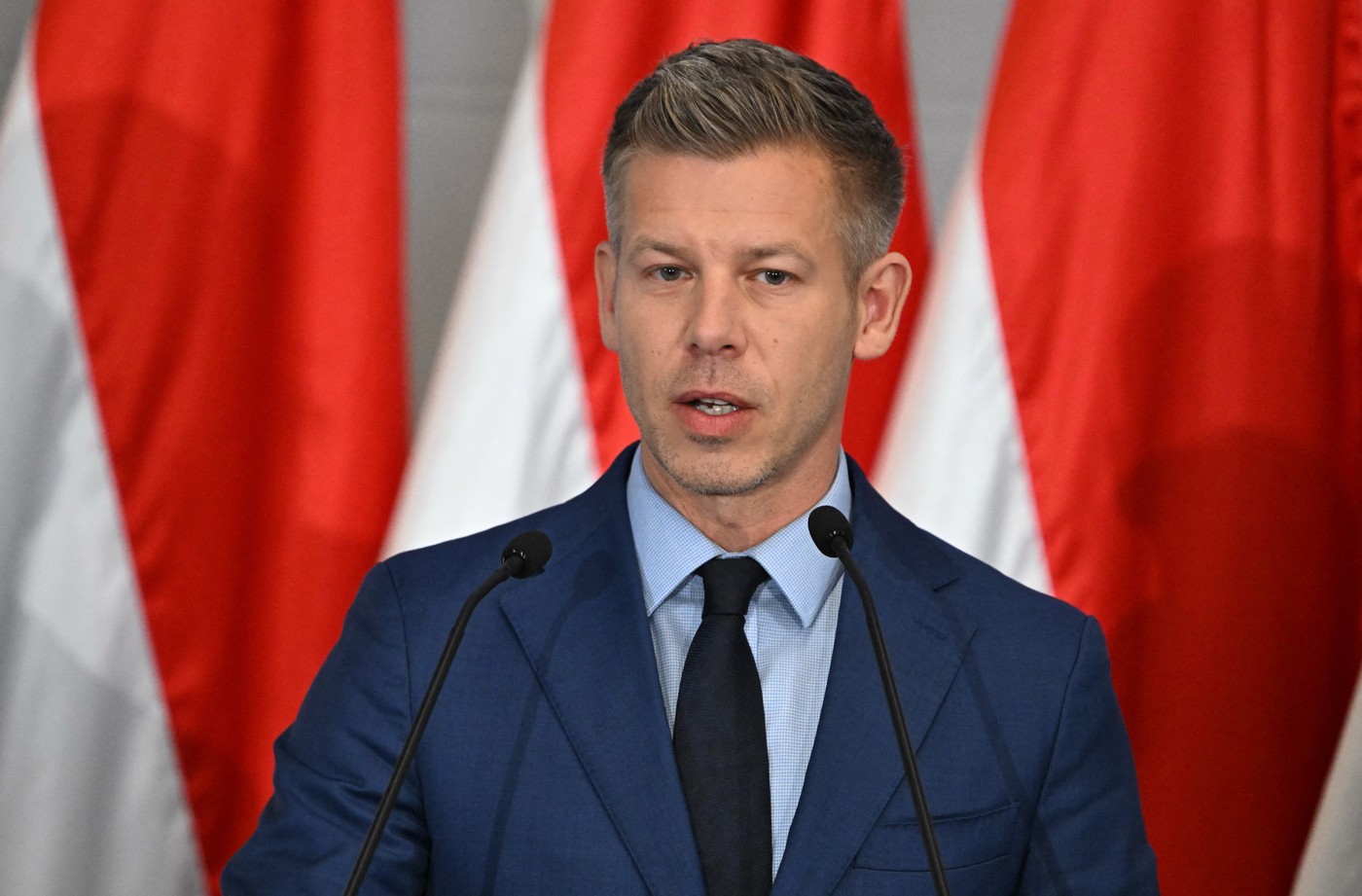
“I will not humiliate myself.” The leader of one of the greatest savings of the world face Trump and shows the ambush in which Zelenski and Ramaphosa fell with his finger

In the context in which the US customs tariffs on Brazilian products increased to 50%on Wednesday, President of Brazil, Luiz Inacio Lula Da Silva, said in an interview with no direct negotiations with US President Donald Trump, who said they will most likely be “humiliating”.
He stated that Brazil does not intend to announce mutual customs duties. His government will also not give up negotiations at ministerial level. But Lula does not rush to call the White House.
“On the day when intuition will tell me that Trump is ready to discuss, I will not hesitate to call him,” Lula said in an interview from the presidential residence in Brasilia. “But today intuition tells me that he does not want to discuss. And I will not humiliate myself,” added the Brazilian president.
Despite the fact that Brazil's exports are facing some of the biggest trump rates, the new US commercial barriers do not seem to affect the largest economy in Latin America, giving Lula more maneuver to maintain their position than most Western leaders.
Lula described the relations between the US and Brazil as being at the lowest level of the last 200 years, after Trump has linked the new rates to fulfill his request to end the criminal prosecution of the former right president Jair Bolsonaro, who is tried for the plot to overturn the result of the elections in 2022.
According to President Lula, the Supreme Court of Brazil, who judges the file against Bolsonaro, “does not care what Trump says and should not care.” He added that Bolsonaro should be judged separately, in another trial, because he caused Trump's intervention, appointing the former right-wing president “traitor of the homeland”.
“We have already forgiven the US intervention in the 1964 coup,” said Lula, who started his political career as a trade union, protesting against the military government who followed after the removal of a democratic president and who benefited from the US support.
“But now it is not a minor intervention. It is about the President of the United States who believes he can dictate the rules of a sovereign state like Brazil. It is unacceptable,” Lula pointed out.
The Brazilian president said he has nothing personal with Trump, adding that he could meet with the US leader next to the next month or UN November negotiations. However, he mentioned Trump's behavior, which argued on the white house guests, such as South African President Cyril Ramaphosa and Ukrainian president Volodimir Zelenski.
“What Trump did to Zelenski was a humiliation. It's not normal. What Trump did with Ramaphosa was a humiliation,” Lula said. “A president cannot humiliate another president. I respect everyone and ask for respect,” added the Brazilian leader.
Lula also said that its ministers are striving to initiate discussions with their American counterparts, so the Government of Brasilia focuses on internal policies to mitigate the economic impact of American tariffs, while maintaining “tax responsibility”.
The president refused to give details about the measures in adoption, meant to support the Brazilian companies. Analysts and experts anticipate that these measures will include credit lines and other forms of assistance for country exports.
He also said that he intends to convene developing leaders in the developing countries of the BRICS group, starting with India and China, to discuss the possibility of a common response to the US tariffs.
“There is no coordination between BRICS countries yet, but it will exist,” Lula said, comparing the multilateral action with the power of collective negotiations during the period when he was a trade unionist. “What is the negotiating power of a small country to the United States,” he said.
Brics is an international organization, grouped around Moscow, of which Brazil, Russia, India, China, South Africa, Egypt, Ethiopia, Iran, the United Arab Emirates and Indonesia are part.
Separately, he said that Brazil intends to file a collective complaint with other countries at the World Trade Organization (WTO).
“I was born negotiating,” said Lula, who grew up in poverty and climbed into the trade union hierarchy until he became president for two mandates, between 2003 and 2010, then returned to politics in the 2022 elections, defeating Bolsonaro, the in exercise president.
He said, however, that he is not in a hurry to conclude an agreement or take measures against the tariffs imposed by the US: “We must be very cautious,” he said.
Asked about the countermeasures aimed at American companies, such as the higher taxation of large companies in the field of technology, Lula said that his government is studying ways to tax American companies in equal conditions with Brazilian companies.
Lula also described the plans to create a new national policy for Brazil's strategic mineral resources, treating them as a matter of “national sovereignty”, so that the country breaks the history of mining exports that have brought little added value to Brazil.
Brazil is one of the greatest savings in the world, being considered the 8th global economic power. It is also the largest economy in the southern hemisphere.
In an extraordinary scene, obviously orchestrated by the White House for a maximum effect and which reminded the visit of Ukrainian President Volodimir Zelenski, Trump faced in May on the South African President Cyril Ramaphosa with false genocide statements against the South African white farmers, among whom he was accused of mass, That moment, Reuters Agency.
Then, Trump extinguished the lights in the Oval Office and transformed into the target of the newest geopolitical ambush on the South African president who-obviously prepared to counteract the accusations of his American counterpart, but unlikely to have expected a political show-was careful and calm while trying to infirm what he had presented to him, but he had to challenge him. Reputation that it is very sensitive to such treatment.
It was still a demonstration of Trump's apparent availability to use the Oval Office, which from a historical point of view is considered a space meant to honor foreign dignitaries, to put in difficulty on less powerful nations or to take responsibility for matters to which he made a fixation.
“I am sorry that I do not have a plane to give you,” said, smiling, South African President Cyril Ramaphosa's Donald Trump, alluding to the luxury plane that Qatar I was offered to the Republican Magnate to replace the Air Force One aircraft.