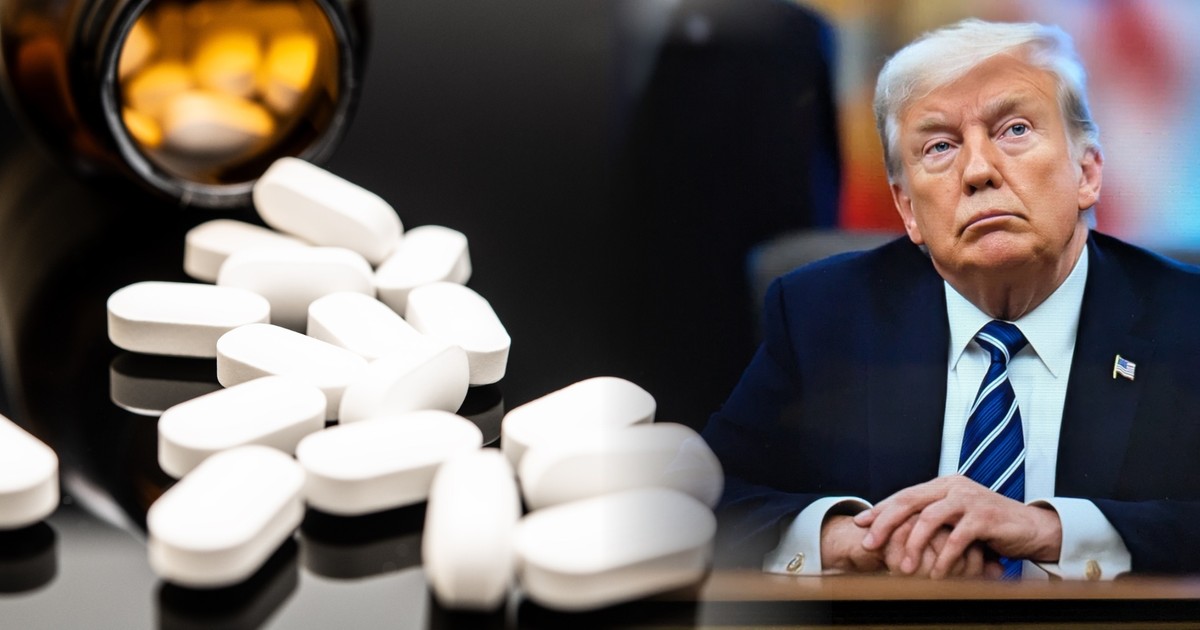
As Bloomberg writes, this is part of the pressure on pharmaceutical companies to move production to the United States.
The rest of the article is below the video
As decided by the White House the new duties will apply primarily to patented medicines produced in countries that do not have trade agreements with the US.
Even 100 percent customs duties on medicines
The highest – even 100% – tariffs will apply to companies that have not signed the so-called “most favored price” agreements (MFN).
This is a fulfillment of Trump's announcement last year, when he threatened the pharmaceutical industry with severe restrictions if production was not moved to the USA. We wrote about it in Business Insider Polska.
Various entry into force dates
The new regulations will not come into force immediately for everyone. Larger companies will feel the effects of the new tariffs after 120 days, and smaller ones only after 180 days.
This solution is intended to give companies time to adapt to new conditions or renegotiate relations with the administration.
Exceptions for allies
Not all countries will be subject to the maximum rates.
Tariffs on products from economies that have concluded agreements with the US will be limited to 15%. This includes, among others: European Union, Japan or South Korea. Even lower rates are to apply to imports from Great Britain.
- Read also: Trump's new tariffs on drugs. Exceptions for countries with agreements with the US
Incentive to produce in the USA
The administration also introduced a relief system. Companies that commit to partial production in the US will pay 20%. customs duties. If the MFN agreements are concluded, the rate may drop to zero, and the customs duty exemption will apply until January 20, 2029.
This is a clear signal that the main goal of the new regulations is not so much fiscal profit as the reconstruction of supply chains and increasing domestic production of medicines, as Bloomberg writes.
The biggest players avoided being hit
The largest pharmaceutical companies – including Merck and Eli Lilly – managed to avoid the most severe restrictions by signing appropriate agreements with the administration.
In return, they committed, among others: to lower drug prices for public programs, direct sales to American patients, or the introduction of new drugs at prices similar to those in other developed countries.
As a result, the new tariffs will hit smaller pharmaceutical companies and producers of active ingredients the hardest, writes Bloomberg.
Trump's new tariffs. What does this mean for the market?
New regulations may significantly reshuffle the global pharmaceutical market. On the one hand, they will increase the pressure to relocate production to the USA, on the other hand, they may increase costs for companies that will not be able to meet the administration's conditions. For investors and the industry, this means another stage of uncertainty, but also potential changes in global drug supply chains, according to Bloomberg.