The Semenic resort, brought back to life after a century. Major investment in the pearl of the Banatul Montan in the vicinity of Reșița

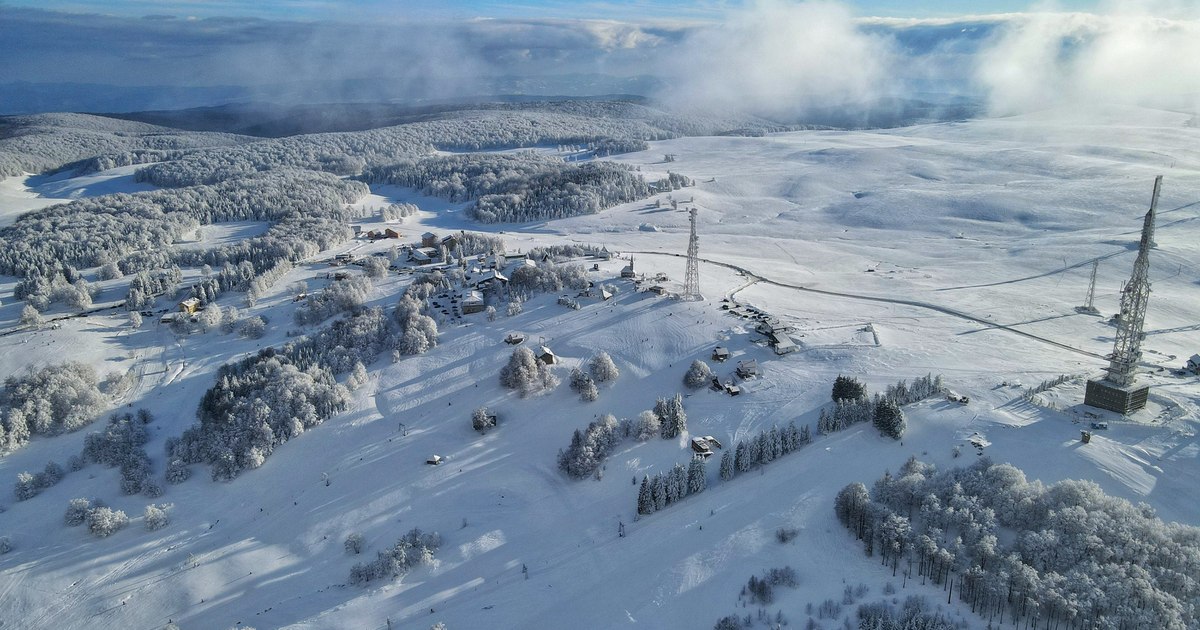
An investment estimated at over 220 million lei could revitalize Semenicul, one of the oldest mountain resorts in Romania, and could give a new tourist boost to Reșița, the metallurgical town located in its vicinity.
Semenic Photo: Banatul Montan. Facebook
Reșița, the capital of Banatul Montan and Caraş-Severin county, was for over two centuries one of the great metallurgical centers in the region. The city of 60,000 inhabitants in the southwest of Romania developed over time around the old metallurgical factories, established around 1771 and fed by the rich iron and coal deposits in the surroundings.
The industrial history of Reșița is linked to the construction, in the 19th century, of the tracks and locomotives for the first railways on the current territory of Romania, as well as the hydropower, military and petroleum equipment of 20th century Romania, the large steel plant and the car manufacturing plant at the end of the 20th century.
After 1990, the mines in the Banatul Montan were closed, and the factories in Reșița reduced their activity and the number of employees, which had reached almost 20,000 people during the years of communism.
Investment of over 220 million lei in the Semenic resort
In recent years, the community of Reșita hoped for the revitalization of the city affected by the industrial decline, counting on the tourist potential of the area, but also on the industrial heritage preserved here. One such place is the Semenic mountain resort, established at the beginning of the 20th century, in the vicinity of the city. According to the mayor Ioan Popa, the leisure area was included in an important tourist development project for the future of Reșița and Banatul Montan.
“We have started the works for the Semenic tourist area! We are talking about an investment of over 224 million lei, through which we aim to put Semenic on the European skiing map. We will build approximately 15 kilometers of ski slopes, strategically oriented to maintain snow, a modern snowmaking system, functional until the end of 2026, a state-of-the-art gondola with 101 cabins, which will reduce the time of ascent only 11 minutes away, modern transport including electric tourist buses, facilities for all seasons: zip line, adventure park, pump track and outdoor events We have already started the installation of the snow system and our goal is clear: the first tests already next season“, informed the mayor of Reșița.
The municipality's announcement was met with enthusiasm by some locals, while others questioned the efficiency of the investment, recalling that the mountain resort is at an altitude of less than 1,500 meters, where winters bring less and less snow. In fact, according to experts, climate change has made snowfalls more and more expected, and the managers of many resorts have to give up investing in slopes and ski facilities and focus on promoting them as “all-season” resorts (for the whole year), with mountain trips taking the place of invitations to ski or sled.
Reșița, the city of steel crossed by Via Transilvanica. The unique attractions of the “little Krupp of the Balkans”
The Semenic resort, the attraction of the Banatul Montan
Located in southwestern Romania, in the Banatul Montan, Mount Semenic got its name from the name of an endemic alpine plant, with white-pink flowers, that blooms on the pastures of the massif. For centuries, Semenic was a deserted land, covered by alpine pastures and centuries-old forests, with gentle peaks that reach almost 1,450 meters above sea level in its highest points: Semenic, Piatra Goznei and Nedeia.
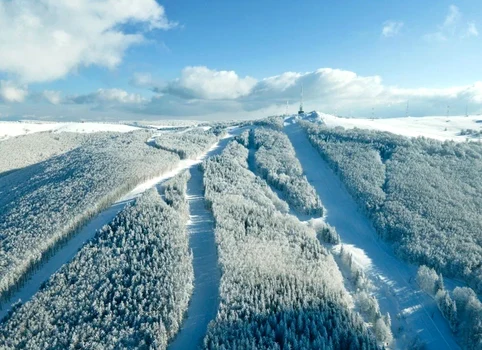
Image 1/10:
Semenic Photo City Hall Resita jpg
Until two centuries ago, Semenic was traversed only by shepherds, foresters, bands of outlaws hidden in the woods and, later, by geologists interested in coal and metal ores from the depths.
The cities of Anina, Reșita and Caransebeș developed at its foot. Only in the first part of the 19th century did the first stable human settlements of the modern era appear here. The villages of Lindenfeld (Cracul Teiului), Wolfsberg (Gărâna), Weidenthal (Brebu Nou) and Wolfswiesen (Poiana Lupului) were founded by the Bohemian settlers around 1826, the village of Wolfswiesen being exposed to blizzards, being permanently abandoned in the following years.
During the First World War, two unusual events marked the beginning of the first resorts in Semenic.
“The first incident took place in 1914, when a young forestry engineer, shortly before leaving for the front, brought his seriously ill wife from Basedow to Wolfsberg (Gărâna), considering that here she would be safer from the dangers of war. And then the “miracle” occurred that made medical circles shudder: after a short time, the young woman returned completely healed, healthy and full of life.” noted the newspaper Neuer Weg, of the German community in Romania, in 1959.
Oravița, the first railway station built in Romania, has been standing for 180 years. From here begins the most spectacular railway
The favorite resort of Banat residents
The second incident focused on the residents of Gărâna, who also became known for an episode that happened after the First World War. Then they went on skis, through the snow, to Caransebeș, in order to change their Hungarian crowns into Romanian lei in time. Through this collective race, they went down in history as the pioneers of skiing in Banat.
In the 1930s, the first tourist cabins were set up on Mount Semenic, some for the workers of the Reșiței Factories, others by the German community. After the Second World War, however, the mountains around Reșița became a favorite recreation area for the families of the thousands of workers from the Banatul Montan and for tourists from the Timisoara area. The “Trei Ape” reservoir, built in the 60s, completed the tourist offer of Banatul Montan, while the legend of the beneficial springs in Semenic continued to attract tourists.
In the 90s, the Semenic resort and the recreational areas around it entered a period of decline. In recent years, the number of guesthouses has increased, and Semenicul offers tourists accessible recreation areas and the opportunity to explore the spectacular areas of Cheile Carașului – Semenic National Park.
In winter, in the resorts of Semenic, tourists can ski on several slopes and enjoy the ozonized mountain air and the opportunity to visit the two-century-old bohemian villages.