“Ring” around Moscow. The end of Putin's fairy tales about a safe capital of Russia

Everything indicates that the towers house anti-aircraft systems designed to counter threats from long-range drones.
This is happening at a time when Ukrainian drones are increasingly reaching targets located deep in Russian territory. Even Moscow is no longer perceived as completely safe.
Early Monday morning, a Ukrainian drone struck a residential tower in western Moscow, damaging apartments and scattering debris, Russian officials and media said.
Moscow Mayor Sergei Sobyanin said the drone hit a building near Mosfilmovskaya Street around 1 a.m. Russian Telegram channels said the impact hit a high-rise complex, destroying walls in three rooms on the 36th floor. Part of the facade collapsed onto a parked car, and debris and broken glass scattered below.
According to the Astra website the building is located about 6 km from the Kremlin.
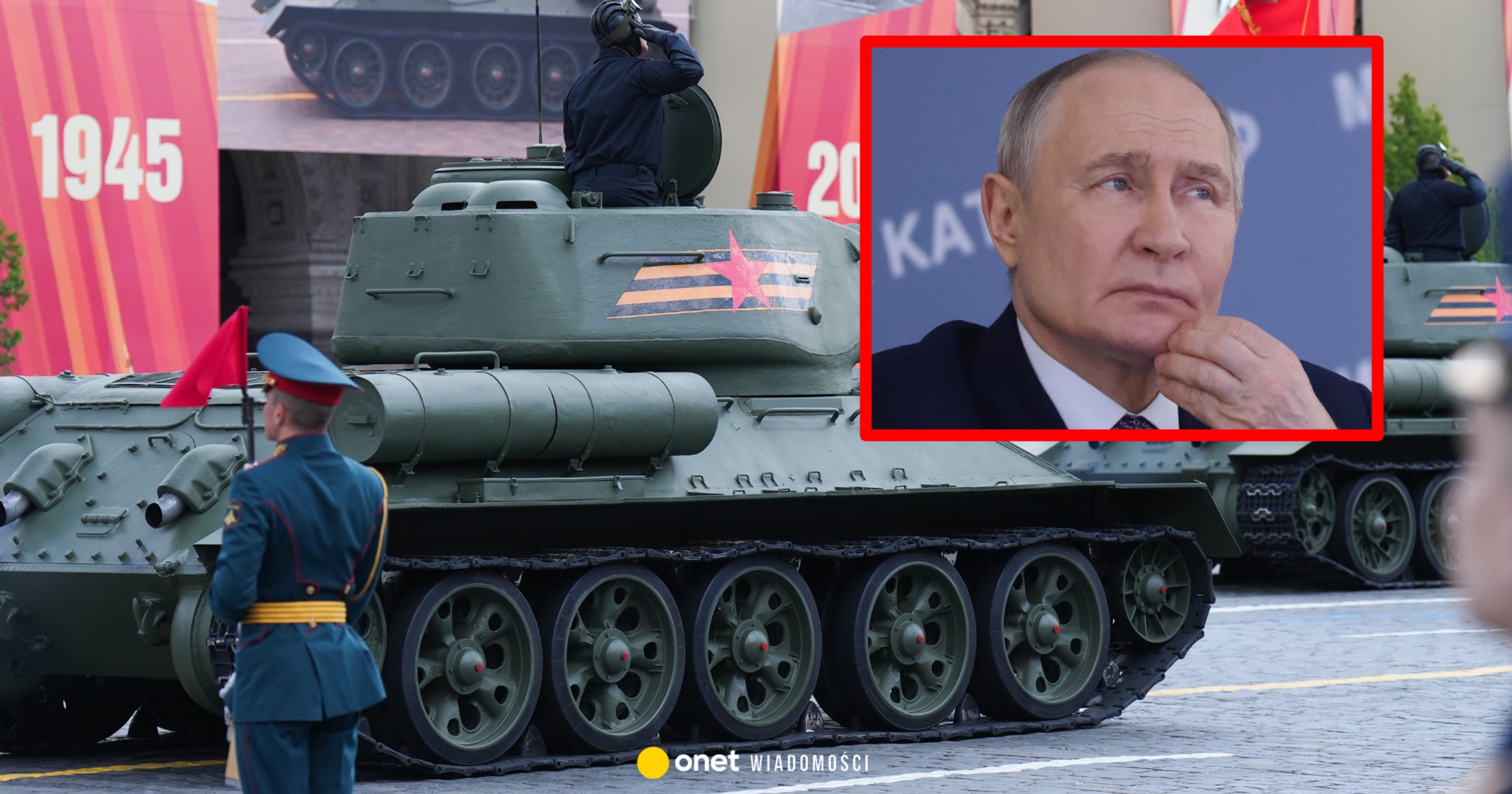
Security concerns are particularly acute ahead of the May 9 parade in Red Square, commemorating the Soviet Union's victory over Nazi Germany. Due to fears of drone attacks, this year's event is expected to be held without heavy military equipment.
Authorities have also taken unprecedented steps to mitigate potential threats. Mobile internet has reportedly been restricted — and in some cases disabled — in Moscow and St. Petersburg until May 9 amid concerns that drones could use cellular networks for navigation.
Parade but disruption
The disruption is already affecting everyday life, causing problems with communications, taxis and banking apps.
Alexei Zhuravlov, deputy chairman of the State Duma's defense committee, described the parade as a “dangerous event”, warning of possible attacks by a swarm of Ukrainian drones.
Speaking at the opening of the 8th summit of the European Political Community in Yerevan, Zelensky suggested that Russia is no longer able to demonstrate the same level of military power as in previous years.
He noted that Russia had announced a parade on May 9, but stressed that “there will be no military equipment at this parade,” calling it the first time in many years that Moscow “cannot afford the presence of weapons.”
Zelensky added that Ukrainian drones could also attack the event, saying it showed that Russia “is no longer as strong as before.”
At the same time, European intelligence assessments suggest that Vladimir Putin fears not only external attacks but also internal threats, including a possible assassination attempt or coup d'état – with drones seen as a potential method.
As Moscow strengthens its defenses, the Bild report indicates that air defense systems may be moved from other regions, raising concerns that protection is concentrated around the capital at the expense of a wider range.
At the same time, the Kremlin is expanding the circle of entities that can respond to threats related to drones. In late March 2026, Putin signed amendments to Russia's weapons law allowing private security companies to use military-grade small arms, including combat rifles and ammunition.
The stated goal is to protect critical infrastructure, especially in the energy sector, from drone attacks — marking a significant shift in Russia's long-standing policy of relegating such security tasks solely to the military.
Russia is taking risks
Earlier reports from August 2025 indicated that Russia was rapidly strengthening its air defenses around Moscoweffectively rebuilding its multi-layered Soviet-era system in response to repeated Ukrainian drone attacks.
An investigation by Radio Liberty, based on satellite imagery and OSINT data, found that after Ukrainian drones first arrived in Moscow in May 2023, over 50 new surface-to-air missile (SAM) sites were built.
Many of the new sites are equipped with Pantsir-S1 systems deployed on roofs, landfill embankments and near key infrastructure, often next to larger S-300 and S-400 batteries.
Interestingly, several sites were installed on or near former positions of the Soviet S-25 Berkut system, indicating a deliberate restoration of Cold War-era defense systems.
Satellite data shows that construction continued until 2025, and the new Pantsyr sites are concentrated along key transport routes such as the Moscow Central Ring Road (TsKAD) and the so-called “small concrete road”.
Analysts say this reflects efforts to create overlapping defense “rings” around the capital, with some of the newer layers placed even closer to Moscow than the original Soviet lines.
However, modernization carries risks. Many systems are now located near densely populated urban areas, increasing the likelihood that falling debris or unexploded ordnance from intercepted drones will cause harm to civilians.
At the same time, reports suggest that air defense systems are clustered around Moscow and other major cities — as well as elite residences — potentially reducing protection for frontline regions such as Kursk, Bryansk and Belgorod.