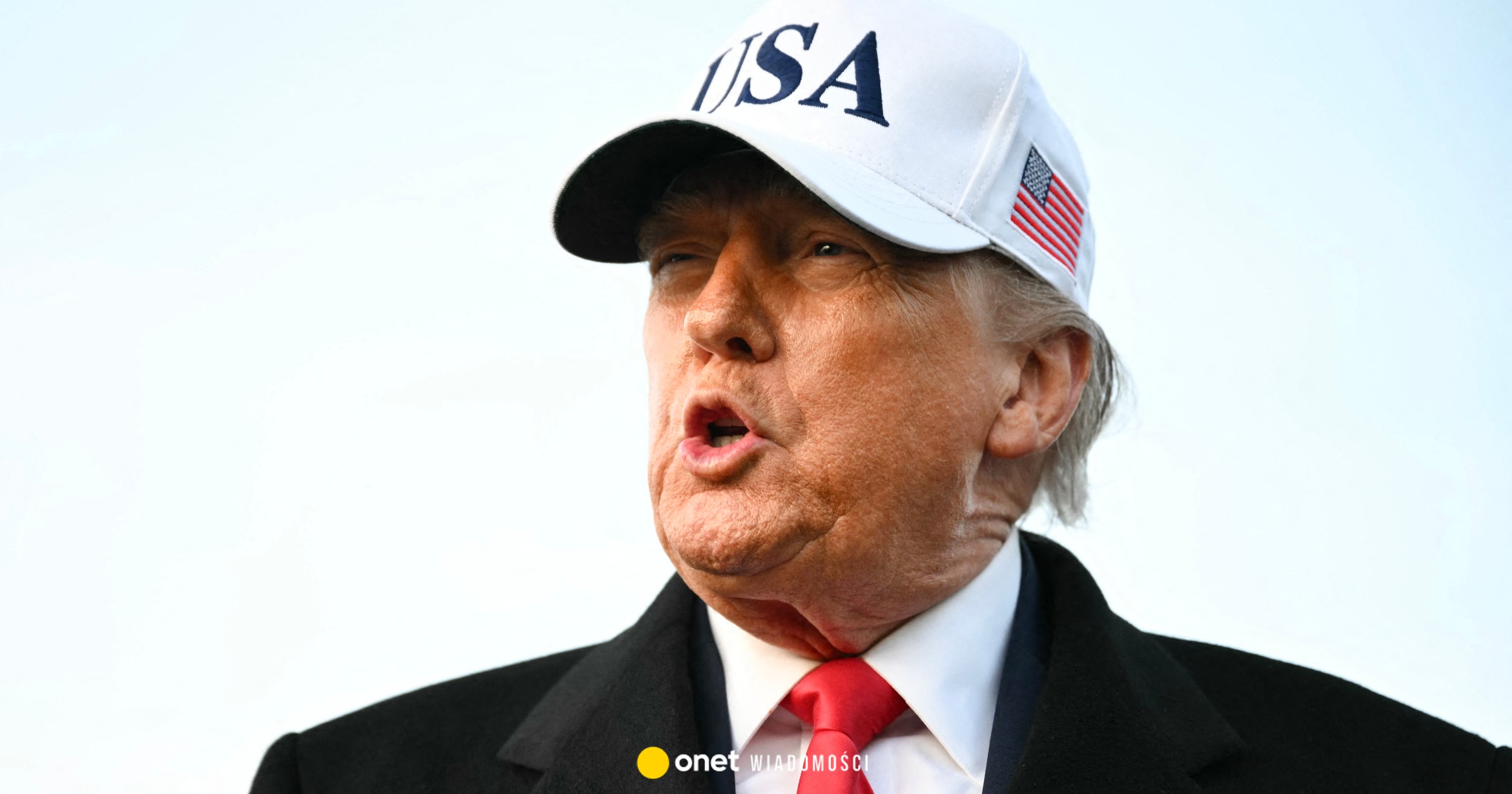
Europe loves to say: “we need to talk”. Donald Trump is guided by the principle: “we act.” This is why Trump proves attractive where words have no longer had any effect for decades — in the Middle East, especially with regard to Iran.
While Brussels, Berlin and Paris are drowning in declarations, conversation formats and “tremendous concern”, Trump is perceived by many as someone that Europe no longer wants: a power politician who forces decisions. Regardless of whether someone supports Trump in his policy towards the Middle East or not, he is taken seriously there because he claims the right to introduce a new order.
Yes, Trump arouses extreme emotions. Yes, he acts impulsively. Yes, he takes risks. But in regions where oppression is not a theory but an everyday reality, European caution is not considered “responsibility”, but cowardice. And this is an uncomfortable truth: what matters for freedom movements is not whether someone looks good on a talk show, but whether they can put pressure on the aggressors.
Europe is afraid of any escalation. And escalation and
European policy in the Middle East is a long-recognized ritual. It is condemned. Admonishes. He appeals. Invites you to talk. “It focuses on dialogue.” And in the end, nothing happens that regimes really need to fear.
The article continues below the video
The problem is not a lack of values. The problem is the lack of enforcement in practice. European foreign policy resembles an administrative procedure: correct, careful, competent, but rarely effective.
Trump at least plays the role of pressurizing regimes, and Europe often appears as his opposite: an alliance that replaces action with a never-ending process. Europe is so afraid of escalation that in effect, it encourages any escalation triggered by regimes — because they know that the reaction will be predictably mild.
It's not about whether Europe wants “war”. The point is that Europe often confuses de-escalation with passivity. And passivity in the Middle East is not a sign of neutrality, but an invitation to the stronger.
It is in this niche that the myth of Trump arises: the man who he is not involved in the diplomatic farce and that at least makes him look like a player who's making a difference.
In the West, Trump's style is often perceived as chaotic. Apart from that, it is sometimes interpreted as a signal: this president does not avoid confrontation. Whether people like his decisions is another matter. The key is that one sees him as someone who not only comments but also acts. And this, in a region where authoritarian systems have learned to wait out Western outrage, is an important psychological factor. Regimes are less afraid of moral judgments than of real consequences.
What's at stake in Iran
In the case of Iran, Trump's image as a “man of action” is not a superstructure – it is its capital. And at the same time its weak point. Because if Trump doesn't take action and allows the regime in Tehran to operate unimpeded, he will lose precisely what the Middle East values him for: credibility that comes from consistency. Then all that will remain from the tough attitude is PR – and in Tehran PR is cheap. Authoritarian systems test limits. Not because they “don't understand”, but because they are calculating.
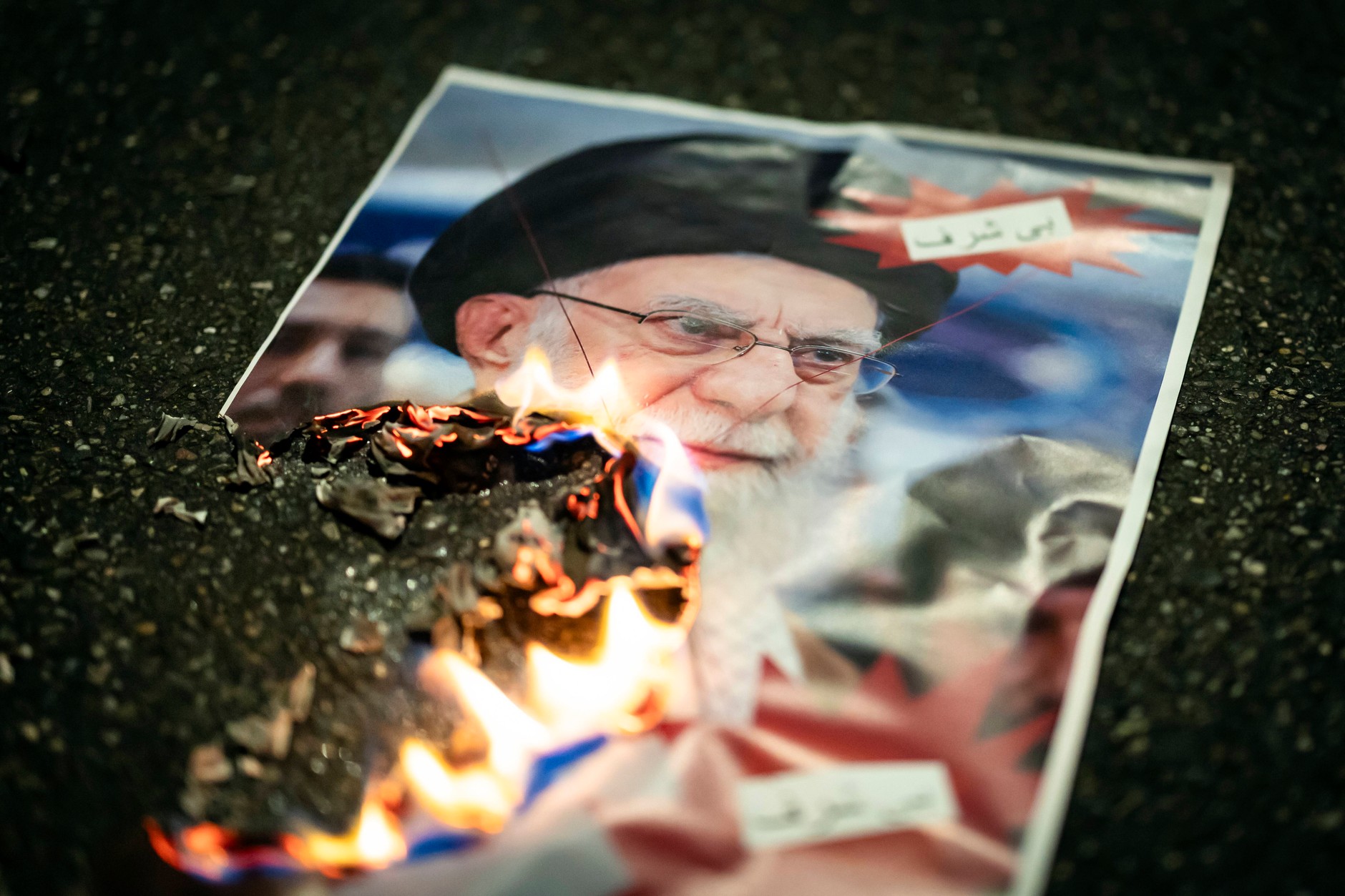
A photo of Iranian leader Ali Khamenei is burned during a rally in support of nationwide mass demonstrations against the government in Iran. Zurich, Switzerland, January 13, 2026EPA/MICHAEL BUHOLZER / PAP
If Trump imposes no tangible consequences on Iran, it will weaken deterrence — not only against Tehran, but anyone who tests American resolve.
And one more thing: it's about the Trump legend. For many who oppose oppression, the foreign attitude is not a matter of symbolism but a matter of survival. If Trump presents himself as an opponent of the regime and then hesitates or looks away, the most dangerous scenario arises: it raises hopes – and leaves people alone with the consequences. This would not only be morally disastrous, but also politically unwise: it destroys trust in the long run.
In the case of the Iranian regime, the rule is simple: if Trump allows it to operate, he loses more than just influence – he loses his story. He will no longer be the one who challenges authoritarian systems, but just another Western politician who looks the other way at a crucial moment.
Against this background, Europe still looks like a spectator in an audience: morally outraged, politically ineffective. And that is why many supporters of freedom in the Middle East do not turn to Brussels – but to who at least it gives the impression that inaction is not an option for him.
I’m Ashley Davis as an editor, I’m committed to upholding the highest standards of integrity and accuracy in every piece we publish. My work is driven by curiosity, a passion for truth, and a belief that journalism plays a crucial role in shaping public discourse. I strive to tell stories that not only inform but also inspire action and conversation.