
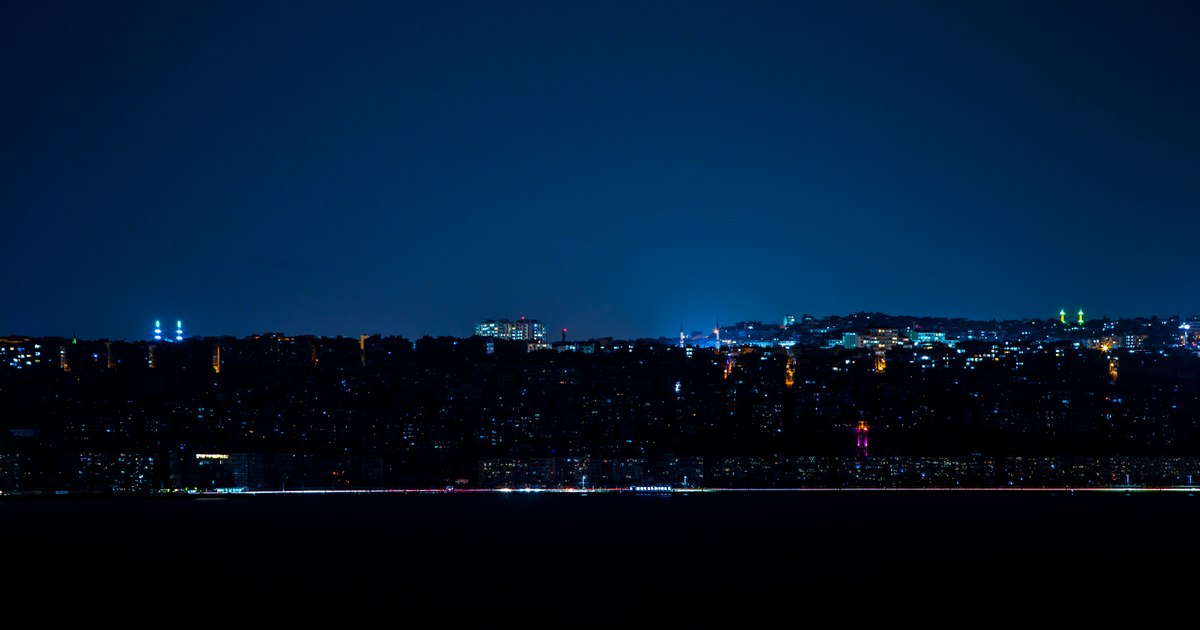
Every year at the end of March, millions of people around the world turn off their lights for an hour. The gesture, although simple, has global significance: it is a wake-up call about climate change and the excessive consumption of resources.
Photo credit: Shutterstock
The event is known as Earth Hour and takes place, as a rule, on the last Saturday of March, between 20:30 and 21:30. During this interval, homes, public institutions and emblematic buildings in major cities remain in the dark, in a symbolic gesture of solidarity with the environment.
The idea originated in 2007 in Sydney, when local authorities, together with environmental organizations, decided to turn off the lights to draw attention to climate change. Since then, the initiative has expanded rapidly, reaching over 190 countries and thousands of cities around the world.
What does Earth Hour actually mean?
Although at first glance it seems only a symbolic gesture, Earth Hour has the role of drawing attention to the impact that energy consumption has on the environment. The organizers have conveyed, over time, that it is not only about that time when the lights are turned off, but about the awareness of some daily habits that we have that contribute to pollution and global warming.
Each year, the event also comes with messages related to protecting natural resources, reducing energy consumption and individual responsibility. Basically, turning off the lights becomes a collective gesture through which people show their support for concrete actions in favor of the environment.
How the event is marked in Romania
And in Romania, Earth Hour annually gathers authorities, institutions and ordinary people in the same symbolic gesture. In large cities, public lighting is reduced in certain areas, and in important buildings, such as the headquarters of institutions or monuments, the lights are turned off for an hour.
Over time, institutions such as the Government, the Parliament Palace or local administrations from several cities have participated in the event. In some cases, outdoor events, walks or symbolic activities aimed at drawing attention to environmental protection were also organized.
Participation is not mandatory, and the gesture remains voluntary. This is what gives it strength: the fact that millions of people consciously choose to participate.
How big the phenomenon is globally
From the first edition to the present, Earth Hour has become one of the largest events dedicated to the environment. Every year, thousands of cities around the world turn off their lights simultaneously, and iconic buildings such as the Eiffel Tower, the Colosseum or the Empire State Building take part in the action.
The number of participants grew steadily, and the event became known globally. Even if there is no exact statistic of the number of people involved, the extent of the phenomenon is evident by the participation of institutions and large cities.
Does it have a real impact or not?
Over time, there have also been critics who say that turning off the lights for an hour produces no real impact on the environment. Specialists say, however, that the main goal is not to reduce energy consumption in one evening, but to change the mentality.
Earth Hour it functions as a moment of awareness. It is a pretext to bring environmental issues back into the discussion and to encourage long-term changes, such as reducing consumption, using resources responsibly or adopting more sustainable habits.
And while the gesture of turning off the lights on March 28 does not, by itself, solve environmental problems, it remains one of the few times when millions of people around the world do the same thing, at the same time, for the same cause. And this, say the organizers, is a first step towards change.


