The end of an era. After 700 years, British nobles lose their inherited privilege of being part of the House of Lords

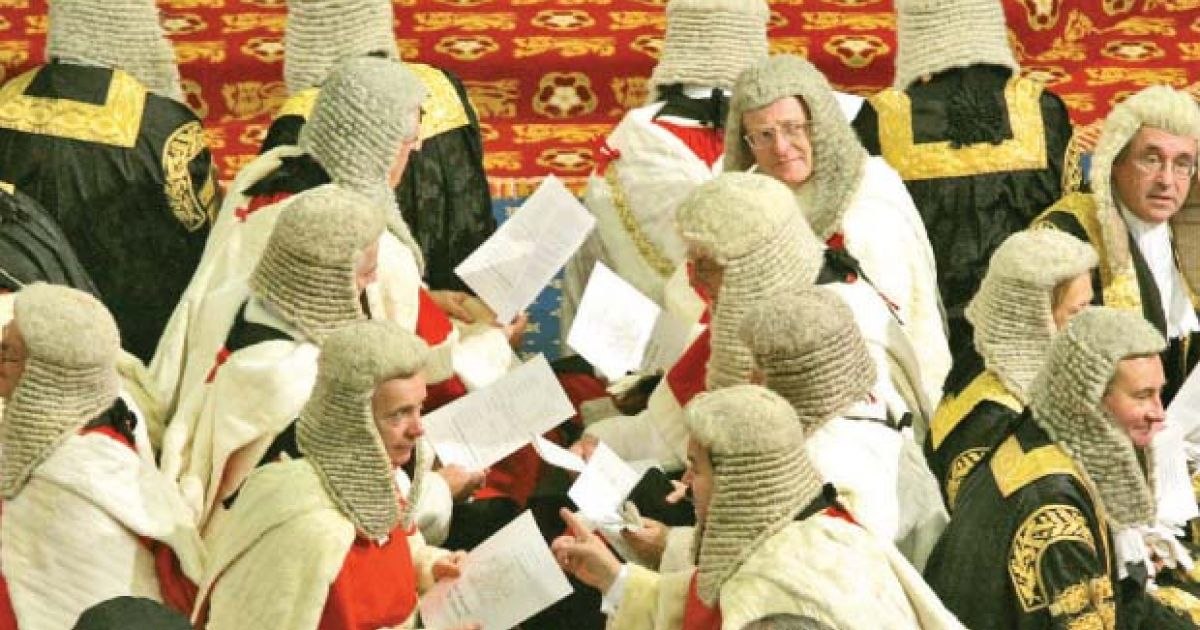
After more than seven centuries, the British aristocrats are losing their political privileges inherited with the title of nobility and the place in the House of Lords in the British Parliament.
British nobles lose the right to automatically be part of the House of Lords. PHOTO: archive
On Tuesday, March 10, members of the upper house of Great Britain withdrew their objections to the bill previously passed by the House of Commons, which forces dukes, earls and viscounts to give up their seats in the Legislature inherited with the peerage, considering that the change ends “an archaic and undemocratic principle”.
“Our parliament should always be a place where talent is recognized and merit counts. It should never be a gallery of networks of old friends, nor a place where titles, many of them awarded centuries ago, hold power over the will of the people.”explained Minister Nick Thomas-Symonds.
The House of Lords has long played an essential role in British democracy, reviewing and correcting laws passed by the House of Commons. However, critics have always argued that it is an unwieldy and outdated institution, and scandals such as that of Peter Mandelson, who resigned in February after the scandal regarding his ties to the pedophile Jeffrey Epstein, have brought the controversial behaviors of some members back to the fore, notes APNews.
Reforming the House of Lords
The House of Lords currently has more than 800 members, making it the second largest legislative chamber in the world, after China's National People's Congress.
During its 700 years of existence, most of the seats were inherited by noble men, with the exception of a small number of bishops. In the 1950s, “life peers” were introduced – retired politicians or outstanding figures appointed by the government – who now make up the majority of the House. About one in ten members are still hereditary lords.
In 1999, Tony Blair's Labor government removed most of the 750 hereditary nobles, leaving 92 temporarily, to avoid an aristocratic rebellion. For a quarter of a century, the other noble heirs remained, until the current government, led by Prime Minister Keir Starmer, introduced legislation to remove them from the House. Hereditary members tried to oppose the measure, and after negotiations it was agreed that a limited number of them would keep their seats, but through a transitional procedure: they would be transformed into life members, that is, they would no longer occupy inherited seats, but would be appointed by the government for the duration of their lives. Thus, the influence of the traditional aristocracy is significantly reduced, but retaining a symbolic number of hereditary members in the chamber.
The law will become official after King Charles III's royal assent, and the hereditary Lords will leave the House at the end of the current parliamentary session this spring.
Nicholas True, the leader of the Conservative opposition in the House, emphasized the importance of the moment.
“Here we are, then, at the end of more than seven centuries of hereditary Lords in this Parliament. Thousands of Lords and Nobles have served their country here, and thousands of legislative improvements have been made. It has not all been a stereotypical history of ermine reaction. Many of these men, no doubt, were imperfect, but for the most part they served their country with loyalty and competence.” he scored.
The Labor government promises to replace the House of Lords with a second legislative chamber “more representative of the United Kingdom”, but the full change will be a gradual process.