The secrets of the devastating blows of Ukraine on the territory of Russia: “Our drones are now Mercedes”

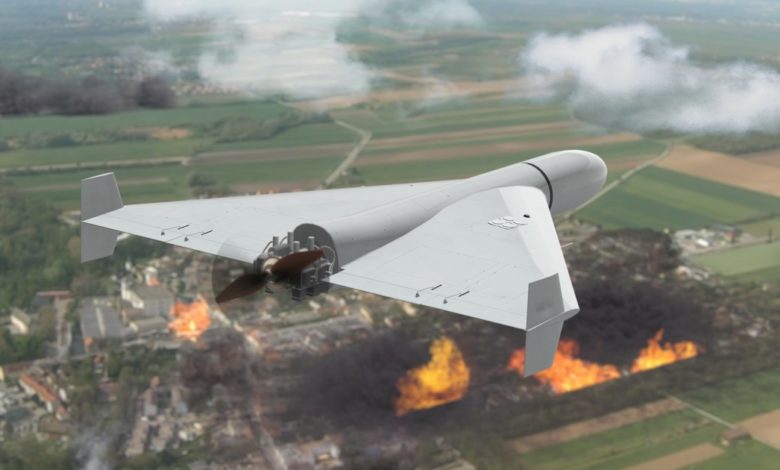
While the allies debated military aid, the Ukraine's defense industry exploded, triggering a real technological revolution – from Drone with record range to the cheapest missiles in the world, a Euromaidan Press analysis shows.
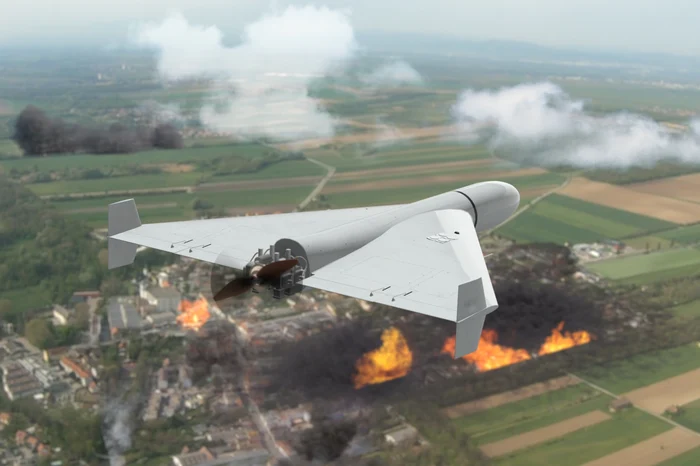
Ukrainians changed the face of war with the help of shutterstock photo drones
At 1120 kilometers between the borders of Russia, a huge fire envelops a drone factory. In a few seconds, 264,000 tons of ammunition jumped in the air, derailing Russia's summer offensive just before it started.
A single force lies behind strategic attacks with drones in the depth of Russia: the local technology of Ukraine.
In just two years, the domestic production has increased ten times, now covering 40% of the first line needs.
Thus, three years after the beginning of the large -scale invasion, hunting has become a hunter, and now Moscow's military planners are experiencing calls to emergency protecting facilities that they once considered intangible.
Former Defense Minister Oleksii Reznikov talked about “Silicon Valley moment of Ukraine” – a technological explosion during war, in which engineers turn garages into armament laboratories and exceed real -time superpower. From his point of view, the most intelligent way to secure Europe is not to increase the aid, but common investments that transform this boom in defense into a common arsenal.
“Ukraine will always need its own technological superiority, so that Russia knows that we will respond to every attack.”said President Zelenski.
Innovation in the field of drones
In no area the technological leap is more visible than in the drone sector – which started with models funded by crydfunding. What started as an effort at local level in 2014 evolved in a large-scale production: until the end of 2023, almost 40% of the front weapons were manufactured internally. In 2024 alone, Ukraine produced 1.5 million drones, and now constitute over 95% of those used on the front.
Kiev has authorized 330 drone models in 2024. Ukraine has increased its long -range drone production reaching 2,000 units per month – an increase of ten times in just two years.
Among the most significant tenchologists are a long-range re-useful bombarder- which is believed to be a modified Aeroprakt Aeroprakt Sports aircraft- which can fly 1,900 km and launch a 222 kg bomb before returning to the base.
Devastating attacks on Russia's territory
These new capacities already reshape the battlefield. In January 2025 alone, Ukraine destroyed nine Russian oil refineries – eliminating 10% of the country's refining capacity and bringing crude oil production to the lowest level in the last 20 years. In just six months, Ukrainian drone attacks on Russia's energy sector have caused at least $ 658 damage, even according to conservative estimates.
Ukrainian drone attacks have a success rate of about 67%, which forced the Kremlin to recognize an increasing vulnerability to these attacks.
According to Serhii Kuzan, the president of the Ukrainian Center for Security and Cooperation, Ukraine's drones are aimed at blocking the fuel supply of the Russian army and reducing export revenues that finance the Kremlin war – which is a direct blow to both the economy and the armed forces.
“Although Moscow has found ways to protect themselves from some of the effects of sanctions, it does not have a complete protection against Ukrainian drones,” he says.
Ukraine hit Russia 7,000 times with own manufacturing weapons
The ability of Ukraine to perform attacks at 2,000 kilometers in the depth of Russia redefines the front lines – bringing the war on a territory considered to be untouched by Moscow. The strategy is clear: paralyzing logistics, destruction of ammunition deposits and reducing pressure on the front lines.
Until October 2024, Ukraine had over 7,000 attacks on the Russian territory – some reaching up to 1,700 kilometers.
Given the restrictions on the use of western weapons in the Russian territory, Ukraine was forced to rely on indigenous technology.
According to the head of the Ukrainian army Oleksandr Sîrski, Ukrainian attacks on long -range deposits in Russia have halved the fire rate of Moscow – reducing daily bombings from 40,000 to 23,000 at the beginning of 2025.
The Ukrainian attacks reached the peak on April 22, when a massive explosion devastated the 51st arsenal of the main rocket and artillery (wheat) direction in Barsovo, Vladimir region-one of Russia's largest ammunition deposits. It is believed to contain up to 264,000 tons of ammunition, the explosion marking one of the most devastating attacks on Russia's military arsenal so far.
Preliminary reports suggest that a long -range Ukrainian drone attack – probably using the local Palianiția system – caused catastrophic secondary detonations that have affected Russia's one -year supply, the explosion being visible from space.
The Paliciei was presented in August 2024. Proposed by a reaction engine, the drone performs high -speed blows that avoids Russian air defense – allowing almost 20 blows on air bases and ammunition deposits, once inaccessible areas due to Western weapons.
A new military doctrine
As the drones begin to replace the traditional artillery in certain portions of the front, the unanswered systems have become the spine of the Ukraine's strategy on the battlefield.
“The Ukrainians are mainly based on unidirectional attack drones, as well as on some local cruise rocket systems”, explained the general of the American army Christopher Cavoli, the head of the European Command of the United States.
This evolution is both institutional and tactical. Iuri Fedorenko, the commander of the Achilles Drone Battalion, says that the unit has eliminated almost 20,000 enemy targets using drones and expects to reach these figures annually, once it will be fully equipped.
On February 9, the Ministry of Defense of Ukraine launched the “Drones Line” initiative – a major effort to place the drones in the center of the front operations. The program aims to modernize the war by equipping the elite terrestrial forces and the border units with advanced pilot systems.
The Minister of Defense, Rustem Humorov, called it “a transforming step in war”.
The first phase is targeting five elite units to create an integrated infantry-Drone attack system with an area of destruction of 10-15 km, designed to catch and destroy the enemy forces. The initiative also improves the capacities of recognition, targeting and precision attack.
It marks the latest step in the effort of Ukraine to turn drones into a complete military field. In February 2024, the Ministry of Defense launched the forces of unanswered systems (USF) – a branch dedicated to the war with drones, electronic struggle and integration of artificial intelligence.
Economic rockets with an unparalleled ray of action
Samuel Bendett, a senior researcher at the center for a new American security, notes that Russia is getting more and more Ukrainian tactics. He notes that the forces of newly formed unmanned systems (FSA) formed by Moscow, launched in December 2024, could be modeled after the Ukraine's unit, established in February.
Despite the constraints imposed by the war, Ukraine rapidly intensified the domestic production of weapons. Casper, the commander of the battalion within the 14th Separate Regiment, says that 80-90% of the drones he uses are manufactured in Ukraine – compared to almost total dependence on foreign models in the first years of the war.
“At first it was the opposite,” he says. “Foreign models are like Toyota now, while the Ukrainian ones are Mercedes. Ours are much more advanced.”
Ukraine aims to produce around 30,000 long -range drones by 2025, capable of attacking targets over 1,600 km inside Russia.
To ensure the success of long -distance attacks, Ukraine often sends bait drones to overwhelm the Russian air defense – opening the way for attack drones to hit targets in the country. Tactic works: Drone now reaches targets over 1,000 kilometers away, slipping untouched by Russia's defense.
From the sea killers to the terrestrial attackers
More local systems are now in action. The Neptune Rocket – initially designed to hit ships and credited with the sinking of the Moskva ship in 2022 – was subsequently adapted for terrestrial attacks. In 2024, the modernized system began to hit targets in Russia, including a March 2025 attack on the Tuapse refinery, over 1,000 kilometers away.
Grim-2, a hypersonic ballistic missile, passed the tests at the end of 2024, while Palicie, a racquet-drone hybrid, entered mass production in December.
Ukraine has also started to use peklo rocket drones (“hell”) – long -range weapons, capable of flying 700 km at 700 km/h. Developed in less than a year, Peklo drones are rivaling with Russian cruise missiles in terms of performance, but it costs much less – below $ 200,000 per unit, even with the cheapest rockets in Russia, starting from $ 500,000.
In February 2025, Kiev took a step further and revealed the light cruise rocket – a capable attack system that costs only $ 14,000. which does it one of the cheapest cruise missiles globally.
On March 17, Zelenski announced that a long -range drone developed internally completed a 3,000 -kilometer -range test. In the same press conference, he highlighted the progress in the Ukraine's missile program, including “Long Neptune”, a new rocket with a 1,000 -kilometer range that has already been tested.
“We develop a line of long -range weapons that will help to guarantee the security of our country”said Zelenski
From promises violated to technological progress
Officials say that even more advanced systems are secretly tested, while the decentralized ecosystem of Ukraine – described as the largest military laboratory – continues to develop state -of -the -art capabilities to overcome the greater and better funded forces of Russia.
Volodimir Dubovik, director of the Center for International Studies at Odessa Mecinikov National University, says the Ukrainian program of long -range drones and rockets advanced quickly – despite the pressure of a large -scale war.
“We can only imagine the potential in time of peace”, he says. “If the external partners add more technologies and funding, this would only amplify the effect and accelerate the process.”
“These weapons cannot, at this moment, complete the advance of the Russian troops in southern and eastern Ukraine.” he says. “But they can delay and seriously complicate this process, while destabilizing certain regions of Russia. ”
The advantage of Ukraine in the field of drones attracts the attention of the Pentagon. As part of the Artemis project, the US tests tester Ukrainian Kamikaze Drone – built with American partners – to see how it is resistant to GPS and electronic warfare.
The purpose is to build resistant and low cost systems, prepared for rapid implementation in future intensity conflicts, including potential confrontations with China.
“Ukraine does the right thing – it creates its own pressure points”says Bill Cole, the founder of the Peace Institute by force. “If the West is late, Ukraine will do it alone. But if we are smart, we will help them now and make sure that the next war will never start. ”