Sharp reaction from the Presidential Palace. Bogucki: There is no consent to the illegal removal of prosecutors

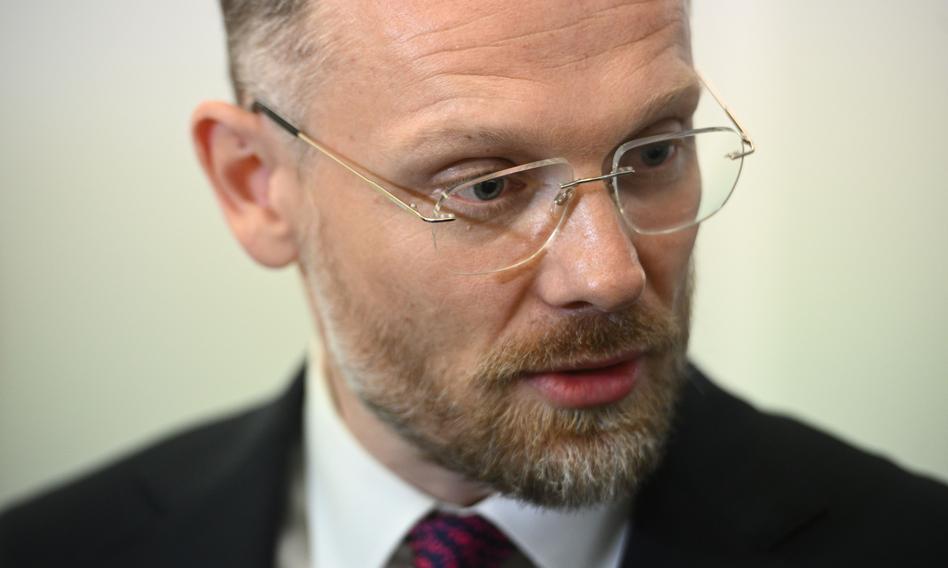
The head of the KPRP, Zbigniew Bogucki, addressed the head of the Ministry of Justice, Prosecutor General Waldemar Żurek, and stated that only the president consents to the dismissal of the deputies of the Prosecutor General. Any other attempt to deprive the deputy prosecutors general of their functions will be a crime, he stressed.
At Tuesday's press conference, the head of the KPRP said that earlier in the day, President Karol Nawrocki met with the deputies of the Prosecutor General. KPRP reported that the meeting with the president was attended by: Robert Hernand, Tomasz Janeczek and Krzysztof Sierak.
The president's prerogatives in the prosecutor's office
According to Bogucki, the situation in the justice system and the prosecutor's office – in his opinion primarily due to the actions of the head of the Ministry of Justice, Waldemar Żurek – is “very bad”. He added that there is information that an “attempt to dismiss, or rather illegally remove from office by resolutions or various types of opinions” of the Prosecutor General's deputies is being prepared.
According to the head of the KPRP, in accordance with the regulations, it is the president who consents to the dismissal of these prosecutors. He noted that this is “a statutory, exclusive power of the President of the Republic of Poland, which results from Article 14 of the Act on the Public Prosecutor's Office.” – Any other attempt to deprive any of the Deputy Prosecutor General of his functions will be a clear illegality and a crime. And this message is addressed primarily to Minister Żurek, said Bogucki.
According to Bogucki, currently the PG's deputies – appointed under the previous government, when Zbigniew Ziobro was in charge of the Ministry of Justice – cannot perform their duties and are victims of some kind of “mobbing”.
The head of the KPRP also pointed out that Nawrocki's meeting with the PG's deputies is part of a series of meetings with other representatives of the “broadly understood justice system” – with the presidents of the Constitutional Tribunal and the Supreme Court, the National Council of the Judiciary and judicial disciplinary spokespersons. As he said, during these meetings the president obtained information about “very bad signals coming from the justice system” in connection with the government's actions.
The picture looks very bad. (…) We are dealing with authorities that are ostentatiously and plannedly trying to destroy the Polish justice system, in many dimensions of its functioning – said Bogucki.
Conflict over the National Council of the Judiciary: veto and Minister Żurek's “plan B”.
He drew attention to, among others: on the situation in the National Council of the Judiciary and the government's recently vetoed amendment to this body, prepared by the president. Bogucki emphasized that the currently applicable regulations from 2017 have never been formally questioned, apart from the political and journalistic dimension.
According to the government who prepared the amendment to the Act on the National Council of the Judiciary, the status of judges selected by the National Council of the Judiciary elected under the current regulations is questionable, therefore a reform of the Council is necessary, regarding, among others, selecting its members by judges, and not – as currently – by the Sejm. – The responsibility for the delay falls on the president. He will have to stand up and tell citizens why the trials for Ziobro were extended. Of course, I will not give up on restoring constitutional bodies to citizens. We have a plan B and we will implement this plan B – Minister Żurek told PAP after the president vetoed the amendment to the act on the National Council of the Judiciary.
Later, the head of the Ministry of Justice explained that this “plan B” would include, among others: consist in the fact that judges, meeting at grassroots meetings in all courts, would select 15 people from among themselves who would be formally reported to the National Council of the Judiciary. – And the democratic majority in parliament would respect this choice – said Żurek. The possibility of such a procedure was previously reported by, among others, judges' association “Iustitia”.
The state is not a “farm of associations”
The head of the KPRP reminded on Tuesday that the Speaker of the Sejm, Włodzimierz Czarzasty, recently launched the recruitment process of the so-called judicial members to the National Council of the Judiciary under the provisions of 2017. Bogucki said that those in power “have to make a decision.” – Either they do not recognize this act, and then the recruitment cannot be carried out, or they will carry out this election in accordance with the decision of the Speaker of the Sejm, and then it must be based on the provisions that are included in the act (of 2017 – PAP) – Bogucki noted.
– The Polish state is not the farm of one association, party or even coalition. The Polish state is the foundations of the political system recorded in the constitution and laws that have undergone a full legislative process. If some associations think that they will pursue the corporate interests of their members and will operate absolutely without a legal basis, then there is no consent from the president – declared Bogucki.
The head of the KPRP repeated that the vetoed amendment reforming the National Council of the Judiciary was “extremely unconstitutional”. As he said, problems related to it were pointed out in the legislative process by representatives of the Supreme Court, the National Council of the Judiciary, the National Electoral Commission, the Supreme Administrative Court and Senate legislators.
The amendment to the Act on the National Council of the Judiciary, vetoed by the president, provided that the election of 15 judge-members of the National Council of the Judiciary would be made in direct and secret elections – organized by the National Electoral Commission – by all judges in Poland, and not by the Sejm as currently. Judges with at least 10 years of judicial experience and 5 years in a given court could run for the new National Council of the Judiciary, which also opened the way for some judges promoted after 2017. The change in regulations was criticized by PiS, and the government – including the Ministry of Justice – argued that the amendment would make the National Council of the Judiciary constitutional.
Paralysis in the Supreme Court and lack of quorum
The Head of the Chancellery of the President also referred to Tuesday's events at the Supreme Court, where some judges – those appointed to the Supreme Court before 2018 – did not appear at the meeting of the General Assembly of Supreme Court Judges, convened to select 5 candidates for the position of the new First President of the Supreme Court, thus causing a lack of quorum. According to Bogucki, such action on the part of judges is an evasion of their duties and is an anti-state attitude.
– These are the same judges who, for example in the Criminal Chamber, make decisions that overturn sentences in very serious crime trials and do not take any responsibility for it. These are the same judges who today are turning their backs on the Republic of Poland, saying that they will not participate in the election of the first president; the same ones who do not want to follow the judgments of the Constitutional Tribunal and do not recognize the president's prerogatives – said Bogucki.
The Supreme Court judges who did not come to Tuesday's meeting emphasized in a statement posted on social media by one of them – judge Włodzimierz Wróbel – that the meeting was “convened by a person appointed to the office of the First President of the Supreme Court in violation of the Constitution of the Republic of Poland and the Act on the Supreme Court”, and due to the participation in the meeting of judges appointed to the Supreme Court “after conducting defective proceedings”, it does not constitute the General Assembly of Supreme Court Judges. (PAP)
mml/ mja/ par/