The effect on the stock market after Trump promised new attacks on Iran was seen immediately. How much has the price of oil reached?

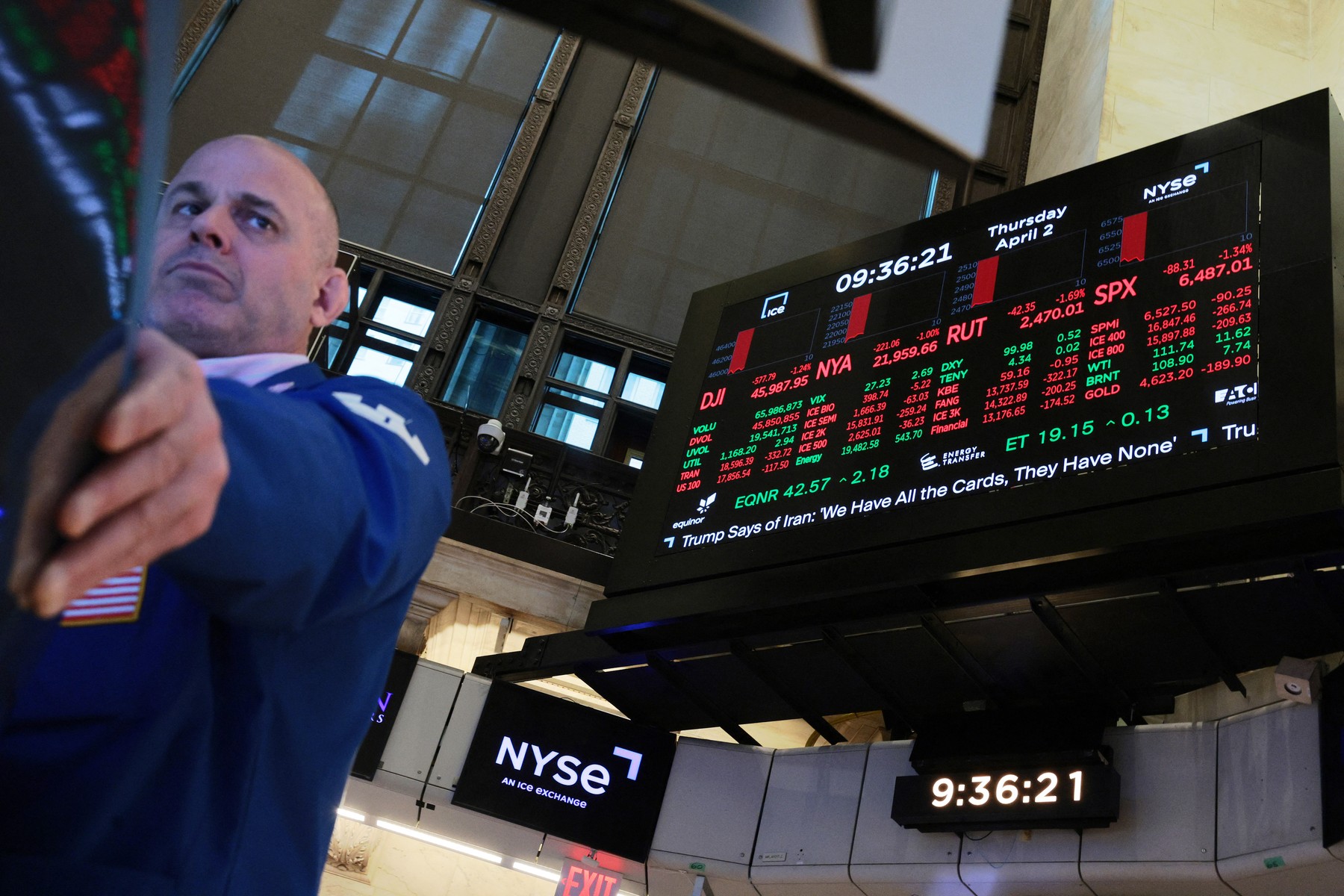
U.S. oil prices rose more than 11 percent on Thursday, with Brent crude up nearly 8 percent in volatile trading as traders worried about prolonged oil supply disruptions, a day after President Donald Trump said the United States would continue attacks on Iran.
Brent crude futures closed $7.87 higher at $109.03 a barrel, up 7.78 percent from the previous session.
U.S. West Texas Intermediate (WTI) crude futures rose $11.42, or 11.41%, to $111.54 a barrel, marking the biggest absolute price increase since 2020.
Both benchmarks, however, remained below the highs of nearly $120 a barrel reached after the outbreak of the Middle East conflict.
Trump said in his address to the nation on Wednesday night that military operations against Iran would be stepped up, but he gave no timetable for an end to hostilities. He also did not provide details on the measures that could lead to the reopening of the Strait of Hormuz.
“We're going to hit them extremely hard in the next two to three weeks,” Trump said. “We're going to put them back in the stone age, where they belong,” he added, in a prime-time speech.
Iran is currently working on a protocol with Oman to monitor traffic in the strait, an Iranian foreign ministry official said, according to a Bloomberg report.
Iran has effectively blocked the narrow strait through which a fifth of the world's oil and liquefied natural gas is transported in retaliation for US and Israeli attacks that began on February 28. Reopening the Strait of Hormuz has become a priority for governments around the world amid skyrocketing energy prices, especially fuel prices.
“The question that really concerns traders is whether Iran's oil infrastructure is now at risk, and with more damage likely to occur in the area even if it remains intact, the resumption of crude flows from the region looks set to be delayed even further,” said Dennis Kissler, vice president of trading at BOK Financial.
WTI, which usually trades below Brent crude, ended up priced nearly $3 above Brent oil as US contracts now trade for May delivery, while Brent contracts trade for June delivery. And WTI's risk premium to the global benchmark was the highest in a year.
“The market's expectation is that if the Strait of Hormuz opens in a few weeks, that risk premium will drop immediately,” said John Kilduff, partner at Again Capital.
Federal Reserve Bank of Dallas (FED) President Lorie Logan said on Thursday that a quick resolution to the conflict could mean the economic impact could be quite moderate, adding that the economic outlook is uncertain because of the crisis. The United States has some reserves to deal with the impact of war, Logan said.
Brent oil prices could reach an average of $95 a barrel in the base case and $130 a barrel in the bullish scenario in the second half of the year, Citi said, while crude oil prices could rise to between $120 and $130 a barrel in the near term, JP Morgan said. Prices could exceed $150 if the Strait of Hormuz remains closed until mid-May, JP Morgan also estimated.
The U.S. oil rig count, an indicator of future production, rose by two to 411 this week, energy services firm Baker Hughes said. A rise in oil prices for delivery in the coming months is prompting producers to consider adding more rigs, but they have warned they would like higher prices to hold longer to do so.
On Thursday, next-month WTI traded at the largest premium on record to the second- and seventh-month contracts.
Discussions on reopening the Strait of Hormuz
Britain is hosting a virtual meeting of around 40 countries to discuss options for reopening the Strait of Hormuz. The United States will not participate.
Meanwhile, OPEC+ said it is likely to consider a further increase in oil production on Sunday, industry sources said. This would allow the organization's members to produce more barrels if the Strait of Hormuz reopens, but is unlikely to significantly increase supply before then.
In Russia, Ukraine's attacks on port infrastructure, pipelines and refineries have cut export capacity by 1 million barrels a day, a fifth of total capacity, according to sources, enough to set the stage for imminent output cuts.
And the head of the International Energy Agency said that supply disruptions would start to affect the European economy in April, after the region had until then been protected by supplies contracted before the start of the Iran war.