How the Red Army became the most experienced in the world. The Secrets of Transforming Workers and Peasants into a Sophisticated War Machine

The “Red Army” decided the fate of the Second World War, being considered by historians as one of the most feared armies in history. Its beginnings were humble, starting from a disorganized mob that grew into a disciplined and efficient war machine.
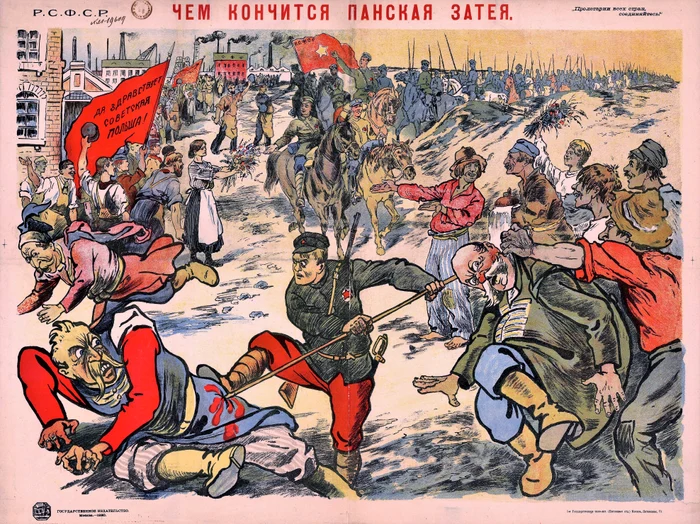
Propaganda poster with the beginnings of the Red Army PHOTO wikipedia
In May 1945, when World War II was ending in Europe, the Soviet Union had the largest and most experienced military in the world. It was about the famous Red Army, a huge force that was becoming the main military tool of the Soviet Union in the struggle for world supremacy. It was the largest land force in the world.
Although the Red Army has long been talked about as a military force that prevailed through the large number of soldiers, but did not excel in terms of quality on the battlefield, specialists say that it was, in fact, one of the best trained in the world and with the most combat experience. By 1943–1945, the Red Army had grown into a huge mechanized force capable of continental-scale offensive operations, culminating in the capture of Berlin in 1945.
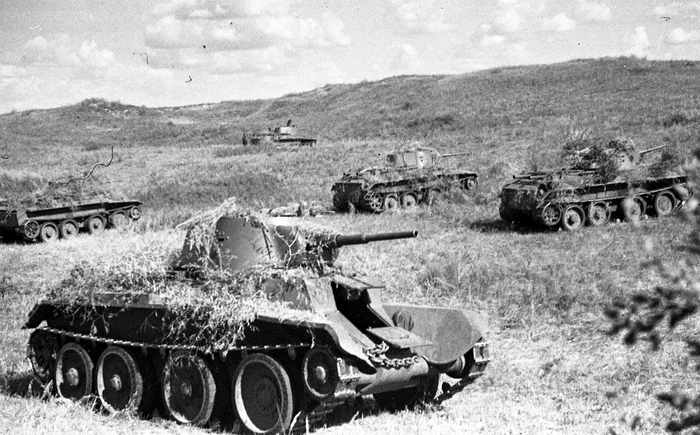
Soviet tanks in 1945 PHOTO wikipedia
From the point of view of many specialists, this army, which at one time had more than 12 million men mobilized, was the main factor in the victory against Nazi Germany. “The Red Army was the main instrument in the defeat of Nazi Germany; without its sacrifice and ability to mobilize, the outcome of the war in Europe would have been very different”said historian Richard Overy.
From a geopolitical point of view, its maximum influence was manifested in the early years of the Cold War, when the USSR directly rivaled the United States in the global strategic balance. As events and specialists show, the Red Army was practically born in the heat of war, a military force created on the fly, adjusted and retouched according to military and geopolitical needs and realities. He started from below, from a disorganized mob trying to defend the Revolution. “The Red Army evolved from a disorganized force into a sophisticated war machine capable of conducting the most complex offensive operations of the era”Geoffrey Roberts also said.
“We don't have an army”
During the Russian Revolution of 1917, the Imperial Russian Army had begun to collapse. Moreover, it was a huge force but poorly equipped, unmotivated and poorly led. It was far from the army of Peter I and Catherine II. Because of these setbacks, the Imperial Army had suffered defeat after defeat in the First World War. About 23% (about 19 million) of the male population of the Russian Empire had been mobilized. However, most were not equipped with weapons and performed auxiliary roles, such as maintaining lines of communication and areas behind the front. Tsarist General Nikolai Duhonin estimated that there were 2 million deserters, 1.8 million dead, 5 million wounded and 2 million prisoners.
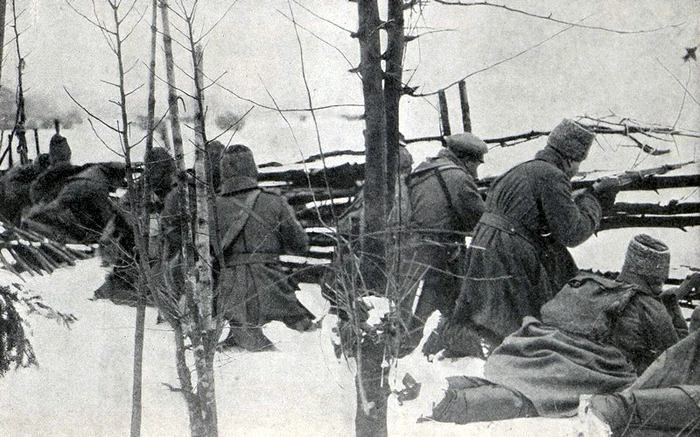
Tsarist army on the front PHOTO wikipedia
He estimated the remaining forces at about 10 million troops. Incidentally, all these humiliations swallowed by the Russian soldiers were among the causes of the outbreak of the Revolution of 1917. After the Bolsheviks seized power in November 1917, the Imperial Army almost ceased to exist. It was obvious that Russia was in an extremely dangerous situation. Without an army, with the German threat on the western border and a civil war raging, the Russians were a safe target. “We have no army. The demoralized soldiers flee in panic as soon as they see a German helmet appear on the horizon, abandoning their artillery, convoys and all war material to the triumphantly advancing enemy. Red Guard units are swept aside like flies. We have no power to stop the enemy; only the immediate signing of the peace treaty will save us from destruction.”specified Lenin.
And indeed, the Bolsheviks signed the Treaty of Brest-Litovsk with the German Empire, which effectively marked the exit of the Russian Soviet Republic from the First World War. All the while, the Bolsheviks were trying to build a military force of their own to replace the disintegration of the Imperial Army. The Council of People's Commissars decided on 28 January 1918 to form the Red Army, a military force “made up of the class-conscious elements and the best of the working classes”.
Virtually all citizens over the age of 18 were eligible for enlistment. The new army was to “to defend Soviet authority, to create a basis for the transformation of the standing army into a force that would draw its strength from an armed nation, and, moreover, to create a basis for the support of the future Socialist Revolution in Europe”. In other words, the dreams were big. From a handful of “Red Guards,” that is, a few groups of Bolshevik workers and intellectuals, the leaders of the Soviets hoped to make an army that would frighten Europe and bring the “Bolshevik revolution” everywhere.
“Daddy” Trotsky and the attempt to turn a mob into a real army
Initially, the Red Army consisted of volunteers. It was an army of necessity, poorly equipped and hastily organized for survival. The soldiers wore civilian clothes or remnants of the old imperial uniforms. There were very few motorized vehicles and they moved mostly on foot or with carts. It was an army technologically inferior to that of the great Western powers.
Aviation was non-existent and the navy poorly organized. The biggest problem was the lack of professional officers. Those leading the troops were Soviet men, workers transformed overnight into commanders. The only professionals in the Red Army, in its early days, were former officers of the Tsarist Army, who were, however, viewed with suspicion and supervised by the Bolsheviks. The Red Army was composed mostly of peasants. Even after Lenin decreed general mobilization and more than 5 million recruits were assembled, the Red Army was little more than a disorganized mob, led by fanatical Bolsheviks who were unskilled at arms. In short, it was numerous but poorly equipped and dependent on captured or inherited resources.
The problem was becoming serious for the Bolsheviks, even after they came out of the war. Anti-Bolshevik, pro-Tsarist forces or insurgent armies from the former provinces of the Tsarist Empire risked giving Lenin's men great trouble. At that time he was tasked with transforming the Red Army into a capable military force Leon Trotsky, who had held a position in the revolutionary military committee, was an ideologue of socialism and a very capable individual intellectually.
At the time he received this task, the Red Army consisted of 299 infantry regiments, poorly equipped, undisciplined and filled with elements of questionable loyalty (generally ex-Imperial army). February 23 was the first day of recruitment in Petrograd and Moscow. The first thing Trotsky did was to abolish workers' control over the Red Army. In their place he preferred to recruit en masse officers from the old Russian Imperial Army, who were employed as military advisers.
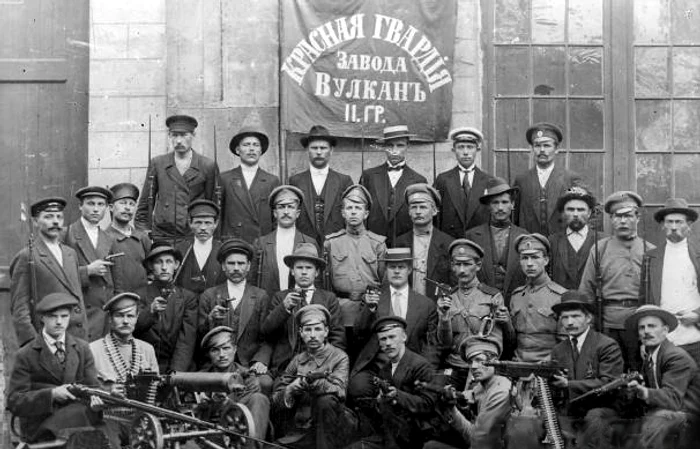
The Red Guards at the Vulkan factory PHOTO wikipedia
This is why in 1918, 75% of the officers were former tsarists. Obviously, Trotsky did not take his word for it when it came to loyalty. He resorted to a cynical but effective method. While serving in the Red Army, their families were held hostage. At the slightest sign of treachery, they were killed. By mid-August 1920, the former tsarist personnel of the Red Army included 48,000 officers, 10,300 administrators, and 214,000 NCOs. When the civil war ended in 1922, ex-tsarists made up 83% of the Red Army's division and corps commanders. In other words, Trotsky's first concern was to ensure a trained command capable of understanding, developing and applying professional military strategies. At the same time, they were able to effectively train hordes of peasant and worker recruits with no trace of military training.
“Incitement, Organization and Retaliation”
In September 1918, the Bolshevik militias were consolidated under the supreme command of the Revolutionary Military Council of the Republic. The first president was Trotsky, and the first commander-in-chief was Jukums Vācietis of the Latvian Riflemen. Once Trotsky had crystallized all the command structures and ensured a clear line of instruction for the soldiers, especially the Bolshevik recruits, he moved on to ensure iron discipline and above all, unbeatable loyalty.
To this end, Trotsky established the GRU (military intelligence service) which provided political and military intelligence to the commanders of the Red Army. In short, the structure knew everything that moves within the Army and not only that. In addition, Trotsky also, with the help of the Cheka (secret police), suppressed in blood any attempt at opposition within the army. The Ceka created veritable special punitive brigades to find and punish anti-communists, defectors and generally “enemies of the people” in an exemplary manner. In 1919 alone, over 600 deserters were publicly executed to teach a lesson. The slogan imposed by Trotsky in the “Red Army” was “incitement, organization and retaliation”. That means discipline, loyalty and initiative. Those who did not prove the three qualities were most often executed. During the campaign, the Cheka's special punitive brigades carried out summary field courts-martials and executions of deserters and idlers.
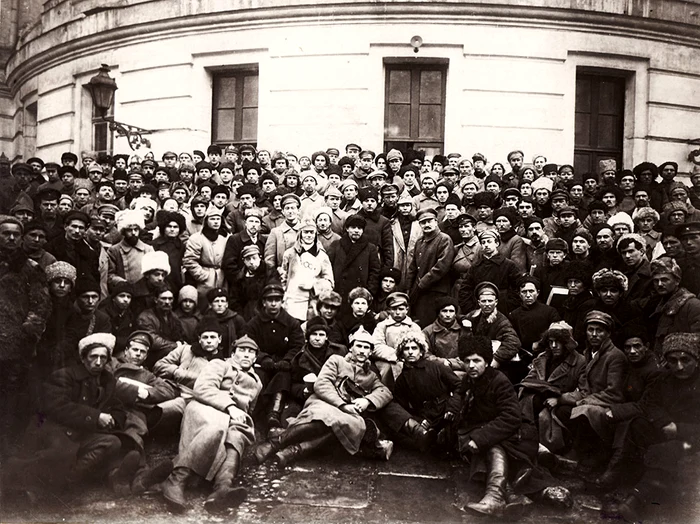
Lenin and Trotsky at a congress PHOTO wikipedia
This draconian discipline contributed to the first successes of the Red Army but also to ensuring victory in the Civil War. The Soviets enforced the same loyalty to the various political, ethnic, and national groups in the Red Army through attached political commissars at the brigade and regimental level. The commissars were also tasked with spying on the commanders, making sure they toed the party line. Trotsky also inaugurated the grim tradition of shooting those who retreated without permission from the enemy. These were the foundations of the Red Army laid by Trotsky. More and more reorganizations will follow, also dictated by the strong industrialization of the country and the equipping of the army with much better equipment. Artillery played a central role in the Red Army, being the most valued weapon.