This text was created as part of the Axel Springer Global Reporters Network project, of which Onet is a part.
Will the US leave NATO? Will Europeans soon have to defend themselves against a possible attack from Russia? These are questions that bother the inhabitants of the continent – especially in the countries bordering Russia, which is considered in NATO as the “most important and direct threat” to the security of the defense alliance.
The background to these concerns are statements by US President Donald Trumpwhich recently once again cast doubt on the wisdom of continued American membership in the world's largest defense alliance. Trump has previously expressed dissatisfaction with insufficient support from Europeans during the war with Iran, as well as with statements from Berlin (“It's not our war”).
The US president called NATO a “paper tiger” and said he was “seriously considering” withdrawing the United States from the alliance. According to him Europeans made a 'very serious mistake'and “NATO did absolutely nothing” when he asked alliance members for support in the war with Iran. There was palpable uncertainty on both sides of the Atlantic.
In turn, French President Emmanuel Macron stated at the beginning of April during his visit to Seoul: – If doubts about defense readiness are sown every day, it is undermined.
The article continues below the video
Former US ambassador to NATO, Ivo Daalder, told the New York Times: “It's hard to imagine how any European country would now be able and ready to trust the Americans to protect them.” Daalder added: “You can hope. But you can't rely on it.”
“A stronger NATO means a safer world for all of us”
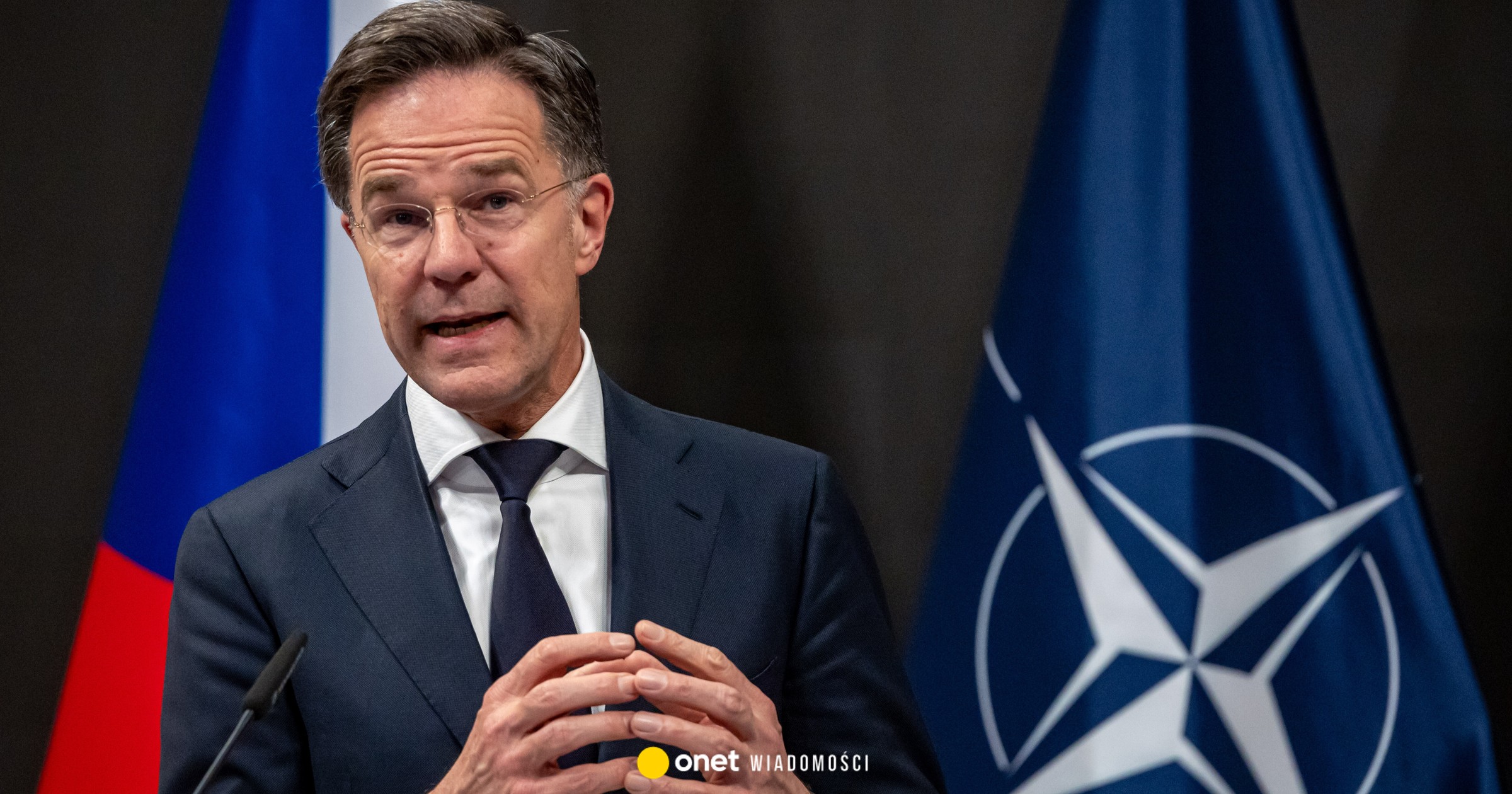
NATO leadership, however firmly rejects the vision of the US leaving the alliance. — I don't see the United States leaving NATO, argues Secretary General Mark Rutte in an interview with “Die Welt.” At the same time, he emphasized that there is a need for “a stronger Europe in a stronger NATO”.
“President Trump is clearly disappointed with some NATO members,” Rutte admitted. “And I understand his frustration.
However, during his meeting with the American president at the White House last week, the Secretary General also emphasized the benefits that the US derives from its presence in the alliance: — Europe wants to play a greater role in NATO. This is good news. This is a change: from unhealthy dependence to a transatlantic partnership based on true cooperation.
Mark Rutte and Donald Trump, president of the USA. Washington, October 22, 2025Aaron Schwartz / Pool via CNP/AdMedia / PAP
Rutte emphasizes that Europeans and Canadians are already clearly increasing their defense efforts. — Germany is a model for many allies here, says the former long-time Prime Minister of the Netherlands and expresses his belief that NATO will become stronger if this trend continues. “A stronger NATO means a safer world for all of us,” he said.
In the context of the war between Iran on the one hand and the US and Israel on the other, Rutte claims that Tehran poses a threat to European security. — Together with China and North Korea, Iran played a large part in supporting Russia's war against Ukraine, Rutte emphasizes. — For decades, Iran has exported chaos. Not only in your region, but also around the world.
Iran has contributed to the destabilization of the Middle East, not only through its nuclear program, but also by using missiles with a range of up to 2,000 km and supporting numerous terrorist organizations such as Hamas in the Gaza Strip and Hezbollah in Lebanon.
“We need to spend these funds wisely.”
With a view to better defending Europe, Rutte calls for strengthening the arms industry: — This is crucial to maintaining our deterrence and defense capabilities. I am confident that NATO as a whole, but also each individual ally, will work to remove barriers and unlock the potential of the arms industry on both sides of the Atlantic.
The head of NATO recalls that at the summit in The Hague last summer it was decided that each member state by 2035 will be allocated in total 5 percent of its GDP for defense spending.
– But we must spend these funds wisely – he emphasizes. Rutte praised the planned enhanced military cooperation between Kiev and Berlin, especially in the field of drone and missile production.
The topic of the arms industry – in addition to support for Ukraine, strengthening the military capabilities of “European NATO” and tightening the alliance's cooperation with the Persian Gulf countries – will play a key role during the July NATO summit in Ankara.
The purpose of the alliance is accelerating the pace of innovation in weapons systemsfaster implementation of scientific research results and increased production capacity of drones and ammunition.
“Investing in defense is not a bad thing”
In addition, it is planned to obtain new sources of financing and intensification of cooperation between the arms companies of individual NATO countries as part of joint projects. Rutte is pleased that Europeans and Canada increased their defense spending by 20 percent last year alone.
NATO headquarters. Illustrative photoAlexandros Michailidis / Shutterstock
— But civil society can also help, adds Rutte. — Tell your banks and pension funds that they can invest in defense. Investments in defense are not reprehensible, on the contrary: our arms industry plays a key roleso that we can continue to live in safety.
The NATO head also referred to the issue of nuclear deterrence. — The American nuclear shield is the ultimate guarantor of security here in Europe. And I am convinced that it will remain so, Rutte said.
He adds that too nuclear weapons of France and Great Britain has a repellent effect and contributes to the overall security of the alliance. — NATO's nuclear deterrent is powerful and essential as part of our collective defense, which relies on an appropriate combination of nuclear and conventional capabilities, as well as missile defense, complemented by space and cyberspace capabilities.
I’m Ashley Davis as an editor, I’m committed to upholding the highest standards of integrity and accuracy in every piece we publish. My work is driven by curiosity, a passion for truth, and a belief that journalism plays a crucial role in shaping public discourse. I strive to tell stories that not only inform but also inspire action and conversation.