Russia's Arctic units were severely damaged in Ukraine. However, NATO is preparing for a “dangerous” return of them

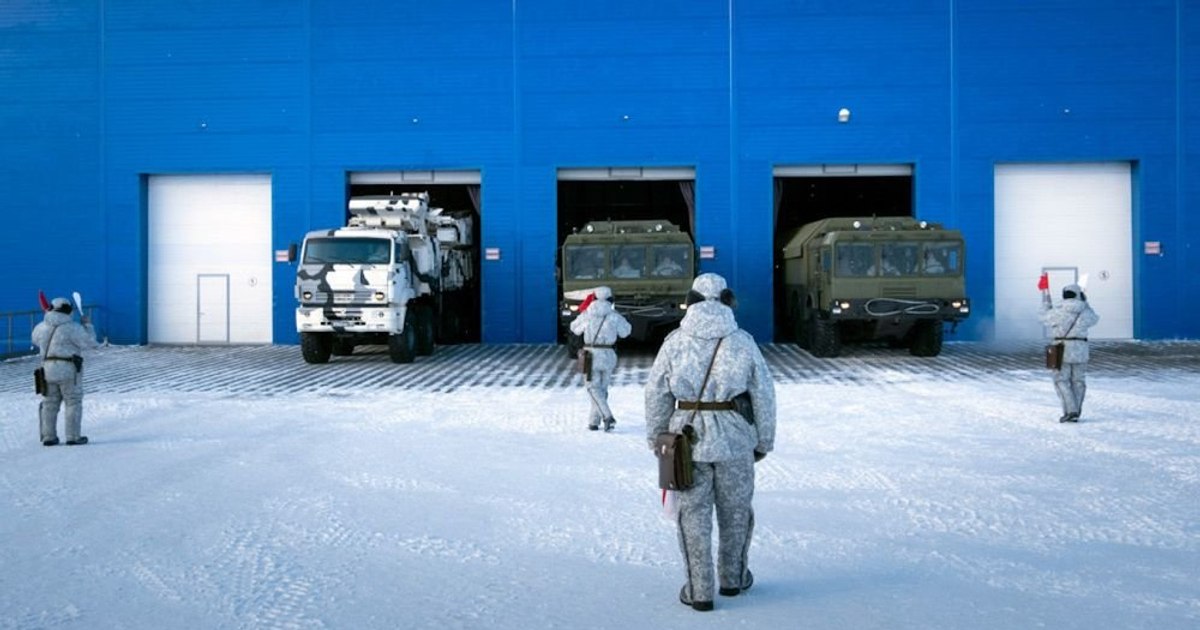
Russian forces withdrawn from the Arctic to fight in Ukraine have suffered significant battlefield losses. However, NATO expects Moscow to rebuild its military capabilities in the north over time, which could pose a “dangerous” challenge, a senior Norwegian military official told Business Insider.
Russian forces in the Arctic/PHOTO:X
Vice Admiral Rune Andersen, head of Norway's Joint Chiefs of Staff, said there is currently “no clear and immediate military threat” from Russia in the Arctic region. However, he warned that Moscow has plans to rebuild and expand its forces after the end of the war in Ukraine.
“We are preparing for a more dangerous Russia”, he said, stressing that NATO must use the current context to strengthen its defenses.
An increasingly disputed strategic region
Security in the Arctic has become, in recent years, a priority for the North Atlantic Alliance. Western officials have expressed concern over the expansion of Russia's military presence in this strategic region, critical for sea routes, natural resources and nuclear deterrence.
NATO leadership has called for increased investment in Arctic defenses to counter the activities of Russia—and, more recently, China. The Allied Powers intensified their deterrence operations in the far north, known as the “High North”.
Despite rising tensions, imminent conflict in the Arctic does not seem likely at this time. Russia remains focused on the war in Ukraine, a conflict that has involved considerable human and material costs.
According to Andersen, Moscow has withdrawn much of the forces stationed on the Kola Peninsula — a strategic area located near Finland and a key hub for the Russian fleet and nuclear infrastructure in the Arctic — to send them to the Ukrainian front. Numerous soldiers were killed in the fighting.
“Russia is blocked in Ukraine“, said the Norwegian official.
Diminished capabilities, but not definitively
A report published this week by the RAND Corporation shows that Russia's decision to redirect resources from the north to Ukraine has led to the “emptying of content” of ground units specialized for operations in the Arctic.
But experts warn that with the end of hostilities in Ukraine, Moscow could quickly reinvest in its military posture in the far north.
And the Center for Strategic and International Studies has noted in previous analyzes the gradual strengthening of Russian military infrastructure in the Arctic, including the modernization of Soviet-era bases, increased air and sea patrols and the deployment of missile defense systems.
NATO is strengthening its position in the north
For countries like Norway, the Russian military presence in the Arctic is a direct concern. Since the 2000s, Russia has reactivated several Soviet-era bases and stepped up submarine deployments on the Kola Peninsula, according to Norwegian officials.
Currently, NATO military planners believe that there is a window of opportunity for strengthening defenses in the region.
“We are in a moment where we have the opportunity to strengthen ourselves”Andersen said.
Allied nations are investing in technologies adapted to the Arctic environment, including additional surveillance systems, icebreakers, drones, satellites and vehicles capable of operating in extreme cold conditions.
At the same time, NATO has expanded its presence and scale of exercises in the region to prepare troops for the harsh conditions in the north, where cold temperatures and fragmented supply lines can pose risks as great as the adversary.
Next month, thousands of allied troops will take part in the biennial Cold Response exercise in northern Norway. The purpose of these maneuvers is to prepare for high-intensity combat operations in the Arctic environment — skills considered essential should Russia rebuild its forces in the region.
“You have to train here to fight here”Andersen concluded. “In practical terms, only troops that have this training and this equipment are relevant in the Arctic.”