And now that we are orphans of the old order, what will we do? This would be the European state of mind before the Munich Security Conference, if we are to go by the report with the significant title “In the process of destruction”, published before the meeting.
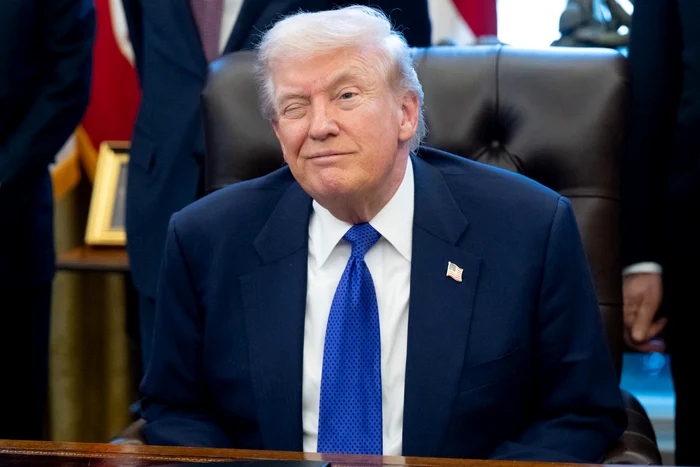
AFP PHOTO
The report targets the “demolition policy” of President Trump, the most prominent of leaders who prefer destruction to change, taking advantage of “widespread disillusionment with the performance of democratic institutions” and “loss of confidence in meaningful reforms.”
The challenge for those opposed to demolition is “to demonstrate credibly that meaningful reforms and policy course corrections are viable and far more likely to meet growing demands for improvement than a policy of large-scale destruction.”
The conclusion of the report – and the starting point of the weekend talks in Munich: “More than 80 years after construction began, the international order led by the US after 1945 is now being destroyed.”
A year ago, also in Munich, Europe received a blow to the plexus from Vice President Vance, which sent it from the phase of denial into the shock of ideological divorce. Just beginning, Trump's second term was markedly different from his first, in which his flattery and stalling minimized the European damage.
It took the Canadian prime minister to say it bluntly last month in Davos: “We are in the midst of a rupture, not a transition. Stop invoking the rules-based international order as if it still worksMark Carney called on middle-sized countries to act together to survive in a world of great power rivalry.
For many months, the conclaves of European leaders have left the impression of earthquake simulations: some were tempted to rush up the stairs, others stuck at the table, and a few ready to throw themselves out of the window. Among them stood out the president of Finland, who proposed a concept to guide his country's foreign and defense policy in the new world: “value-based realism.” Alexander Stubb is one of the few European politicians who managed to have close relations with Donald Trump, but also among the rare leaders of the moment who clearly say what they believe on this sensitive subject: “The ideology of the US administration is in contradiction with our values”.
The way the Europeans managed to defuse the tension regarding Greenland, through an agreement that respects Danish sovereignty but makes strategic concessions to the US, could be considered a first illustration of this combination of principled firmness and tactical pragmatism.
In this context, an idea has gained ground in Western chancelleries, the one launched by Mario Draghi, former prime minister of Italy and former president of the European Central Bank, author of a report, in 2024, in which he accurately diagnosed the state of the EU – which Union is only now beginning to apply the remedies proposed by Draghi at the time.
In October last year, in Oviedo, Draghi launched the thesis of “pragmatic federalism”. Two weeks ago, a concrete answer came: “Now is the time for a two-speed Europe”transmitted the German Minister of Finance. And he launched a debate on the creation of the Union of Savings and Investments with his counterparts from France, Poland, Spain, Italy and the Netherlands.
In a letter addressed to European leaders, before Thursday's informal EU summit, the president of the European Commission evoked the idea of two-speed Europe, starting from the principle of enhanced cooperation, which allows member states, provided that at least nine states agree, to deepen integration. On the sidelines of the summit, leaders from ten EU countries, including France and Belgium, in addition to those listed above, are coming together to chart a common line.
Not coincidentally, the meeting at the Belgian castle Alden Biessen takes place before the Munich Conference. Munich is where, in 2007, Putin challenged the security order after the fall of communism, announcing, to a world that refused to hear, everything that followed in Ukraine. From the Russian attack to the post-Cold War stability system, we have meanwhile come to blow up, on American initiative, the post-war international order as it was built and guided by the United States.
Will Europe manage to transform this forum with more than 60 heads of state and government from around the world into more than the inevitable burial of what we have to get used to calling the “old world”, based on international rules and institutions? It depends on how the EU will undertake to manage its military, energy and technological dependence on the US, while dealing with the existential – military and hybrid – threat of Russia, as well as the overwhelming Chinese economic offensive.
Such a complex equation forces a new European start. Until it's too late. Are we still wet? But what does Romania think?