NATO's eastern flank. The general reveals a new defense strategy. “Deterring Russia”

Mr. General, NATO's leadership intends to strengthen the eastern flank of the alliance, stretching from Finland to Romania, in accordance with a new concept called the Eastern Flank Deterrence Line (EFDL). What is it about?
The first priority is to protect countries that are on the so-called the eastern wing borders with Russia and Belarus. The idea is to deter Russia from attacking and ensure defense capabilities in the event of a threat. In this sense, EFDL is a concept aimed at optimizing existing NATO defense plans. However, this concept can be used not only on the eastern wing, but all over the world. In principle, it would also be suitable for protecting critical infrastructure in the civil sector, such as airports.
It's about deterrence and border defense. The basic idea is to create a complex, multi-level defense system along the border with Russia and Belarus and to use for defense not only conventional armed forces, but also obstacles and technologies in order to create a robotic or automated zone near the border with the enemy, which the enemy must first overcome.
Who developed it?
Work on it started at the beginning of last year. At the beginning, the US armed forces, together with universities, think tanks and laboratories, wondered how to use modern technology to meet the threat from an aggressor such as Russia. There was close cooperation with the Baltic countries, which started building a defense line against Russia in 2024, the so-called Baltic Defense Line. Gen. Donahue, commander of US land forces in Europe and commander of NATO Allied Operations Command, presented it in July at a conference. It is currently being developed and implemented within NATO.
The NATO Supreme Commander presented this concept to the military representatives of member states in the military committee. It met with general approval.
Who is now responsible for implementing this concept?
First of all, the Member States. Each country must decide whether and in what form it wants to participate in cooperation with NATO command structures.
What activities does the new concept cover?
EFDL basically consists of five pillars, the implementation of which is planned in stages. We rely on technology that is already in use or is at a very advanced stage of development. We also use Ukraine's experience in its defense fight against Russia. Currently, the first elements of the concept are being tested in selected areas, including: in partner countries on the eastern flank. The first systems have already been introduced and are in use, others are being finalized. The idea is to install a system of sensors and effectors, interconnected in a large digital network, to create an automated zone. However, it is also about the initial deployment of equipment, the deployment of troops on site and the establishment of a command and control system that will connect the armed forces of individual countries and NATO.
How should we imagine the first pillar, i.e. the construction of a complex sensor system?
It is a network of sensors placed on the ground, in space, in cyberspace or in the air. They collect data on the enemy's movements or use of weapons, combine them and share the reconnaissance results in real time with all NATO countries.
The area to be monitored is several thousand kilometers long. Where are the sensors?
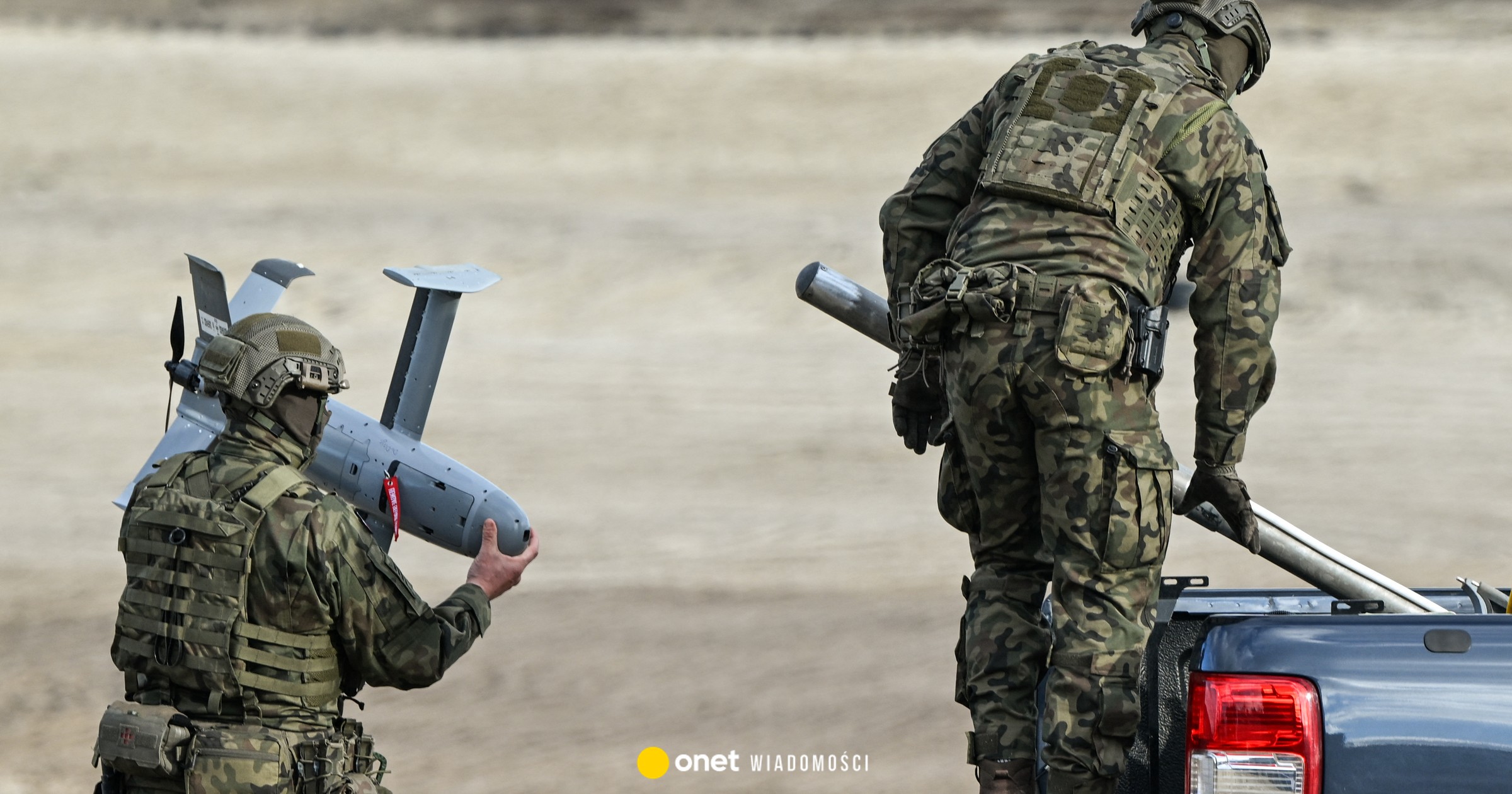
These can be stationary or mobile sensors, radar, acoustic, optical, electronic, etc., combined with reconnaissance data from manned systems such as Awacs-Early-Warning reconnaissance aircraft, but also with data from satellites, drones or quadrupedal walking robots equipped with one of the above-mentioned sensors. Sensors can also be mounted on a bunker, fence or tree. They transmit data to the command center, where they are analyzed, assessed and entered into the situation picture using efficient artificial intelligence. Some sensors monitor the entire border area, others only monitor NATO territory.
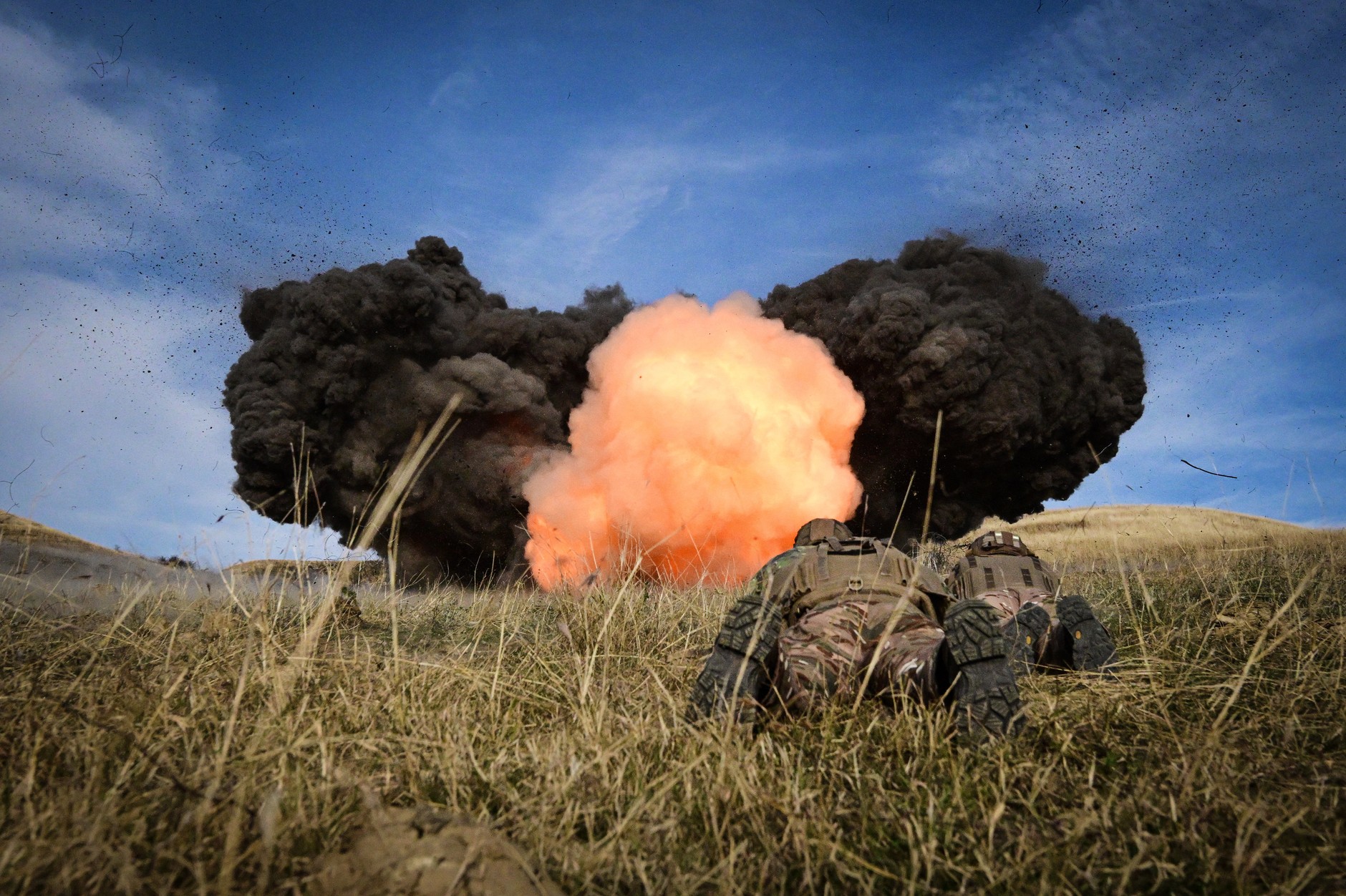
NATO exercises in Romania, November 3, 2026 (stock photo)Daniel Mihailescu / AFP
Let's move on to the second pillar, i.e. the creation of an automated defense zone along the eastern flank.
The joint operations zone is a clearly structured, multi-layered space of operation used to immediately combat and put pressure on enemy forces. This is a kind of danger zone. The goal is to stop the enemy's attack: we direct his movements, slow him down, force him to take unfavorable positions and gradually exhaust him. Each measure serves to consistently weaken its combat power, while at the same time securing our own forces and maintaining their full combat capability.
How big is this zone?
It should not be generally defined as a zone of specific depth as it may vary from region to region. This zone is not an area with a fixed area, but is another element of future defense plans. It is largely vacant and there are usually no soldiers stationed there permanently.
Fortifications such as anti-tank barriers or anti-tank ditches can be created. The project is in the conceptual phase and is subject to national decisions.
This means that people living near the border would have to be relocated.
Looking at the implementation so far, I do not see such a need. For example, the Baltic states use natural obstacles such as swamps and forests, which reduces the need for further construction. I think that efforts will be made to find amicable solutions with local communities. Many objects and obstacles will only be activated and used in the event of an upcoming operation. This will minimize lasting disruption to civilian life. There will be no mass displacements.
What exactly is happening in this zone?
We're talking about an automated operational space that works seamlessly together. Sensors detect an enemy, immediately report him and activate the connected devices according to the instructions. These include armed drones, semi-autonomous combat vehicles, unmanned robotic ground systems that I believe will have a similar impact on land warfare as drones currently have in the air, and automated air and missile defense. These interconnected systems are designed to quickly target an enemy, limit its capabilities and effectively deprive it of combat power and initiative.
It sounds like science fiction. So in the future, in some areas, only weapons will fight against weapons, and soldiers will no longer appear on the battlefield?
In accordance with our operating principles and ethical standards, the decision to use weapons always remains the individual's responsibility. He is supported in this by artificial intelligence, especially when a decision must be made quickly. This is not about dehumanizing war. Ultimately, it is the individual who responsibly decides when and how to use a weapon.
But what is the purpose of such a zone?
This network creates an area where the first phase of the fight can take place, without the need for direct contact between own troops and enemy forces. The goal is therefore to preserve your own combat power, spare your own soldiers and delay the enemy's actions early to gain room for maneuver.
Will mainly autonomous weapon systems be used to defend NATO territory in the future?
This would be an incorrect conclusion. It is the soldiers who regain territories. It is the soldiers who fight to liberate the cities. Ultimately, it's always about soldiers against soldiers. We also see this in the example of Ukraine.
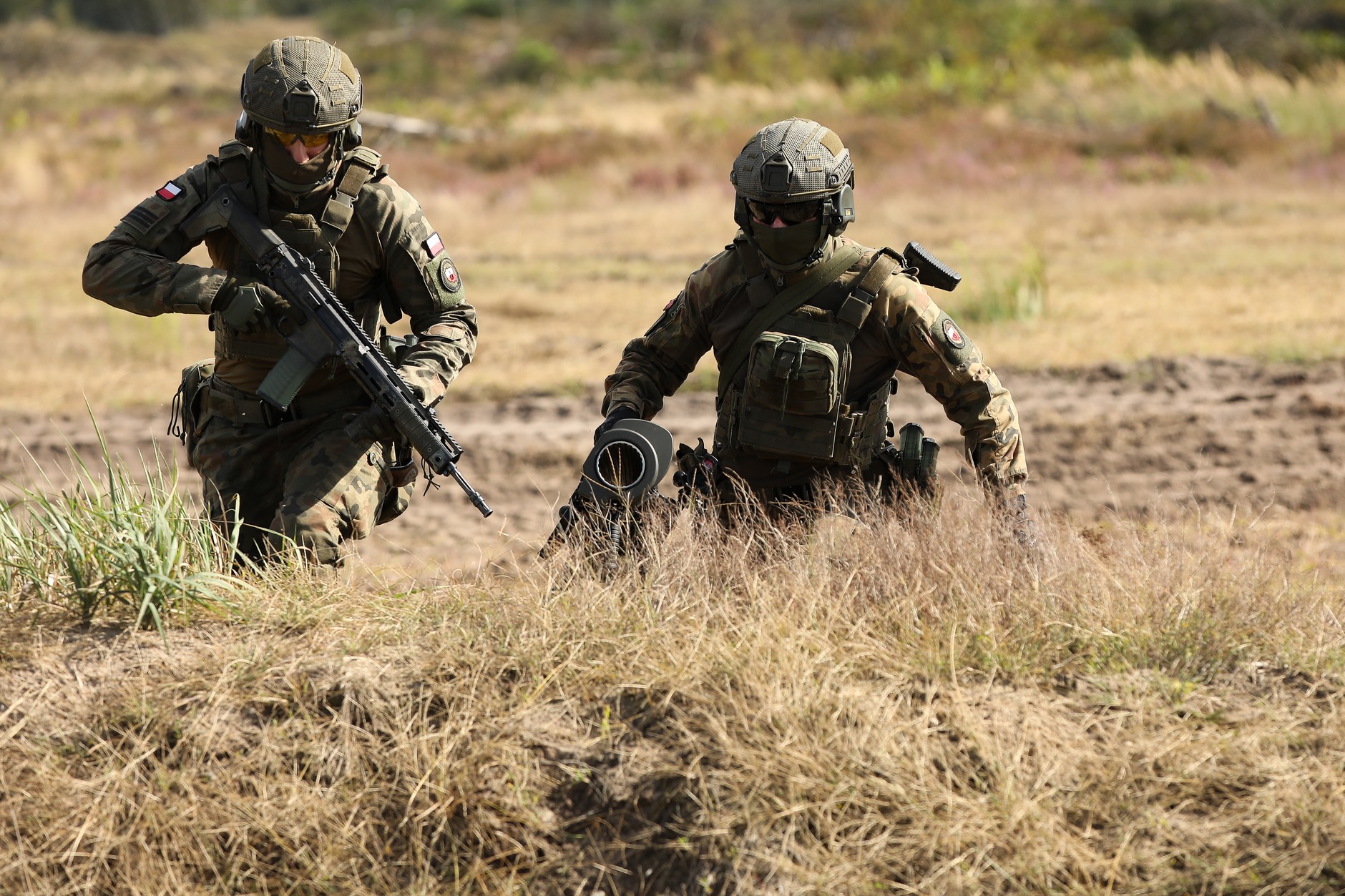
NATO exercises in Poland, September 19, 2025 (illustrative photo)Klaudia Radecka / AFP
The third pillar of the NATO defense concept on the eastern flank is the initial deployment of equipment.
We already have it today. However, in the countries bordering Russia we will see much larger stocks than before, including, for example, weapons and ammunition warehouses for re-arming defense systems in the automated zone, but also for equipping NATO armed forces.
The fourth pillar of the concept, i.e. the deployment of troops along the eastern flank, also already exists.
And this arrangement is to be maintained unchanged. Unmanned systems alone cannot permanently deter or stop the enemy. This requires soldiers, this requires armies.
However, creating a defensive zone relieves the soldiers. Can't the number of NATO soldiers on the eastern wing be reduced?
NO. Russia's forces are so numerous near the border that we cannot afford to reduce our own forces. We must continue to follow the guidelines contained in the so-called NATO regional plans.
Please briefly explain the fifth pillar of the concept.
It is planned to create a cloud-based network. AI-based systems – including generative models and machine learning – collect intelligence in real time and feed it directly to the armed forces. This cloud-based combat network is the nervous system of the eastern flank deterrent and ensures that humans and machines work as a tight-knit team.