Historian Adrian Majuru, about young people attracted by extremism and Ceaușescu: “We risk starting from scratch, with people ruled by ignorance”

In today's Romania, nostalgia for communism reappears more and more often in public discourse, extremism gains ground online, and more and more young people form their political and social opinions directly from social networks.
The question is no longer whether there is a dystopia in the way we understand the past, but how big it has become. From the idealization of Ceaușescu to the trivialization of some radical ideologies, from mistrust of democracy to hostility towards “foreigners”, many of the trends that seem new actually have old historical roots and well-known mechanisms.
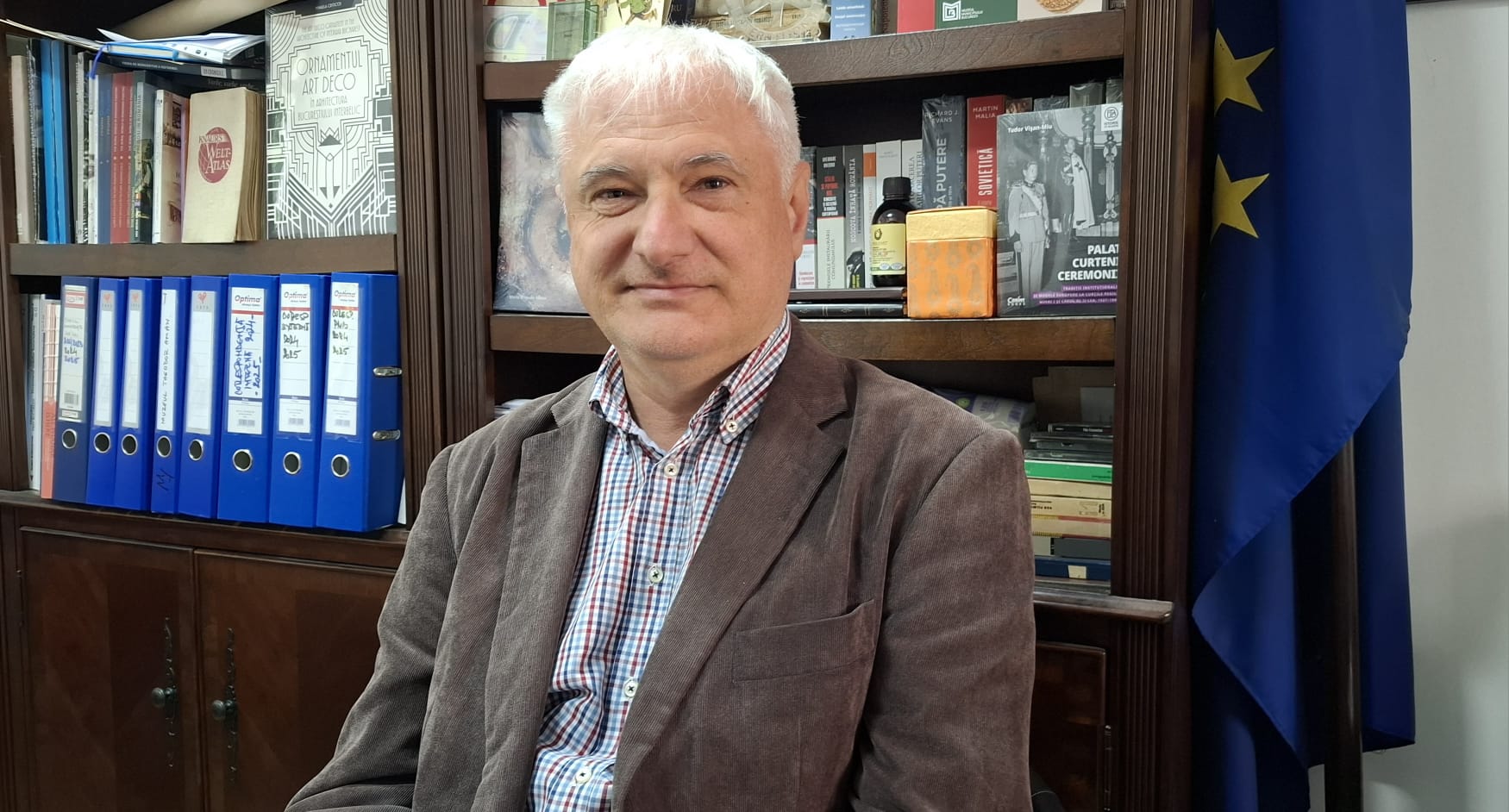
I discussed all this with Adrian Majuru, historian, anthropologist and director of the Bucharest City Museum, one of the most attentive observers of the way Romanian society has changed in recent decades.
With experience including in education (he was a teacher of history and civics), Majuru speaks freely about how ignorance of recent history makes young people vulnerable to manipulation, about the rift between generations and about the reasons why societies end up periodically building “enemies”.
Beyond historical explanations, the discussion also raises an uncomfortable question for the present: how much of what we live today is about politics, and how much is, in fact, about education, family, community, and a society's ability to lucidly convey its own past?
In Adrian Majuru's opinion, the signs can already be seen in the way young people relate to authority, truth, promises and responsibility. And the stake is no longer only Romanian, but European, at a time when democracies have become more vulnerable and easier to influence.
All About Mothers: In recent years, more and more young people say that it was better in Ceaușescu's time. How do you explain this idealization of communism among a generation that did not live through that time?
Adrian Majuru: This ignorance is built up over time, including by the educational system after 1989. And that means the information in secondary education textbooks is dying. Then, bypassing or eliminating components with serious content in high school education, such as information about recent history, about the 20th century, which is very relevant, because it has known all possible extremes, and some are still ongoing on this planet and can be a negative example. You cannot say that it was better under Ceaușescu. Look what is in Pyongyang, because Ceaușescu took over the model of North Korea, passing through China, but China was only the platform of the model that conquered him. The model was Pyongyang, because he visited both countries in the late 1970s.
But, in my opinion, the young generations are not very much to blame, because, once this ignorance pre-exists, this situation cannot be blamed. However, they are very easily subjected to manipulations of ideas, images created through an appropriate vocabulary by other interested parties, so to speak. I don't mean the parents, they are certainly not interested in this direction. And then their vote is a determined one, and their faith is one in the possession of others.
Read the rest of the interview HERE