Global airline revenue will hit new records in 2026, with the Winter Olympics and FIFA World Cup set to boost travel, while air cargo could benefit from increased shipments related to hardware for AI systems.
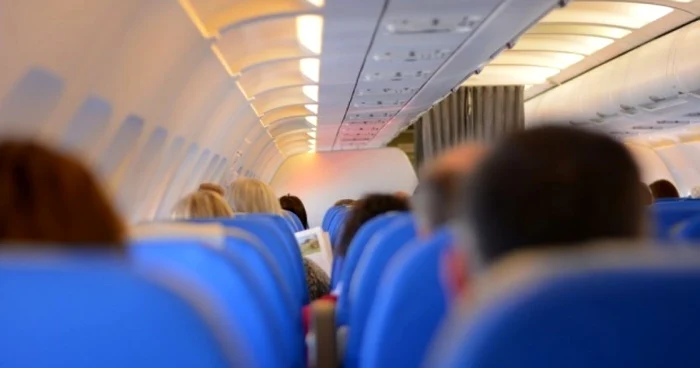
Global airline industry revenue to hit new records in 2026. File photo
Airlines expect growth of 4.5% this year, after 2025 is expected to see the industry already record its best financial performance in history, with the International Air Transport Association (IATA) reporting that total revenue has passed the $1 trillion mark for the first time in history.
However, behind these impressive figures hides a sector constrained by geopolitics, supply chain bottlenecks and extremely tight margins, which make airlines vulnerable to potential demand shocks, believes eToro analyst Bogdan Maioreanu in his analysis of the industry. In this difficult context, the unpredictability of the Trump administration, tariffs, visa restrictions and the instability induced by these things push North America to the bottom of the ranking of the growth of airline business.
Europe will have the strongest financial performance
According to the IATA report, the total costs of the airline industry are expected to reach $981 billion in 2026, an increase of 4.2% over the previous year. The report also predicts that Europe's airline industry will post the strongest financial performance in absolute terms among all regions in 2026, with net profits estimated at $14.0 billion and a margin of 4.9%, largely unchanged from 2025. European airlines demonstrate disciplined capacity management and strong load factors, currently at 84.7%, although still below 2019 high of 85.2%, leaving room for further efficiency gains. “Low-cost carriers are performing particularly well, posting double-digit growth and outperforming full-service carriers in terms of net profit margin“, says Maioreanu.
In the US, income growth has stagnated due to the measures taken by Trump
In contrast, North America is poised to lose its position as the most profitable region in absolute terms for the airline industry, with net profits expected to reach $10.8 billion in 2025 and $11.3 billion in 2026, with Europe taking the lead. The year proved difficult for North American airlines, particularly in the United States, where revenue growth stagnated and the domestic market contracted. A number of headwinds have weighed on demand: political uncertainty around customs tariffs and tighter immigration rules have affected both domestic and foreign travel.
The Trump administration's sudden measures, such as suspending immigration visa processing for 75 countries starting January 21, announced just days before it took effect, are worrying because the United States, along with Mexico and Canada, are the hosts of the FIFA World Cup, which starts on June 11. While the suspension does not affect tourist visas, FIFA warned that purchasing a match ticket does not guarantee entry into the country and urged supporters to apply for a visa as soon as possible. The event, which is expected to contribute $17.2 billion to US GDP and attract 10 million visitors, now faces a possible logistical and reputational emergency.
Passenger traffic, estimated to increase by 5%
IATA forecasts that passenger traffic will see a 4.9% year-on-year increase in revenue per passenger kilometer (RPK). This is a slowdown from the 5.2% growth forecast for 2025, driven not by weakening demand but by persistent capacity constraints – aircraft delivery delays, maintenance-induced delays and labor shortages – that continue to limit airlines' ability to expand operations. As a result, passenger load is forecast to reach a record high of 83.8% in 2026, keeping aircraft remarkably full and supporting yields in an otherwise turbulent operating environment. Looking at regions, the strongest growth is forecast in Asia-Pacific (7.3%), followed by Latin America (6.6%), the Middle East (6.1%) and Africa (6%). Europe accounts for 3.8%, while the smallest increase in passenger traffic contribution comes from the United States (1.5%).
Air cargo volume is expected to grow by 2.4% this year, benefiting from the expansion of e-commerce, demand for semiconductors and the structural shift towards air transport of high-value and time-sensitive cargo. Although trade expansion may slow in 2026, after a forecast growth of 3.1% in 2025, air cargo remains the preferred option when speed matters most, with cargo traffic in the Asia-Pacific region projected to grow by 6% amid persistent global uncertainties, reinforcing air's role as the most reliable mode of delivery. The other regions are expected to grow by around 2%, while the Middle East will stagnate, with North America the only region likely to see a 0.5% decline.
“With the Winter Olympics next month and the FIFA World Cup in June 2026, all the ingredients are coming together for may this year be a successful one for the airline industry in terms of passenger traffic' points out the analyst.