Signs Vladimir Putin is considering invading a NATO country in 2026 in a last-ditch bid to cement his legacy


Vladimir Putin does not see the war in Ukraine as the end of the road, but as a stage. Even in the event of a peace deal, Western analysts consulted by The Sun warn that the Kremlin leader could use the break to regroup, rebuild military capability and strike again – perhaps even directly into NATO's flank.
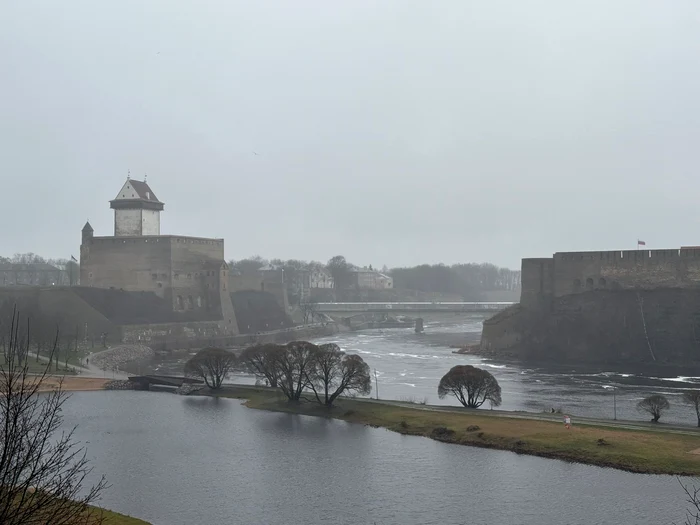
Narva – Estonian city with a Russian-speaking population, located right on the contact line between NATO and Russia
One name keeps coming up in expert analyses: Narva, a small Estonian town on the border with Russia, with a majority Russian-speaking population and an extremely sensitive strategic position.
“There are all the signs that Putin sees 2026 as his moment”says Tim Wilsey, former British diplomat and professor at King's College London. “He hasn't had such an accumulation of opportunities in a long time – weaknesses in Ukraine, fatigue in the West, political divisions and uncertainty in Washington.”
“A favorable deal” and a dangerous break
According to Wilsey, Putin is prepared to sell any form of compromise to the domestic public as a great victory, regardless of the real costs.
“There is a serious chance that Putin will get a deal in his favor and present it at home as a historic triumph”warns the analyst. “But that would not mean the end of his imperial project.”
The major problem, experts say, is an agreement that stops the fighting without stopping ambitions. A “peace” that would give the Kremlin time to rebuild the military – estimated by Wilsey at about three years – and to resume pressure by other means: sabotage, assassinations, political influence, hybrid attacks.
“If the guns remain silent in Ukraine, the next phase will not be safer, but dirtier”says Wilsey.
Narva, the ultimate test for NATO
The most dangerous scenario remains, in his opinion, Narva – an Estonian city with approximately 80% Russian-speaking population, located right on the contact line between NATO and Russia.
“The real question is: Do we really think the United States would go to war over a single city in Estonia?” says Wilsey. “I'm not sure anymore.”
Narva is separated from Russia only by a river, and on the other side is the Russian city of Ivangorod. The two were united historically, being separated only after Estonia regained its independence. In the early 1990s, Narva even voted for autonomy in an unofficial referendum deemed illegal by Tallinn – an episode believed to have been quietly encouraged by Moscow.
In 2022, Putin publicly stated that Narva would be “historic Russian territory,” a statement that set off serious alarms in NATO capitals.
It all depends on Washington
Alan Mendoza, director of the Henry Jackson Society think tank, says the future largely depends on the security guarantees Ukraine receives – and the position of the US administration.
“If there are firm, US-backed guarantees, Putin will probably step back for now”Mendoza explains. “If not, a cold war with hot incursions will continue.”
In this context, the role of Donald Trump becomes central. “Much of what happens to Putin in 2026 depends on what Trump decides,” Mendoza says.
The scenarios are radically different: either Washington puts real pressure on the Kremlin or withdraws from the game, leaving Putin free rein.
The war shows no signs of dying down
Meanwhile, fighting in Ukraine remains intense. Drone and missile attacks on energy infrastructure continue, and the UN reports hundreds of civilian casualties every month. Russia is beefing up its threats, including by forming units equipped with Oreshnik hypersonic missiles, described by the Kremlin as “impossible to intercept”.
Europe approved a substantial financial package for Ukraine, but insufficient in the long term. Kiev warns that it is approaching a critical threshold, with huge funding needs over the next two years.
“Europe is moving too slowly at exactly the worst time,” says Wilsey. “I don't see any signs that it will make up for the withdrawal of American support.”
A warning for 2026
The message sent by the Kremlin is one of confidence and defiance. Putin talks about “strategic initiative” and readiness for peace – but only on his terms.
For analysts, the signal is clear: 2026 could be the year Putin tries to turn a lull in conflict into a fresh start to expansion.
The key question is not what the Kremlin wants, but whether the West is finally ready to stop it.
“It doesn't matter just what Putin does”says Mendoza. “What matters is what we do. That will decide whether 2026 will be a good year for him – or not.“