How was the shock of adopting the Euro felt in Bulgaria. Bulgarian journalist: I buy about the same products with the same amounts

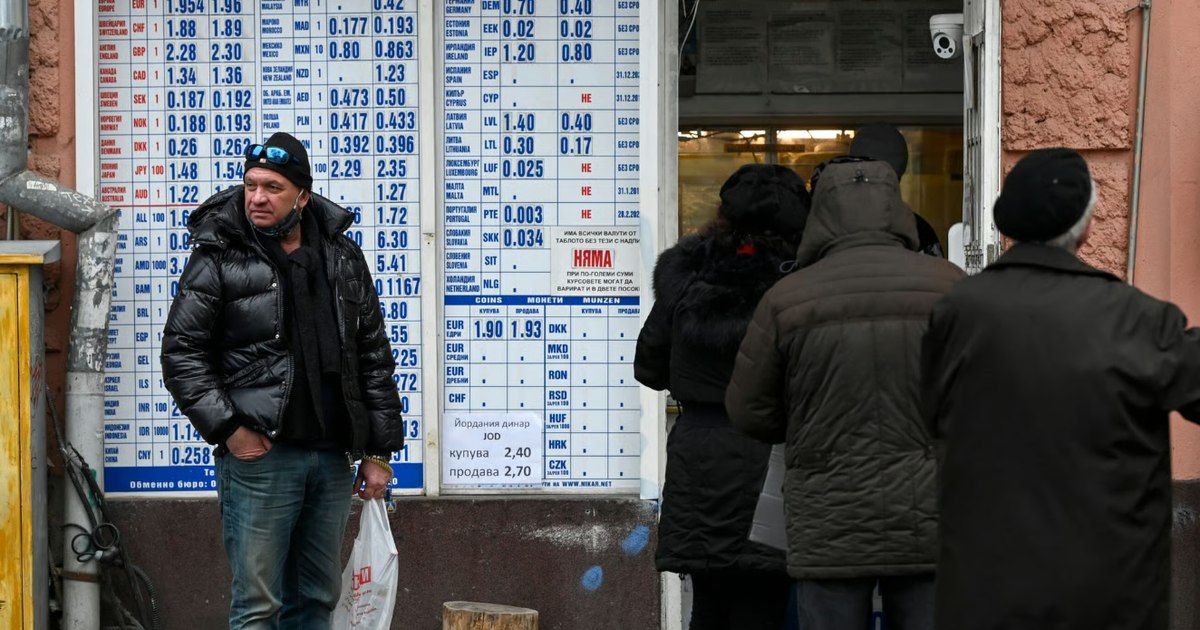
Bulgaria entered the Eurozone on January 1st, and the first weeks of transition dismantle many of the myths circulating in Romania as well. Bulgarian journalist Vladimir Mitev explains, for “Adevărul”, how the daily life of the neighbors south of the Danube changed with the adoption of the single European currency.
Nikolay Doychinov/AFP via Getty Images
The transition to the single European currency is often viewed with fear by Romanians, the main argument being “price rounding” and hidden inflation. However, the reality in Sofia at the beginning of 2026 paints a different picture: a smooth technical transition, strict supervision of traders and a population that has invested heavily before D-day.
The “Great Purge” of cash took place in 2025
An interesting phenomenon observed by Mitev is not related to the moment of change itself, but to the preceding year. Bulgaria, an economy where cash was king for a long time, has gone through an accelerated process of “whitening” and investment of savings.
“It seems to me that the big preparation for accession took place before the accession itself. That is, in 2025, a lot of the money that was held in cash by Bulgarians was either put in banks, or invested in real estate, or cars, or gold or the Sofia stock exchange”explains Vladimir Mitev.
This move was dictated by necessity. People who had accumulated large amounts of cash realized that the opportunities to keep it “in the stocking” ended with the change of currency.
“Basically, over time, relatively large amounts of cash had accumulated in the population. There were not many possibilities to invest or use this money. (…) When it was necessary to make the transition to a new currency, the money had to be taken out and turned into something else. And that happened rather in 2025”adds the journalist.
The myth of price explosion: “I buy about the same products for the same amounts”
The biggest fear of the Romanians – traders will take advantage of the confusion to round up the prices – is treated seriously by the Bulgarian authorities. Although there are complaints, the situation is far from dramatic.
Mitev points out that although prices have risen slightly, this is attributed by economists to increased incomes and money in circulation, not necessarily to the switch to the Euro. In addition, the state intervened strongly through the tax agency (NAB).
“When incomes rise and when more money accumulates in the system, prices tend to rise. There have been complaints from some people that some prices have risen, but economists have explained that this is more due to the simple fact that there is more money in circulation or that incomes are higher, not necessarily an effect of accession. (…) Checks are made in several stores, traders are subject to surveillance and anyone can complain. As far as I know, there are over a thousand reports or alerts from citizens. (…) So the system somehow works, but what is being reported is that there are no flagrant violations. There are probably some problems, but they are not of strategic importance.”, explained the Bulgarian journalist.
On a personal level, the experience of the average shopper belies doomsday scenarios.
“I see that the amounts I pay at the store are about the same as before and I buy about the same products, so I don't feel a significant price increase. I don't feel, in my everyday life, a significant difference in prices.”, claims Mitev.
The story of the taxi driver
However, the transition is not without small abuses or inconveniences, perhaps specific to the Balkan space. Mitev recounts an incident with a taxi driver who refused to enforce the law literally out of convenience.
“I traveled by taxi and I didn't pay in leva. The law says that if you pay in leva, you must receive change in Euros. (…) I had Euros, but the driver didn't want to give me change in Euros, but only in leva.”, says Mitev.
The explanation is a practical one: small traders avoid accumulating leverage that they would later have to take to the bank for exchange. “It is something that the law allows, but which is also abused, taking advantage of its laxity”admits the journalist.
The surprise of pensioners
One unexpected aspect was the reaction of the elderly. Although there were fears that the elderly would not adapt to the new notes, the reality was softer, also helped by the mathematics of the exchange rate. The fixed rate at which the conversion was made was 1.95 leva for one Euro, not 2.
“The amounts can even seem higher, because the leva is not exactly two leva for one Euro, but 1.95. (…) I know stories where old people expected the pension to be simply divided in two, but they don't get exactly the result of that division. They get more than a simple division by two, so maybe, here too, the glass is more like half full.”, explained Vladimir Mitev.