In recent years of full-scale war, Russia has significantly changed its tactics of air strikes on Ukraine, complicating the work of air defense. A Ukrainian air defense serviceman known by the code name Denis “Pudj” explained in an interview to the Ukrainian publication Focus how Ukrainian units are adapting to new threats.
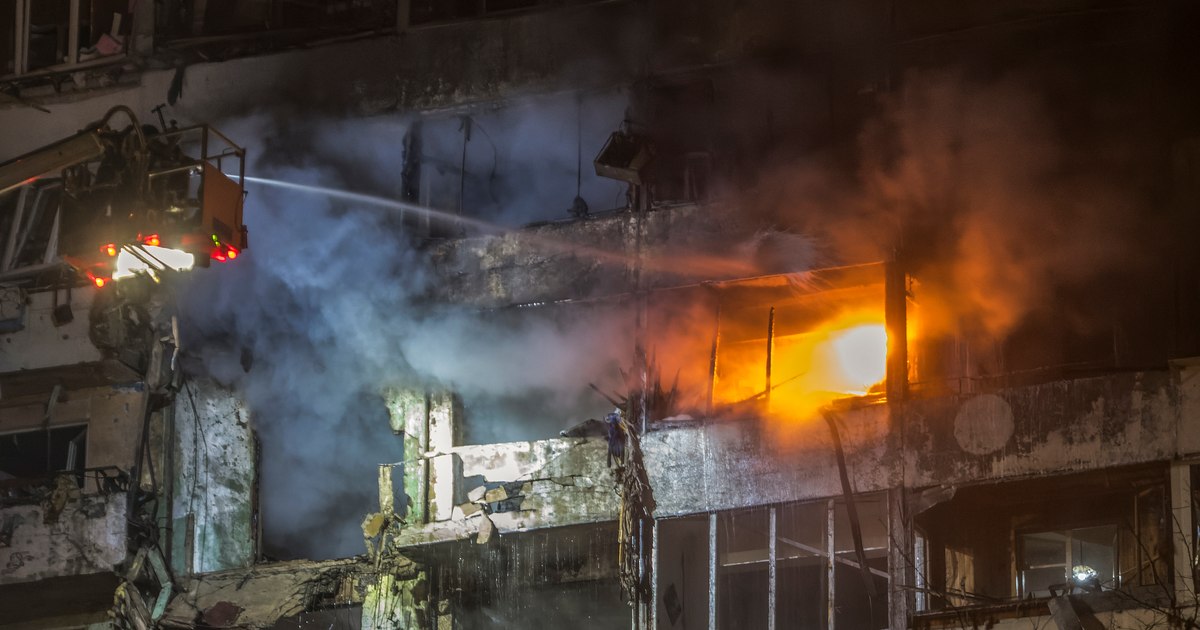
Russian missile attack on Kiev/PHOTO: EPA?EFE
According to him, the Russian military has largely abandoned massive daytime strikes and is now conducting strikes predominantly at night, using drones that fly at higher altitudes.
“In the past, when the attacks took place during the day, it was much easier to work. Now the strikes are carried out mostly at night, and the Shahed drones fly higher, which reduced the effectiveness of our interventions”said the military man.
He added that Russia previously launched salvos of up to 70–100 missiles at a time, but this tactic has changed, which could indicate limitations in available stockpiles.
As for combating drones, Denis says Gepard anti-aircraft systems and other artillery installations remain effective, being able to shoot down a few drones a night. The use of both modern and Soviet-designed weaponry gives units greater operational flexibility.
Differences between Stinger and Needle
The military also explained the practical differences between the Soviet-style Igla portable air defense systems and the Western FIM-92 Stinger. Although the Igla is simpler to use, the Stinger has proven more effective against Shahed-type kamikaze drones.
Denis worked on active duty exclusively with the Stinger system, but had the opportunity to test other systems on simulators. According to him, Igla is easier to operate, as it only involves capturing the target and launching the missile. In contrast, the Stinger requires greater precision from the operator, as the missile has a short initial “fall” after launch.
“On the simulators, the Needle looked much simpler. On the Stinger, you have to take this into account and correct the sight,” he explained, noting that the system includes special markings to assist the operator.
However, the decisive difference is combat effectiveness. “Against Shahed drones, the Stinger is much more effective. The needle is more designed for planes, helicopters and missiles,” the military said.
He specified that the choice of weaponry does not depend on the operator, but on the decisions of the commanders, who take into account the training and experience of each soldier.
Adapting air defense to new threats
Denis also described how the use of Russian drones has changed. They increasingly fly at altitudes of two to three thousand meters, which makes them difficult to detect, especially at night or in foggy conditions. In such situations, defenders often rely on the sound of engines.
Some drones are launched without an explosive charge, but are difficult to distinguish from attack drones. Even without explosives, they can cause injury or damage if they crash.
The military also said that fiber-optic drones are a serious threat, but Ukrainian developers are working on countermeasures.
The most difficult targets for air defense
Asked about the most problematic types of weapons, Denis said Russia has stepped up its use of ballistic missiles, particularly the Iskander-M, which are considered extremely difficult to intercept due to their speed and trajectory.
According to him, Ukraine does not have its own systems for intercepting these missiles, and the defense is based on equipment provided by Western partners, especially the Patriot systems.
He also drew attention to the use of booby-trapped missiles, which can be launched without an explosive charge but must be treated as real threats.
Although Kiev's air defenses are capable of responding to all types of targets, the situation is more difficult in frontline areas, where Ukraine still lacks effective solutions against aerial guided bombs.
The role of electronic warfare
Electronic warfare means play an important role in countering Shahed drones, Denis explained. Many of these lose control, change direction or crash as a result of jamming.
However, he stressed that these systems have limitations and cannot provide complete protection against missiles. Also, excessive use of jamming can affect the communications and navigation of your own forces.
The phrase “target lost” used in official reports usually indicates that the target was neutralized by means of electronic warfare, the military concluded.