Trump administration bans US visas for several European figures: “We will no longer tolerate censorship”


Washington announces unprecedented sanctions against European figures involved in regulating technology and combating online disinformation. The decision sparked strong reactions in Paris and reignited tensions between the US and the European Union over freedom of expression.
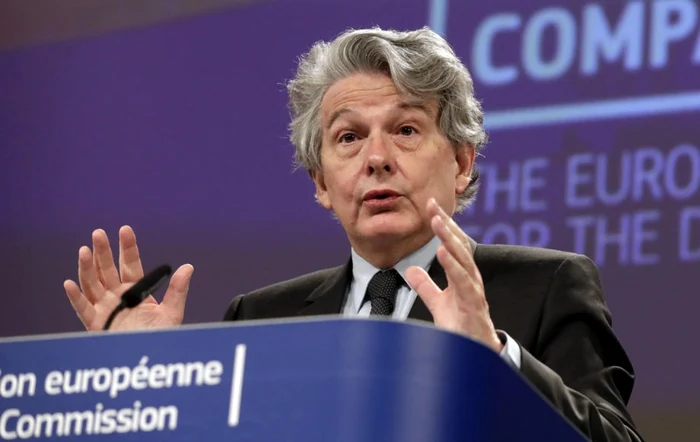
Thierry Breton, targeted by US sanctions PHOTO: EPA EFE
The Trump administration announced on Tuesday the imposition of visa restrictions on five European figures involved in regulating technology and online content, including former French European Commissioner Thierry Breton. The decision, justified by the State Department as a reaction to alleged acts of “censorship” that would affect American interests, was condemned “with the greatest firmness” by the Paris authorities, reports AFP, quoted by News.ro.
According to the US State Department, the actions of the five Europeans would represent a form of censorship exercised to the detriment of American interests. The head of American diplomacy, Marco Rubio, supported this point of view in a message published on X.
“For too long, European ideologues have been taking concerted action to a constrain American platforms to sanction American views with which they do not agree”said Marco Rubio. He added that “The Trump administration will no longer tolerate these blatant acts of extraterritorial censorship”denouncing the existence “a world industrial complex of censorship“.
The announcement of the sanctions was made in two stages. Initially, the State Department issued a statement mentioning the existence of five sanctioned individuals, without releasing their names. Later, the Under Secretary of State for Public Diplomacy, Sarah Rogers, revealed, also on X, the identity of those targeted.
Who are the sanctioned Europeans?
Among those sanctioned is Thierry Breton, former minister in France and former European commissioner for the internal market between 2019 and 2024, considered one of the craftsmen of the European directive on digital services. During his tenure, Breton had extensive digital and industrial skills.
The other four are representatives of NGOs working to combat disinformation and hate speech online in the United Kingdom and Germany. They are Imran Ahmed, director of the Center for Combating Digital Hate (CCDH), Clare Melford, who runs a disinformation index (GDI) based in the United Kingdom, Anna-Lena von Hodenberg, founder of the German NGO HateAid, and Josephine Ballon, a representative of the same organization.
The harsh reaction of France
French authorities publicly condemned Washington's decision. French Foreign Minister Jean-Noël Barrot reacted in a message posted on X.
“France denounces in the strongest terms the visa restriction imposed by the United States against Thierry Breton, former European Minister and Commissioner, and four other European personalities“, Barrot conveyed. He emphasized that “the peoples of Europe are free and sovereign and cannot accept that others impose rules applicable to their digital space”.
Europe, in the sights of Donald Trump
The decision comes amid a broader offensive by the Trump administration against European regulations on digital technology. Those rules impose strict obligations on online platforms, including flagging and managing problematic content, which Washington considers a violation of free speech.
The European Union currently has one of the strongest legal arsenals in the world for regulating the digital sector. Tensions between the two sides escalated in early December when the EU fined social network X, owned by Elon Musk, $140 million. At that time, Marco Rubio talked about a “attack against all American technology platforms and the American people by foreign governments”.
The crisis between Washington and Brussels has been brewing for months. In the new National Security Strategy of the United States, recently published, the Trump administration refers to an alleged “disappearance of civilization” European and criticizes the EU institutions, accused that “undermines political freedom and sovereignty“.
Last February, US Vice President JD Vance sparked controversy in Europe after a speech in Munich in which he claimed that freedom of expression “make regressions” on the continent and took up themes promoted by far-right parties such as Germany's AfD.
Concerns about new visa restrictions
In May, the US Secretary of State already announced visa restrictions for foreigners accused of “censoring Americans”, arguing that freedom of speech is “essential to the American way of life”. In addition, a recent State Department memo cited by US media mentions new guidelines aimed at restricting visas for technology professionals, particularly those involved in online content moderation, including through H-1B visas.
The International Fact-Checking Network (IFCN), based in the United States and bringing together more than 170 organizations active in combating disinformation, expressed “deep concern” to these measures, warning of the impact they could have on the global fight against information manipulation.