“The Super-Revolutionaries”. The radical faction in Iran trying to sabotage a nuclear deal with the US

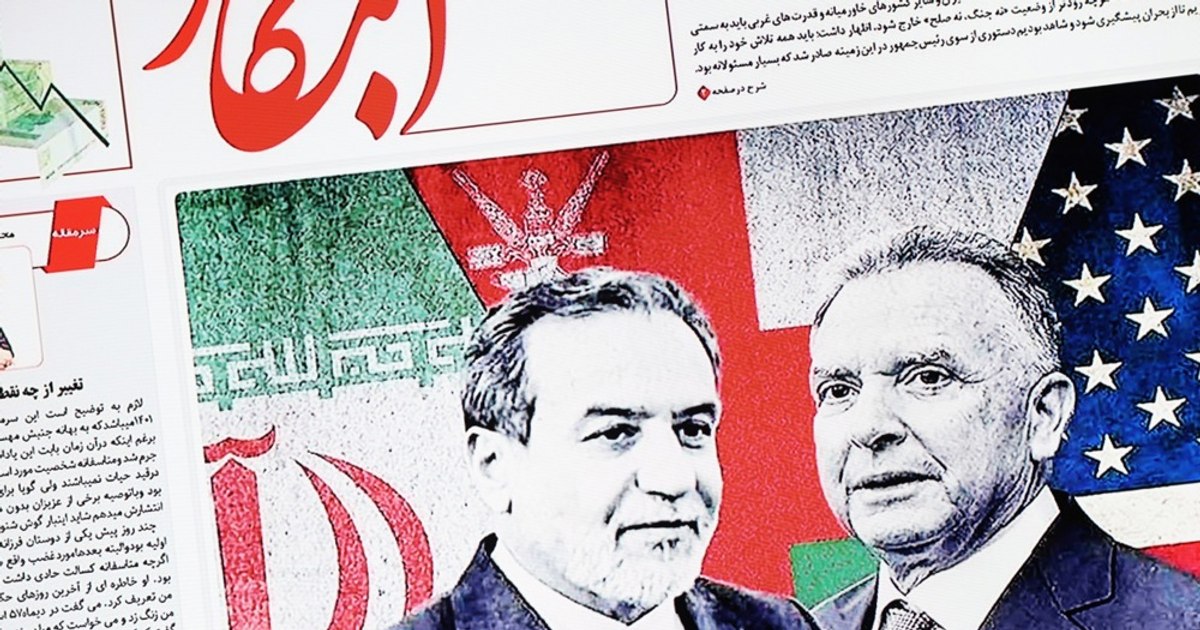
As negotiations between the United States and Iran enter a crucial stage, a small but influential faction within Tehran's hardline camp has stepped up its efforts to block a possible deal with Washington, fueling US President Donald Trump's claims of internal divisions within the leadership, CNN reports.
While it shares Trump's view that the 2015 nuclear deal was a mistake, the group's arguments differ. The group considers any rapprochement with the West unacceptable, and its speech is even harsher than that of other hard-liners in Iran, so much so that even efforts by the Tehran regime to appease it have failed.
Known as “Jebhe-ye Paydari” (Resistance Front), the group is characterized by observers as one of the “Super Revolutionaries” – defenders of the values of the Islamic Revolution of 1979 – who consider any kind of compromise with the United States and Israel as a betrayal of the fundamental principles of the regime, which embodies Shiite Islamist ideology.
“They see resistance against the US and Israel as an eternal struggle,” explained Hamidreza Azizi, researcher at the German Institute for International Affairs and Security. In their view, the Iranian state has a religious mission that must be continued until “the end of time.”
Over the past month, Iranian officials have tried to maintain a delicate balance between negotiations with the Trump administration and the need to satisfy various influential factions domestically, including the Paydari group. His participation in talks with US negotiators in Pakistan last month is the clearest indication that Tehran is trying to send a message of domestic unity.
Pressures on negotiations and accusations of “betrayal”
In recent weeks, the group has stepped up its public attacks on negotiations with Washington, using the media, parliament and street demonstrations to convey the message that any deal would mean capitulation.
They accuse Iran's negotiators of disloyalty to the Islamic Republic and disobedience to the supreme leader who set red lines for talks on the nuclear program
“America has understood that it costs nothing to kill our leaders”it is stated in an article published on a media channel associated with the group. The text harshly criticizes the idea of negotiations and suggests that any discussion with US officials is a betrayal of Supreme Leader Ali Khamenei.
A group with influence in Iranian politics
Although considered an extremist faction even by conservatives, “Jebhe-ye Paydari” has access to important power centers in Iran. Its members are present in the parliament, in the state media and in religious structures.
One of the group's best-known representatives, Saeed Jalili, won 13 million votes in the 2021 elections. The group's officials also hold positions in key state institutions, including public broadcaster IRIB.
Amid geopolitical tensions and negotiations with the US, the group has become increasingly vocal, organizing rallies and public pressure on the authorities, and even refusing to support the negotiating team.
For example, some voices have accused Iranian officials of “cowardice” for initiating negotiations that they believe will cause “immense damage to the Iranian nation,” while their opponents have accused them of leaking details of a potential deal to the media. agreement.
Members of the group accused Iran's chief negotiator, Mohammad Bagher Ghalibaf, of complicity, and lawmakers affiliated with the group refused to sign a statement of support for the negotiating team, according to Iranian media
The challenges of a nuclear deal with Iran
A lawmaker affiliated with the group, Mahmoud Nabavian, was part of Iran's negotiating team in Islamabad last month, but has since said publicly that negotiating the country's nuclear program was a “strategic mistake”. He later called for the removal of Foreign Minister Abbas Araghchi from the team.
A new center of power
With President Donald Trump saying the regime in Tehran is “fractured”, Iranian leaders have tried to project unity. However, the actions of the “Super Revolutionaries” continue to amplify the perception of internal division.
Analysts say that despite the tough rhetoric, the real stake is domestic political influence. Not all conservative actors oppose a deal with the US, but there is competition over who controls the negotiation process and the terms of an eventual compromise.
At the same time, increasing external tensions and internal social discontent allowed the group to attract support from younger and more ideological segments of Iranian society.
After the US and Israeli bombings, the group became a new center of influence through large-scale street rallies in Tehran, creating an influential political bloc. Thousands of supporters of the Islamic Republic, including members of the Paydari group, took part in protests aimed at putting pressure on the country's new leaders.
The group was heavily influenced by its former spiritual leader, the radical cleric Ayatollah Mohammad-Taqi Mesbah-Yazdi, who served on the Assembly of Experts, which elects the supreme leader, and ran one of Iran's best-funded educational institutes. Its graduates ended up occupying important positions in government institutions.
Currently, the spiritual leader is Ayatollah Mahdi Mirbaqiri, considered an influential religious figure and at one point seen as a possible candidate for the position of supreme leader.
“He has apocalyptic visions,” analyst Azizi pointed out, and wants to hasten the end of the world by encouraging “large-scale conflicts” and a “total confrontation” with the West, according to an interview with state media in 2019.
In the context in which a part of the moderate Iranian society is increasingly expressing its frustration with the situation in the country – some being arrested and others choosing to emigrate – the Paydari group capitalized on the discontent of a younger generation, described as more “revolutionary” and more ideologically loyal to the regime, especially following repeated attacks by the US and Israel.
The cited analyst points out that Paydari managed to present himself as the expression of an idea promoted by Supreme Leader Ali Khamenei, that of forming a religious and loyal young generation capable of carrying on the legacy of the Islamic Republic.
How big is the risk of the Europeans going to war with Iran: “Air cover is needed, the aircraft carriers will be those of the French and the British”
An increasingly isolated faction
However, the group's influence is increasingly being challenged in the Iranian public space. Rival politicians, commentators and even some media outlets have criticized his positions, believing that his radicalism may weaken Iran's position in the negotiations.
According to some analysts, the group's actions have strengthened the image of internal division, complicating Tehran's position on the international stage, and that is why they are trying to isolate the group.
“It seems that this move has backfired on them”observed Mohammad Ali Shabani, editor-in-chief of Amwaj.media, a news website focused on Iran and the region. “They are making a lot of noise and the perception is that they have helped Israel and the US portray Iran as being in the middle of a major internal rift.”
Shabani argues that the hard-liners are not opposed to a deal with the US, but rather want to be the deal-makers in order to gain influence and realign power structures in the country.
“No one in Iran is opposed to a deal. The issue is the tactics by which a deal is reached and who will be the one to conclude it.”