Israeli terror in the West Bank. “We are on alert”


At the end of the road hidden between the hills and rocks, at the bus stop, stands a boy in a skullcap. He looks at the approaching car and recognizes the Palestinian registration plate by its yellow color. He spits on the ground. This is the atmosphere in a region dominated by distrust, violence and fear.
Yet here, in the Jordan Valley, in the north of the Israeli-occupied West Bank, it could be as idyllic as in a biblical movie. Delicate greenery, sheep, softly ringing shepherd's bells attached to cows' collars. Sounds idyllic. In practice, however, the situation is completely different – this is one of the areas where Jewish settlers continue to increase violence against the Arab population.
A Palestinian shepherd sits in a tarpaulin tent in Farsiya Chmayer, which is what they call their little village. He is a tall and proud man with a mustache. But now he looks lost. For at least two years, since October 7 and since the outbreak of the war in Gaza, Israeli settlers are turning the lives of Palestinians living there into hell. “They hit us where it hurts the most: at the foundations of our lives,” he says.
Impunity of settlers
Daraghme and her five sons raise sheep and goats, which is what they earn for a living – they sell milk, cheese and meat. He also grows corn. The land he owns has been in his family since the Ottoman Empire – he shows documents to prove it. Unlike many Bedouins in the area, Daraghme's family is sedentary – they also have a house in the nearby town of Tubas.
Settlers have already planted Israeli flags in the hills around his farm and erected metal fences in many places. As a result, shepherds can no longer graze their animals there – and it is too expensive to buy feed for them all year round. Therefore, 18 out of 20 families have already left the region because they saw no prospects for themselves there. And – more importantly – they were afraid for their safety.
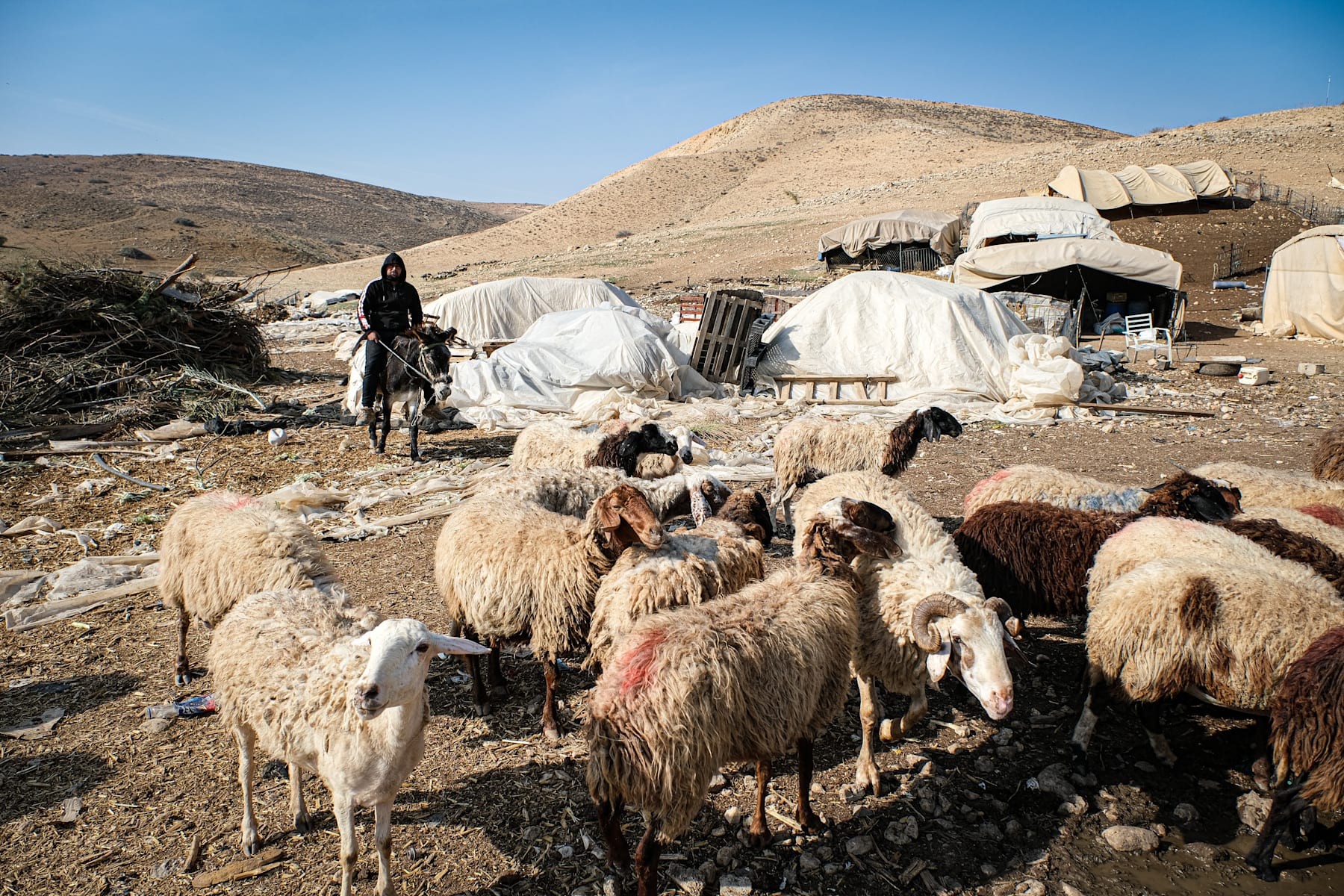
Palestinian shepherd with his sheepMartin UK Lengemann/WELT / Die Welt
As an example, Daraghme cites the example of Gilad – a man barely 20 years old lives in a neighboring settlement. He is one of the leaders of the Israeli settlers, with a stiff look and a loud voice, as seen in numerous videos of him. He and his followers, who apparently previously served in the army and can therefore carry assault rifles, regularly drive an off-road vehicle into pastures and herd flocks of sheep. It repeatedly encroaches on the lands of Palestinian farmers.
If the Palestinians came 'even one step closer', the settlers would immediately call in the Israeli army – say Daraghme. The Jordan Valley is located in the so-called Zone C of the West Bank, which is under full military and administrative control of Israel. A The job of the army is to protect its citizens.
Palestinians are subject to military law, under which Israel can arrest and detain them, even for long periods of time. Israeli settlers are clearly counting on this. It often goes like this – Gilad walks to a tank of water, turns on the tap, and lets the water flow out. The Palestinian shepherd turns off the tap – then Gilad comes and turns it on again. Shepherds have to buy water at high prices and transport it by truck, because water pipes only lead to Israeli settlements.
One of the videos also shows settlers rushing in off-road vehicles towards Palestinian shepherds, and then, with sticks in their hands, driving sheep out of their pens into the mountains. Just a day after Die Welt journalists visited the farm, Israeli settlers cut almost all the hoses irrigating the fields of Palestinian shepherds.
In addition to daily persecution, there are night arson attacks, physical attacks and even shootings in the area. On many road signs, settlers painted over the Arabic place names.
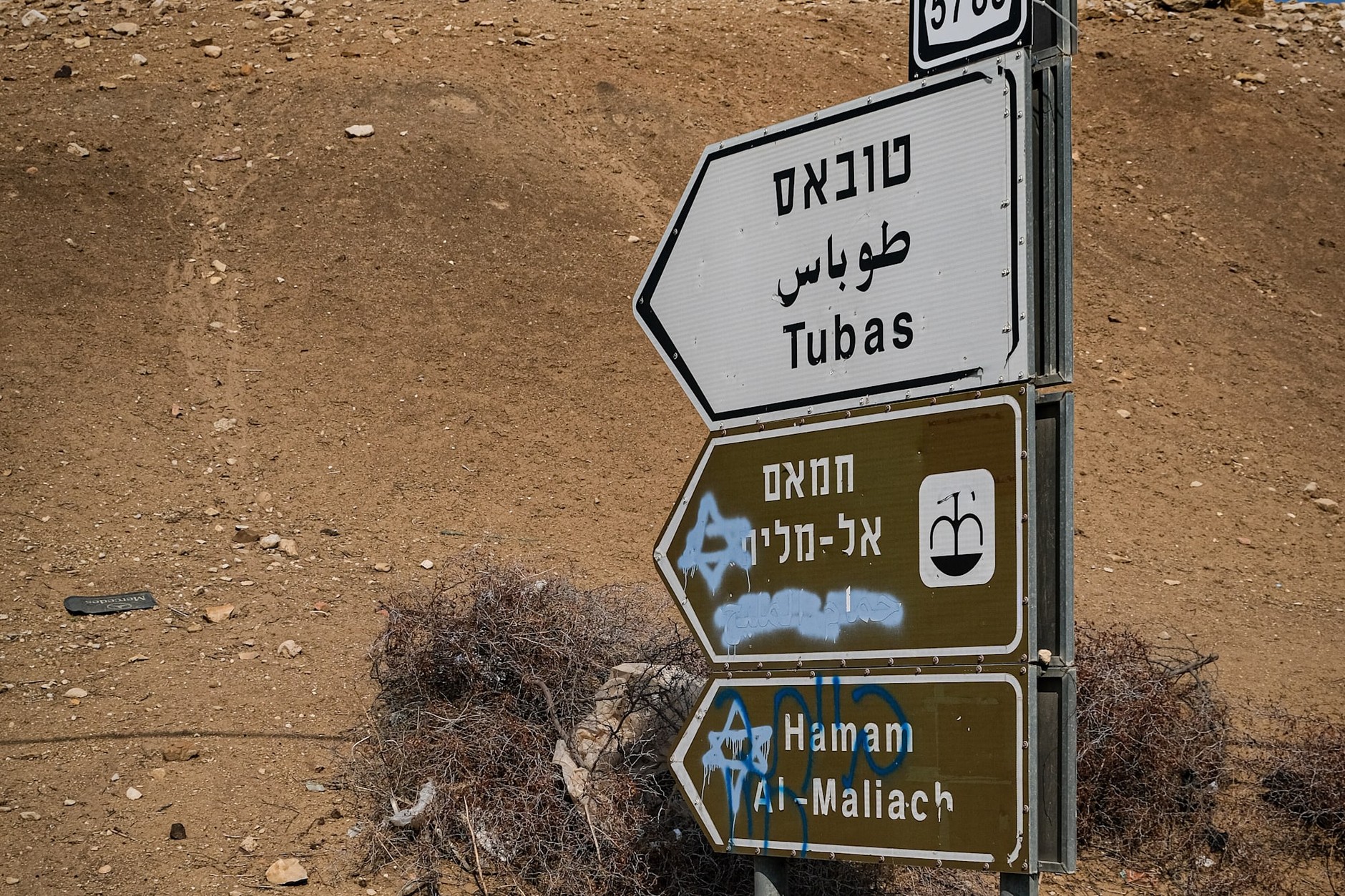
Signs with Arabic place names painted over, most likely by Israeli settlersMartin UK Lengemann/WELT / Die Welt
You can also tell the story of the village of Meitije – in the summer its inhabitants were forced to flee, leaving only a garbage dump there. Near them, the editorial staff of “Die Welt” meets Doron Zachar. The Israeli is one of the members of the Jordan Valley Activists (JVA), a group working to protect Palestinian shepherds in the region. Almost always someone from this group is on site with a camera in hand.
Zakhar says that on July 17, several groups of settlers attacked the village. When the inhabitants resisted, the settlers called the police and the army, following a proven pattern. The officers sprang into action – many Palestinians were led away in handcuffs and blindfolded. Then one of the settler leaders asked the other if he wanted to take the sheep of the captured Palestinian shepherds. He refused, claiming that it would only cause him problems.
The next day, 115 of these sheep were found – shot, beaten with iron bars, cut with knives. Videos and photos showing animals – some of them still dying – have spread online.
Mandate instead of help
The next day, Zachar went to the local police station to report the incident. — They asked me where my car was. Then they checked everything and finally gave me a fine of one thousand shekels (approx. PLN 1,124) – allegedly for too low tire pressure and incorrectly adjusted mirrors – he says. This is a typical example of harassment. It is important to understand one thing – settlers, police, army and civil administration work closely together.
Activists from Jordan Valley Activists focus on protection through their presence. Many of them, as Israeli citizens, stand between settlers and Palestinian shepherds during conflict situations, document the attacks, publish them, and show them to lawyers. In addition, the settlers know that if they harm an Israeli, they will face civil proceedings and may face real consequences. Some activists sleep in tents at night – so that someone is always there if needed.
The editorial team of “Die Welt” asked the Israeli police about the mass killing of sheep – whether an investigation is being carried out into the alleged perpetrators. However, she did not receive an answer. Recently, Israeli media reported isolated cases of arrests of aggressive settlers. Israeli President Yitzhak Herzog and Prime Minister Binyamin Netanyahu also condemned the attacks committed by settlers in November and announced the prosecution of “criminal acts.”
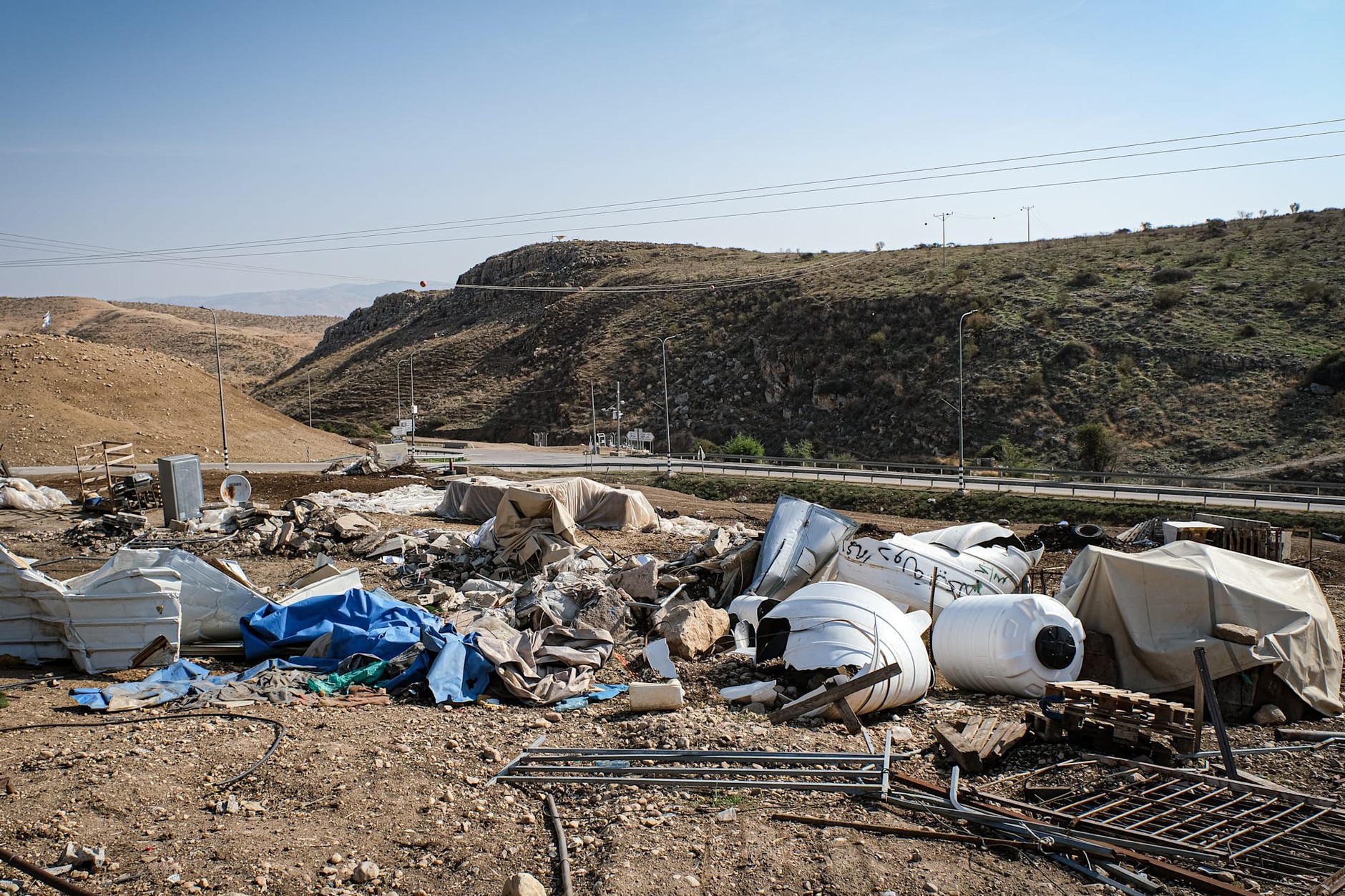
The town of Meitije razed to the groundMartin UK Lengemann/WELT / Die Welt
Eyal Zamir, Chief of the General Staff of the Israel Defense Forces (IDF), even stated that attacks by Israeli settlers consume so many army resources that they threaten IDF operations in Lebanon and the Gaza Strip. Cases of settler attacks on the Israeli army have also been documented.
However, as long as the far-right Ben-Gvir, working on behalf of the settlers, serves as the Minister of Internal Security, the situation is unlikely to change. In most cases, settlers who commit some attacks, even if arrested, are quickly released. But it's not just about Ben-Gvir. Israeli Defense Minister Israel Katz, like Prime Minister Binyamin Netanyahu of the Likud Party, officially abolished the provision that allowed the army to detain Israeli settlers without trial under the so-called administrative arrest.
For Palestinian shepherds, it is as if aggressive children have taken over. In the past, disputes and conflicts over land also occurred among the shepherds themselves, because many families did not officially register their land. At some point, however, the heads of the conflicting families started negotiations to find a solution to the problem. Daraghme and his sons, in addition to Arabic, speak Hebrew fluently, so they can talk to the settlers. “But they look at me like I don't exist,” he says.
A different atmosphere
It used to be different. There were times when Jewish neighbors visited Palestinian shepherds during the holidays and bought cheese from them. However, since 1967, when Israel occupied the West Bank to forestall an attack from its Arab neighbors, the army has declared large areas of the West Bank a no-go zone.
Already then, special settlements were established whose task was to protect the border with Jordan. Many residents supported the Israeli leftist and secular Avoda Workers' Party. When in 2005 Israel ordered the evacuation of towns in the Gaza Stripsome of its inhabitants have just arrived in the West Bank.
Already then the mood had changed. Many of the religious settlers considered it a betrayal that the Jewish state did not want to give them the land allegedly promised to them by God. Since then, the group has gained considerable influence in Israel.
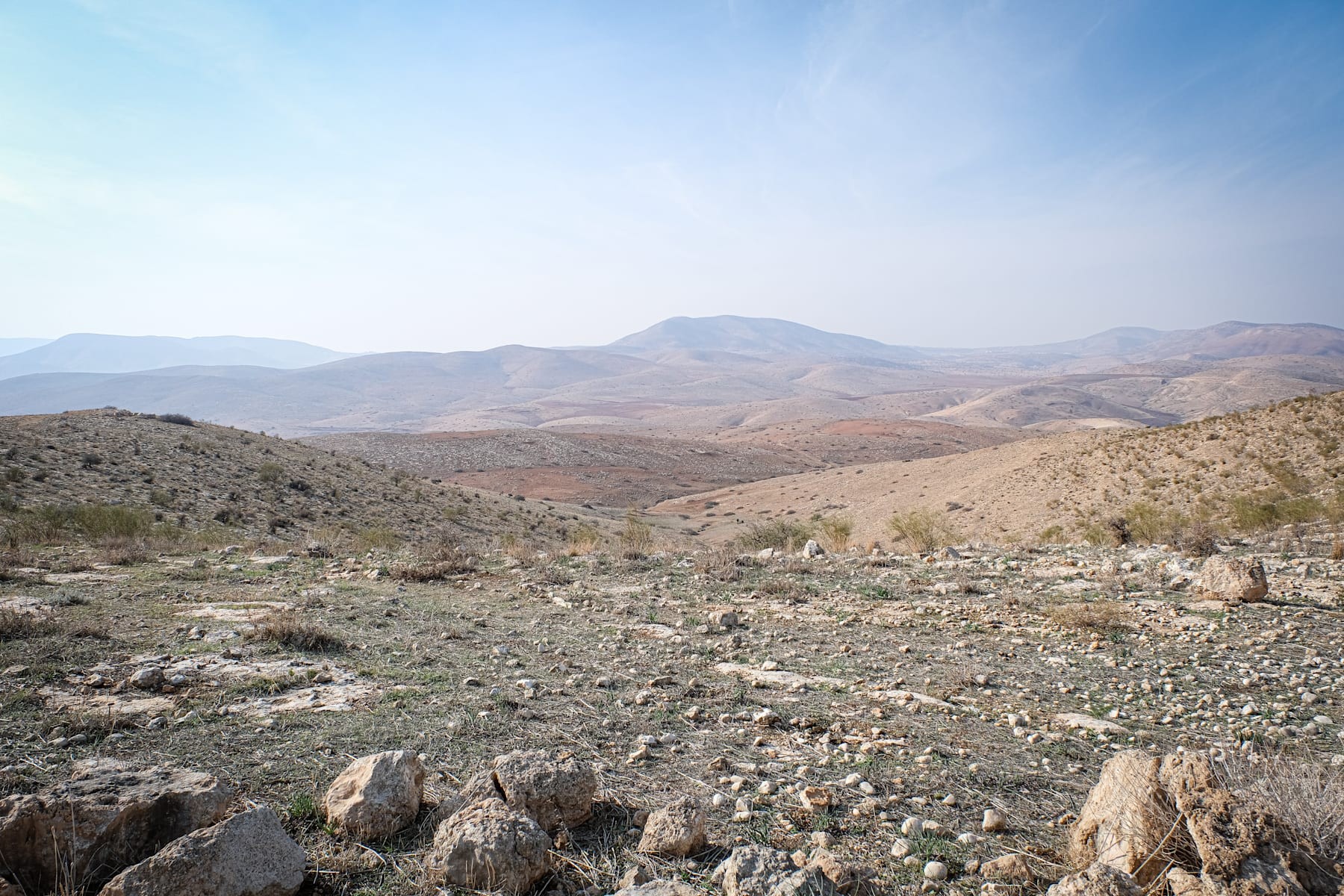
Fields to be developed in the Jordan ValleyMartin UK Lengemann/WELT / Die Welt
When you talk to settlers, you usually get similar answers. Most of them are not aggressive, says one of the women living in a settlement further south. He believes that the problem is exaggerated by public opinion – settlers simply want to live in nature and engage in agriculture.
He also claims that some people cannot afford expensive housing in Israel. — Why should we? – asks the woman, since most of the land belongs to no one. Rather, she says, the problem is that the law prohibits Israelis from buying land in the Jordan Valley, which the Israeli state took over after 1967.
Israeli settler support organization Regavim, founded by former Minister of Finance Bezalel Smotrich, submitted a bill to the Knesset in November to change that — and announced “an end to historical injustice.” In addition, she accuses Palestinians of illegally building houses in Area C – and has filed a court request to have them demolished.
The court sides with the Palestinian shepherds
Just like in the village of Ein El-Hilweh. Only one family lives there now. The army and bulldozers recently arrived there and demolished the village, with ruined water tanks strewn everywhere. Jordan Valley Activists appealed to the Supreme Court. The Palestinian family still lives there, but every time they try to build something to shelter them from the blazing sun, the Israeli army comes and destroys it.
At least that was the case until the court decided the family could stay put temporarily. Thanks to donations, she was able to at least set up a large tent. At the entrance to the village there is now a warning sign reading: “training ground – no entry.”
Although many Israeli settlers in the Jordan Valley claim to oppose violence, Jordan Valley Activists have not encountered such people, even though the organization has been operating for 10 years. “We feel like our eyes and ears are turning a blind eye to what's happening here,” says activist Prema Liviu. — Just like most people in Israel, unfortunately.
The sun is already low when the shepherd leads his animals to a small river to water them. After Israeli settlers built a reservoir nearby and created a recreational area with benches, only a small stream remained in the river. This Friday, a group of teenage girls lie there listening to Hebrew music and drinking champagne from paper cups to celebrate the coming of Shabbat. A police car is parked nearby in the shade. When asked about the settlers' violence against Palestinian shepherds, the girls laugh. “We have nothing to do with it,” says one of them.