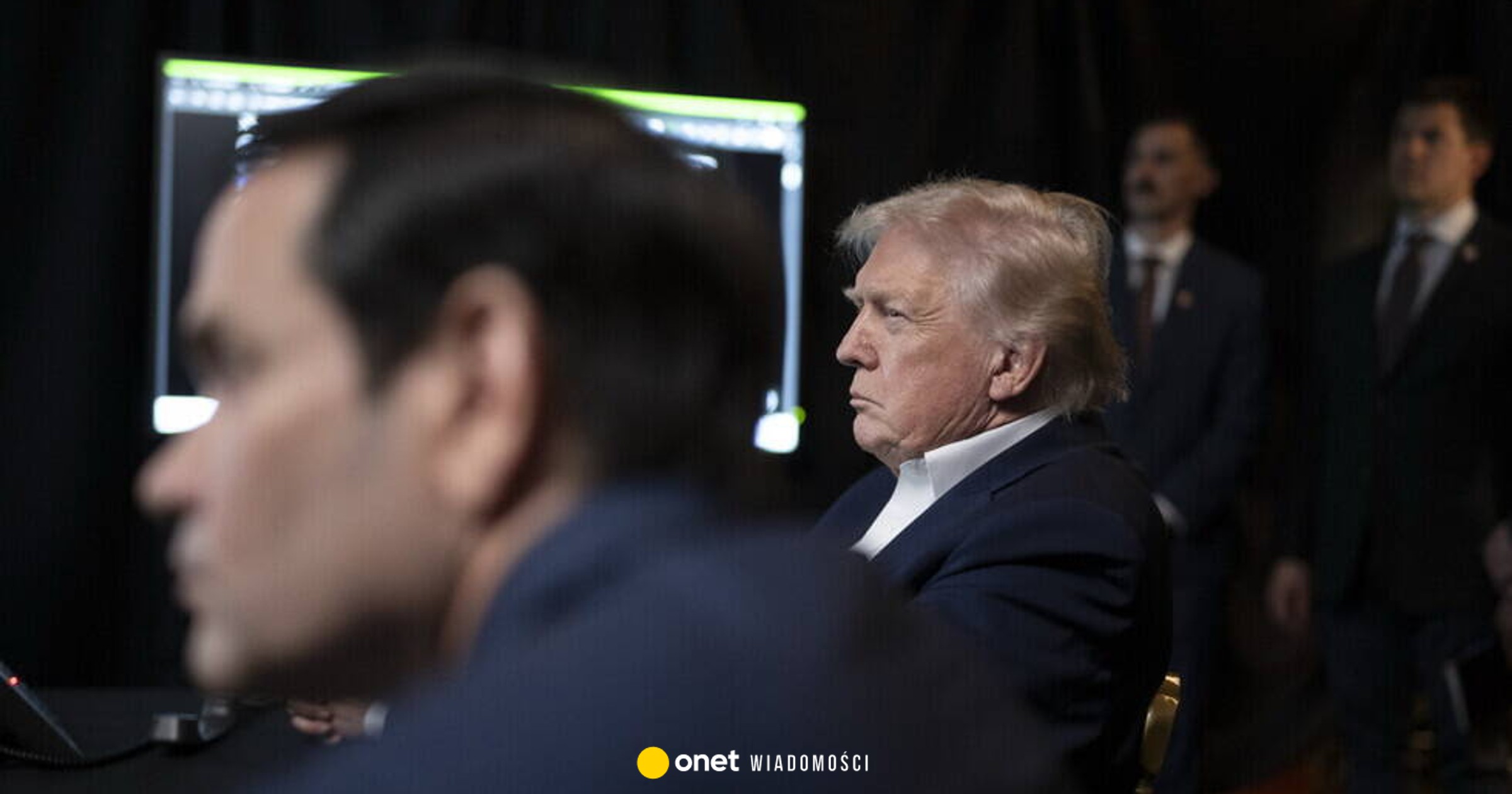
The Americans are negotiating with Russia, and there are no figures of this caliber at the negotiating table


At the end of World War II much of the world was plunged into social and material ruin. It was the second such case in less than 50 years. It seemed obvious to many people then that a bold vision was needed to break this vicious circle.
It's after such an era Dean Acheson decided to describe his career as an undersecretary and then the 51st US Secretary of State (1949–53) in the Pulitzer Prize-winning book “Present at the Creation”, published in 1969.
During his term of office, he was a witness, and often an active participant, in the creation of many groundbreaking initiatives that created relative stability for society, science and culture that many countries have enjoyed for almost a century.
Before we recklessly dismiss this international vision as a closed chapter in history or begin to undermine its foundations, we should think carefully and ask ourselves whether the alternative would bring us a better world.
The article continues below the video
In just a few years after World War II, the United Nations was established, NATO grew from a small group of allies into an organized alliance, and the International Monetary Fund, the World Bank and a number of other mechanisms were created at Bretton Woods to strengthen the international economic order.
The attempt to unite France and Germany under joint management of steel and coal production – in order to prevent further wars between these countries – eventually turned into the Economic Community of Europe, and later into the European Union. In these few years, the word “transformation”, now overused, actually fit like a glove.
Nowadays, there is a tendency to describe these institutions as “globalist” and assign them a role in various conspiracy theories. However, it is worth reading Acheson's account to understand that their source was the desire to prevent the birth of totalitarian centers of power.
These were the organizations they were supposed to support individual freedom, free market, international trade, democratic procedures and a system based on international law — build a community of nations free from catastrophic conflicts and autocratic rule.
The United States has accepted this historic challenge
Acheson's generation did great sense of responsibility. The fragility of freedom and the ease with which it could be destroyed and subjugated, thus leading to unimaginable suffering and death, were still fresh in our minds.
The leaders of the post-war world treated building a better order not as their privilege, but as an obligation. What is palpable in Acheson's book is, above all, an awareness of the enormous sacrifices that have already been made and the need to demonstrate courage and determination in building new international alliances. The United States accepted this challenge and recognized the historic importance of the task before it.
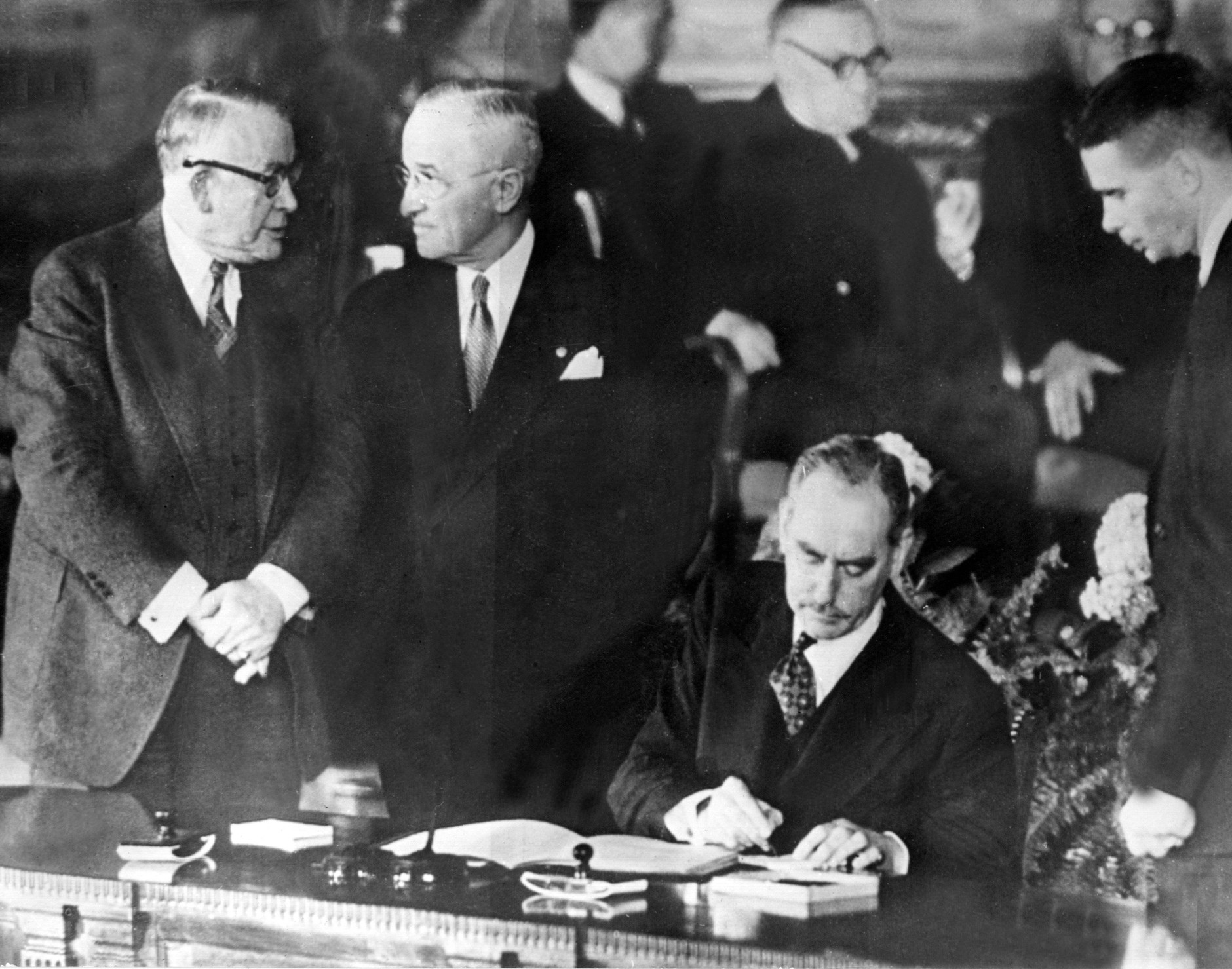
Ernest Bevin, British Foreign Secretary, Dwight Eisenhower, US President, and Dean Acheson, US Secretary of State (at his desk), during the signing of the North Atlantic Treaty. Washington, April 4, 1949PAP/DPA / PAP
In a world in chaos, it would be understandable and forgivable if a sense of loss and apathy prevailed, but instead, there was a unique opportunity to take a new direction — and Acheson, along with the democratic world, exploited it with full commitment.
There is no trace of imperialism or any cunning Western plans to subjugate the world in his writing. The economic decline of Europe and the collapse of European empires created in Asia an opportunity to encourage new nations to choose the classical liberal vision of manin which the individual gains advantage over the state and new, fruitful economies can develop.
The last thing on their minds in a world soaked in the blood and corpses of millions of people was the creation of new political and economic giants to rule the world. People were fed up with this. There is some uniqueness, you could even say cleanliness in the actions of Acheson and America in general in trying to fix the autocratic world once and for all.
I'm not so naive as to say that Americans didn't see their own benefits in taking on this leadership role, but still his ambitions were fundamentally good and derived from a sense of a great and noble cause.
A generation that rose to the challenge
Apart from the global context that shaped these people, Acheson's book leaves no doubt about their class as individuals. His writing has depth. This is not one of those contemporary autobiographies of politicians who publish books just because they feel the need to do so. He actually had something to write about. The best proof of this is that even today we can learn a lot about the world from his work – there is wisdom in it.
The most lasting impression Acheson leaves behind is this respect for the institutions of free states that took centuries to build. After World War II, they fell into ruins, but the desire to rebuild them and the faith in them remained. The deep sense of obligation to fulfill this task and the belief that other nations must also be involved in building a global community that will overcome the mistakes of the past are characterized by calm self-confidence and iron, though not excessive, rhetoric.
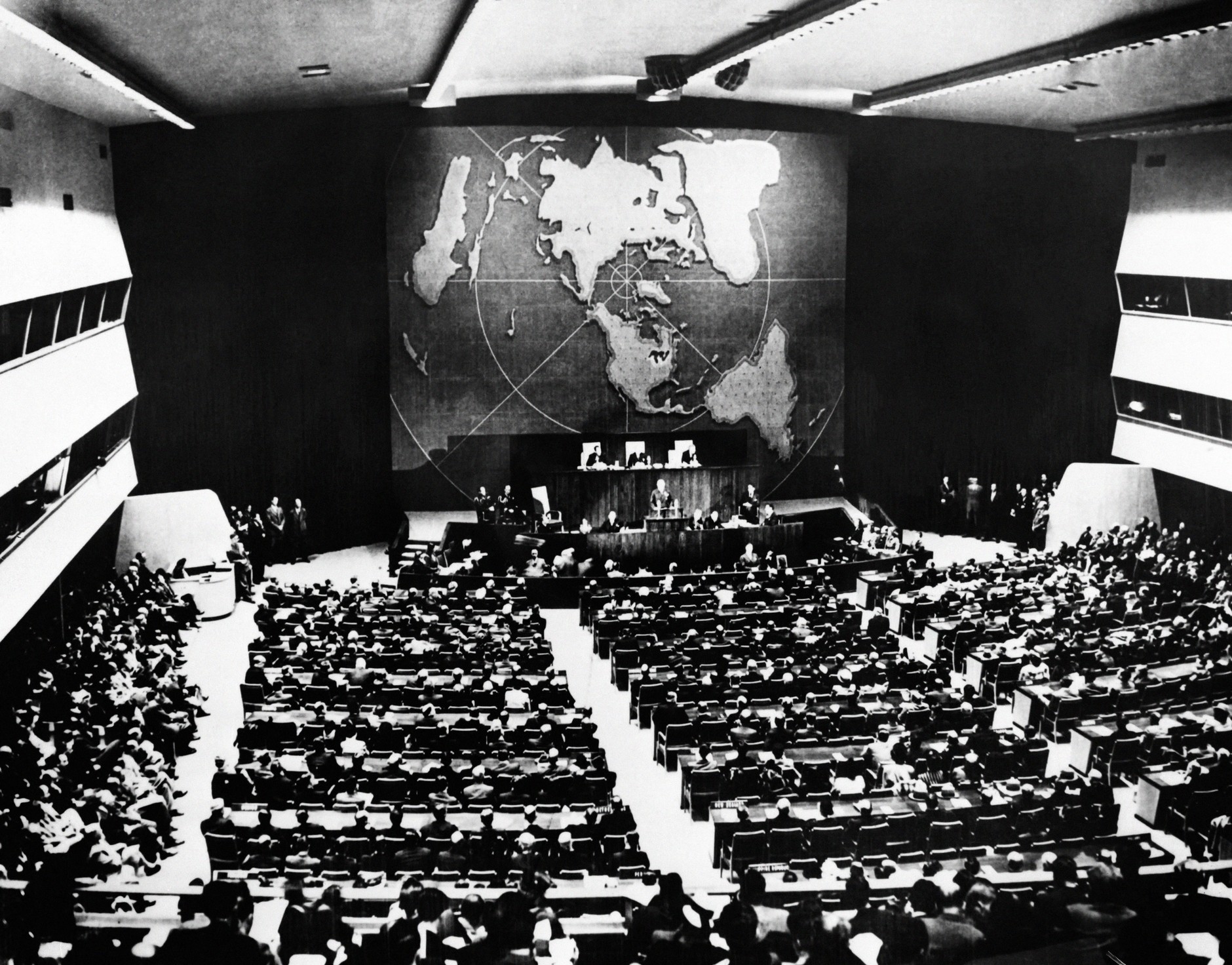
First session of the UN General Assembly in New York, October 23, 1946.AFP
The stakes were enormous – this was a project of great significance. The weight of this responsibility was palpable on the shoulders of Acheson and his peersbut it was also accompanied by a slightly ironic, honest humor in the face of dark experiences. These were not people without a sense of humor, but they were classy and aware of their role in history.
It would be too easy to confine Acheson and his contemporaries to another era, attributing their attitudes to times long past. However, this way of thinking is timeless. Acheson knew that America should aspire to be a reasonable nationwho respects his place in the world, acts with thoughtfulness and purpose, and thus can gain the respect of others.
Today we do not live in a world as devastated as after World War II, but we are getting closer to this possibility, and in Ukraine it is an everyday occurrence. The world needs people with Acheson's seriousness, wisdom and insight.
2026, the beginning of the second quarter of the 21st century, is a good opportunity to commit to achieving these inspiring and noble goals. It is our responsibility to cultivate, defend and develop optimism and institutions handed down to us by those who were present at their creation.