Diplomats are now in a race against time to analyze the proposal ahead of a meeting of EU leaders in Brussels on December 18, during which a decision will be made whether to continue the initiative or meet Ukraine's financial needs with taxpayers' own money. The main obstacle remains the Belgian government's opposition to the loan.
“I'm not impressed yet, let's put it this way,” Belgian Prime Minister Bart De Wever said in a televised speech before the proposal was announced on Wednesday afternoon. — I do not intend to burden Belgium with the risk of hundreds of billions of euros. Not today, not tomorrow, not ever.
Belgium fears Russian retaliatory actions against the state and the financial institution holding the frozen assets, Euroclear. The government is demanding that other EU capitals cover the full amount if Moscow manages to recover the money.
In response to De Wever's concerns, Commission President Ursula von der Leyen told reporters that “mechanisms have been put in place to protect all member states, including, of course, Belgium.” She added that the legal proposal takes into account Belgium's main conditions for loan support, which include greater risk sharing and the use of assets held by other EU countries beyond Belgium.
What does a loan to Ukraine look like?
According to the proposal, the EU will lend Ukraine EUR 165 billion (almost PLN 698 billion), which it will have to repay only after Russia ends the war and pays compensation. The loan covers EUR 25 billion (PLN 105,748 million) of frozen Russian state assets held in private bank accounts in France, Germany, Belgium, Sweden and Cyprus, as well as EUR 140 billion (PLN 592 billion, 186 million) held in Brussels-based Euroclear bank.
As part of the financial package, the Commission will allocate EUR 45 billion (PLN 190 billion 346 million) to repay the loan granted to Ukraine by the G7, which was agreed in 2024. Thanks to this, the total value of the package will amount to EUR 210 billion (PLN 888 279 million).
If all else fails, the EU's executive has said it could issue joint debt to Ukraine as part of a multi-year budget. The main disadvantage is that implementing this option requires unanimity, which is an unlikely scenario given Hungary's repeated threats to block further financing for Kiev.
How will this money be spent?
As part of the reparations loan, EUR 115 billion (PLN 486 billion, 439 million) was allocated to finance Ukraine's defense industry, and EUR 50 billion (PLN 211 billion, 495 million) will cover Kiev's budget needs.
The loan for military expenses will be paid over five years in cash, in tranches, under certain conditions to prevent corruption. Most of the funds, i.e. EUR 90 billion (PLN 380 691 million), will be available in the next two years. The funds allocated to the country's budgetary needs may be sufficient until the end of 2055.
The proposal gives priority to military equipment made in Europe or Ukraine, but also allows the purchase of equipment from foreign allies such as the United States under certain conditions.
What safeguards will Belgium receive?
EU governments will provide bilateral financial guarantees of up to EUR 105 billion (PLN 449 billion 140 million) by 2028 to ensure that Belgium does not bear the risks associated with this initiative alone. The basic principle is that EU capitals will jointly cover the full loan amount if the Kremlin manages to get its money back, which the Commission considers unlikely.
Belgium demands that guarantees exceeded the total value of the EU loan and remained in force after the sanctions package against Russia expired – and will continue to press for this during technical negotiations in the Council. To further reassure Belgium, the Commission will set up a “liquidity mechanism” that will be able to lend money to governments to ensure that guarantees can be paid at any time.
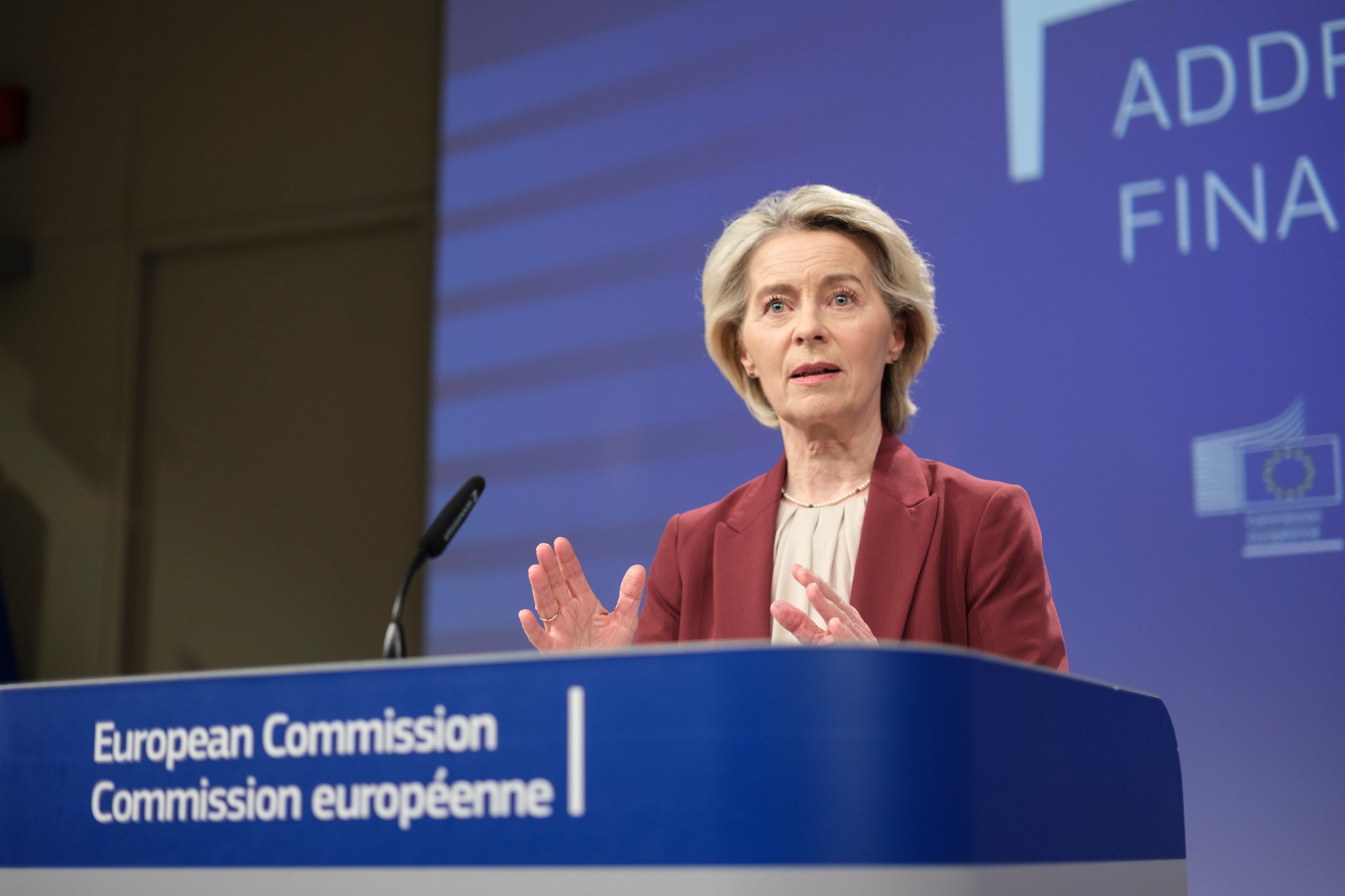
President of the European Commission Ursula von der Leyen in Brussels, 3 December 2025.Thierry Monasse/Getty Images/Getty Images
The next seven-year EU budget will replace national guarantees from 2028 and take over the burden thanks to a “financial reserve”, a financial cushion that ensures Brussels can meet its obligations.
How does the EU intend to keep Russian assets frozen?
The biggest legal obstacle to this proposal is the prospect of unfreezing assets if pro-Russian countries refuse to maintain existing sanctions. Under current rules, the EU must unanimously re-approve sanctions every six months. This means that Kremlin-friendly countries such as Hungary and Slovakia can force the EU to release sanctioned funds by simply voting against it.
The Commission proposed a legal solution that would reduce the likelihood of such a scenario. Its purpose is to activate the clause contained in Art. 122 of the EU Treaty, which could deem the return of assets to the Kremlin unlawful. This clause is legally uncertain and is based on the argument that lifting sanctions would wreak havoc on the European economy. The Commission is confident that it can trigger this legal clause with a qualified majority vote.
Does this affect the peace agreement with Russia?
De Wever argued last week that the commission's proposal would destroy the peace agreement by eliminating a lever of pressure that could induce Russian President Vladimir Putin to enter into negotiations. Von der Leyen, however, downplayed this argument, claiming that the loan was for reparations will increase pressure on Russia.
— This is a very clear signal to Russia that prolonging the war on its side involves high costs for it, she said, adding that the proposal “will have a positive impact on peace negotiations.”
For Ukraine, this program would strengthen its negotiating position, ensuring that it will not join peace talks in the face of a financial crisis. – This is a pressure measure that clearly shows that we are ready for long-term cooperation with Ukraine, said von der Leyen.